70sHairFashion:IconicHairstyles,Trends&theLegacyofthe1970s
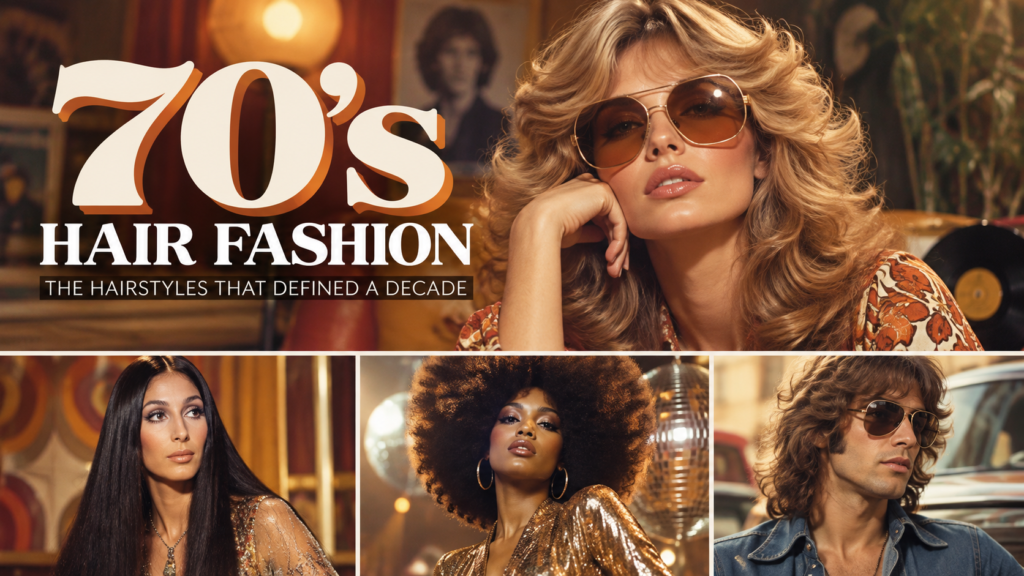
Table of Contents
The 1970s were one of the most expressive decades in modern fashion history. Clothing became more individual, music influenced personal style, and beauty moved toward freedom, texture, movement, and self-expression. Hair was an important part of that transformation.
70s hair fashion was never just one particular hairstyle. The decade included long, center-parted hair, feathered layers, shag cuts, natural Afros, curtain bangs, disco-inspired volume, and eventually the rebellious looks of punk. Different music scenes, cultural movements, celebrities, and changing ideas about personal freedom all helped shape the way people wore their hair.
Today, many of these hairstyles are returning in updated forms. Modern versions of the shag, feathered layers, curtain bangs, long straight hair, and voluminous curls continue to appear in salons, on runways, and on celebrities.
What Made 70s Hair Fashion So Iconic?
The biggest difference between 1970s hair and the heavily controlled hairstyles of earlier decades was the emphasis on movement and individuality.
Instead of making every strand look perfectly fixed, many popular styles allowed hair to move naturally. Long layers, waves, curls, flicked ends, and textured shapes became important elements of the decade’s beauty aesthetic.
The 1970s also reflected major social and cultural changes. The women’s movement encouraged greater independence in personal style, while the Black Power movement helped bring natural Afro-textured hair and the Afro into greater visibility as expressions of cultural identity and pride.
At the same time, music scenes created their own hair identities. Disco favored glamorous volume, rock encouraged longer and more textured styles, and punk later challenged conventional beauty altogether.
That mixture is what makes 70s hair fashion so interesting: there was no single definition of what fashionable hair should look like.
1. Farrah Fawcett’s Feathered Hair
Few hairstyles represent the late 1970s more strongly than the feathered hairstyle associated with Farrah Fawcett.
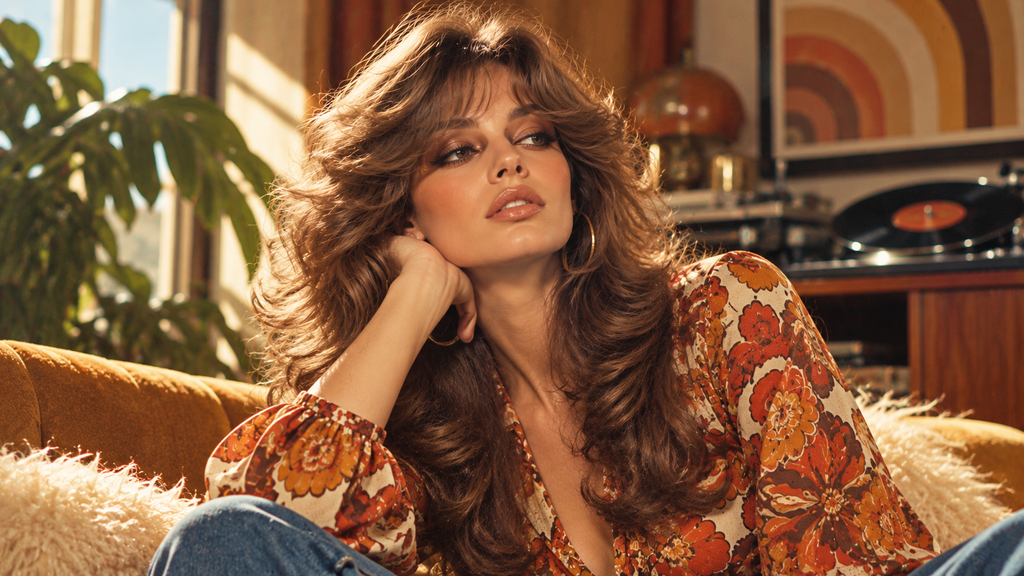
The look featured long layers that were blown away from the face, creating soft, wing-like sections around the cheeks and temples. Volume at the crown and flicked ends gave the hairstyle its famous movement.
Farrah’s popularity through Charlie’s Angels helped turn the hairstyle into a huge beauty trend. The style became so recognizable that women could walk into a salon and ask for a “Farrah” hairstyle.
The feathered look also worked particularly well with blonde highlights because the lighter pieces emphasized the movement of the layers.
Today, the original version can look very retro, but modern stylists often make it softer and less heavily styled. Lighter layers and natural texture can capture the same 1970s feeling without making the hairstyle look like a costume.
2. The Classic 70s Shag
The shag was another defining hairstyle of the decade.
Instead of one clean length, the shag uses multiple layers to create texture and movement. The shape can be messy, wavy, or slightly undone, making it very different from polished traditional hairstyles.
Rock musicians such as Mick Jagger and Stevie Nicks became closely associated with the look, helping give the shag its rebellious and artistic personality.
The shag also demonstrates why 70s hair remains relevant. Modern versions often keep the basic layered structure but make the finish softer and more natural.
For someone looking for a hairstyle inspired by 70s fashion without going completely vintage, a modern shag is one of the easiest options.
3. Long, Straight “Cher Hair”
Another unforgettable 70s look was extremely long, straight hair.
Cher became one of the most recognizable faces associated with this style. Her dark, sleek hair contrasted with the larger, more heavily layered hairstyles that were also popular during the decade.
Long straight hair was frequently worn with a center part, creating a simple but dramatic silhouette. The look was relatively minimal compared with feathered or disco hairstyles, yet its length made it visually striking.
The modern interpretation of Cher-inspired hair usually focuses on healthy-looking length, shine, and a clean center part rather than recreating the exact styling techniques of the 1970s.
4. The Afro and the Meaning Behind It
The Afro deserves special attention when discussing 70s hair fashion because its significance went far beyond appearance.
During the 1960s and 1970s, natural Afro-textured hair became increasingly connected with Black identity, cultural pride, and the Black Is Beautiful movement. The Afro could therefore communicate both personal style and a rejection of pressure to conform to Eurocentric beauty standards.
During the 1970s, Afros were worn by both men and women. Icons including Diana Ross helped bring the dramatic silhouette into popular culture and disco fashion.
This is an important part of 70s hair history because the hairstyle cannot be understood only as a beauty trend. For many people, natural hair represented identity, confidence, and cultural pride.
5. Disco Hair and Big Volume
When disco culture exploded, hair became part of the glamorous nightlife aesthetic.
Disco-inspired hair often emphasized volume, curls, movement, and drama. Large hairstyles worked perfectly with sparkling clothing, platform shoes, dramatic makeup, and the energetic atmosphere of disco clubs.
Diana Ross and other performers became important visual references for this glamorous side of 1970s beauty.
The philosophy was simple: if the outfit was bold, the hair could be bold too.
This is one reason modern fashion continues to borrow from disco-era beauty. Voluminous curls and glamorous textured hair can instantly give an outfit a celebratory, evening-ready feeling.
6. Jane Birkin’s Effortless Bangs
Not every 70s hairstyle depended on enormous volume.
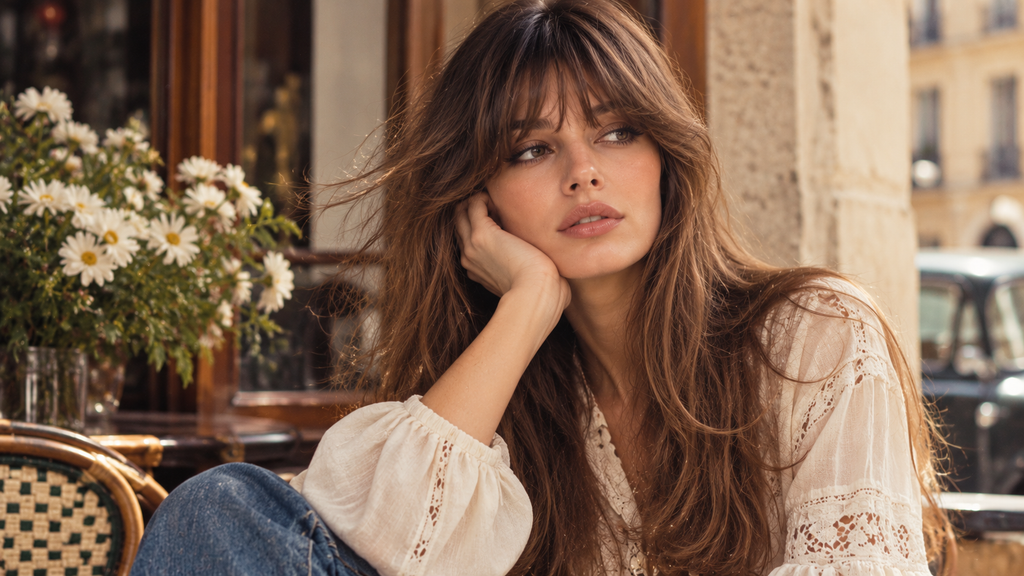
Jane Birkin became famous for a much more relaxed aesthetic, including long hair and soft, brow-skimming bangs. Her look helped establish the effortless French-inspired beauty associated with the decade.
The appeal was its simplicity. Instead of appearing heavily constructed, the hair looked natural and slightly undone.
That idea has become particularly relevant today. Modern versions of Birkin-inspired bangs often combine soft fringe with long layers and natural texture.
7. Curtain Bangs and Face-Framing Layers
The 1970s also helped establish the popularity of face-framing hair.
Curtain-style bangs can be parted near the center and allowed to fall toward the sides of the face. Combined with long layers, they create a soft frame rather than a sharp, structured fringe.
Modern beauty trends have repeatedly returned to this idea because it can be adapted to different lengths and textures.
The renewed popularity of curtain bangs is also part of the larger return of 70s-inspired beauty.
8. Natural Texture and Wavy Hair
The 1970s did not demand that everyone have perfectly straight hair.
Waves, curls, and natural texture were often celebrated, particularly as beauty culture became more relaxed. Layered haircuts were designed to make texture visible and create movement.
This helped create a more carefree beauty aesthetic that remains attractive today.
Rather than forcing every strand into a rigid shape, the 70s approach often allowed hair to become part of a person’s overall personality.
9. Braids and Cornrows
Braided hairstyles also became increasingly visible during the later part of the decade.
For Black communities, braided and natural hairstyles carried cultural importance, while their visibility in popular culture increased toward the end of the 1970s. Cornrows, for example, became more prominent in popular fashion imagery during this period.
Their history is much older than the 1970s, so it is more accurate to view the decade as one period in the broader history and visibility of these styles rather than their point of origin.
10. Men’s 70s Hair Fashion
70s hair fashion was not limited to women.
Men’s hair became noticeably longer during the early and middle parts of the decade. Long hair, sideburns, shag cuts, and textured styles were common, while some men continued wearing shorter cuts such as crew cuts and buzz cuts.
Rock musicians helped popularize longer hair, while disco culture contributed to the popularity of Afros and other expressive styles.
By the end of the decade, punk introduced another dramatic change. Shorter, dyed, and deliberately rebellious hairstyles began challenging the longer, softer styles associated with earlier 70s fashion. Vogue’s history of beauty describes punk hair as a particularly strong rejection of conventional expectations.
11. The Influence of Music on 70s Hair
Music and hair were closely connected throughout the decade.
Different musical communities developed recognizable visual identities:
- Disco: volume, curls, glamour, and dramatic silhouettes
- Rock: long, layered, textured hair
- Folk and bohemian culture: long, natural-looking hair
- Soul: Afros and expressive natural texture
- Punk: short, unconventional, dyed, and rebellious styles
This made hair more than a beauty choice. It could tell people something about a person’s personality, interests, and cultural world.
12. How 70s Hair Fashion Changed During the Decade
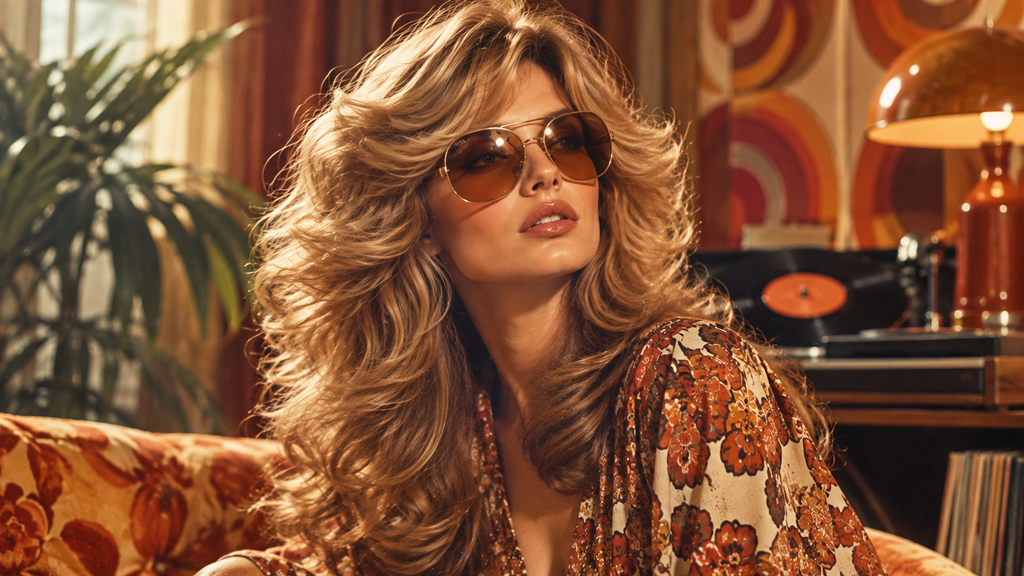
It is easy to imagine the 1970s as one continuous style, but the decade actually went through several different phases.
Early 1970s
Long, straight hair and center parts remained popular, continuing some of the beauty trends of the late 1960s.
Mid-1970s
Shags, layers, waves, natural Afros, and more experimental textures became increasingly visible.
Late 1970s
The disco movement encouraged bigger glamour, while Farrah Fawcett’s feathered layers became hugely influential. Toward the end of the decade, punk introduced shorter and more rebellious hair aesthetics.
So, rather than having one “70s haircut,” the decade should be understood as a constantly changing collection of styles.
Why Is 70s Hair Fashion Coming Back?
Fashion works in cycles, and the 1970s continue to provide designers, hairstylists, and celebrities with an enormous source of inspiration.
Recent beauty coverage shows renewed interest in shag cuts, feathered hair, curtain bangs, long straight styles, Afros, and disco-inspired curls.
The reason is partly practical: many 70s styles can be adapted to modern hair rather than copied exactly.
A modern shag can be softer. Feathered layers can be less dramatic. Curtain bangs can be customized to different face shapes. Natural curls can be enhanced instead of reshaped.
This makes 70s inspiration flexible enough for today’s beauty culture.
How to Wear 70s Hair Fashion Today
The easiest way to bring 70s hair into a modern wardrobe is to take one element rather than copying an entire vintage look.
Try:
- Long layers with soft feathering
- Curtain bangs with natural texture
- A modern shag
- Long, sleek center-parted hair
- Voluminous curls for an evening look
- A natural Afro with a contemporary shape
- Soft waves inspired by 70s bohemian fashion
The goal is not to look as though you stepped out of a 1970s photograph. Instead, use the decade as inspiration and combine its strongest elements with today’s styling techniques.
The Lasting Legacy of 70s Hair Fashion
The influence of 70s hair can still be seen in contemporary beauty because the decade changed the relationship between hair and personal identity.
It gave people more freedom to experiment with length, texture, volume, natural hair, and unconventional shapes. From Farrah Fawcett’s feathered layers to Diana Ross’s Afro, Cher’s long straight hair, Jane Birkin’s bangs, Stevie Nicks’s shag, and the rebellious hair of punk culture, the decade produced an unusually diverse collection of beauty icons.
Perhaps that is the real reason 70s hair fashion never completely disappears.
It was never about following one rule.
It was about finding a hairstyle that expressed who you were.
Frequently Asked Questions About 70s Hair Fashion
What was the most popular hairstyle in the 70s?
There was no single hairstyle that dominated the entire decade. Popular choices included long center-parted hair, shag cuts, Afros, feathered layers, and disco-inspired voluminous styles. Farrah Fawcett’s feathered hairstyle became particularly iconic during the late 1970s.
What is the famous 70s feathered hairstyle?
The famous feathered hairstyle is strongly associated with Farrah Fawcett. It uses layered hair styled away from the face, creating soft, wing-like movement around the sides.
Was long hair popular in the 1970s?
Yes. Long hair was extremely common, particularly during the early and middle parts of the decade. Straight, center-parted hair as well as layered and wavy long styles were popular.
What was the Afro’s significance in the 1970s?
The Afro was both a hairstyle and, for many Black people, an expression of natural beauty, cultural identity, and racial pride. Its history is closely connected with the Black Power and Black Is Beautiful movements.
Are 70s hairstyles still fashionable?
Yes. Modern versions of shag cuts, feathered layers, curtain bangs, long straight hair, Afros, and voluminous curls continue to influence contemporary beauty trends.
Final Thoughts
70s hair fashion was a celebration of individuality. From natural Afros and effortless long hair to glamorous disco curls and Farrah Fawcett’s famous feathered layers, the decade offered a remarkable range of choices.
Its influence remains strong because these styles can be adapted rather than simply copied. A modern haircut can borrow the movement of a shag, the softness of curtain bangs, the volume of disco hair, or the sleekness of Cher-inspired length while still feeling completely contemporary.
The 1970s proved that great hair does not have to follow one formula. Sometimes, the most memorable style is simply the one that gives you the freedom to be yourself.