BridesmaidDresses:HowtoChooseStylesEveryBridesmaidWillLove
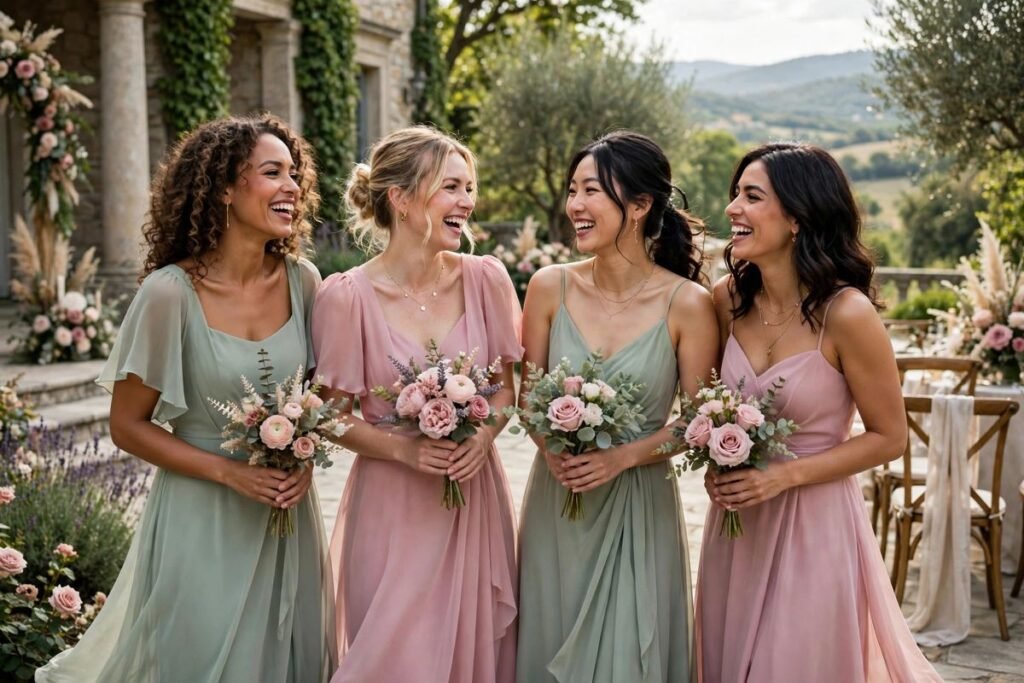
Table of Contents
Choosing bridesmaid dresses is one of the most joyful parts of wedding planning — and one of the easiest to overcomplicate. The right bridesmaid dresses should flatter different body shapes, suit the venue and season, photograph beautifully beside the bride, and, above all, feel comfortable enough to wear from the first photograph to the last dance. This guide brings all of those decisions together, so the whole bridal party feels confident and looks like a considered, cohesive group rather than a collection of compromises.
Start with a simple principle: choose a colour, a fabric family and a level of formality first, then let each bridesmaid choose a neckline or silhouette within those boundaries. That balance gives the wedding party a unified look while respecting different heights, bust sizes, budgets and personal styles. It is also the approach most brides find least stressful, because it replaces endless group debate with a clear framework.
Start With the Wedding, Not the Dress
Before anyone tries on a dress, confirm the venue, season, dress code and time of day. A formal evening wedding in a grand hotel calls for longer hemlines, richer fabrics and more structured silhouettes. A summer garden celebration suits lighter chiffon, floral-inspired tones and shorter or midi lengths. A beach wedding needs breathable fabrics, simple hems that will not drag in sand, and shoes that work on uneven ground.
Your own gown matters too. If your dress is heavily detailed with lace or embellishment, simpler bridesmaid dresses in a solid fabric will balance the photographs. If your gown is sleek and minimalist, your bridesmaids can carry a little more texture, a soft print or a gentle sheen without competing with you. For help with the wider planning picture, see our guide to choosing a wedding venue, which covers the practical questions that shape every other styling decision.
Bridesmaid Dress Styles and Silhouettes Explained
Most bridesmaid dresses fall into a handful of reliable silhouettes. Knowing what each one does makes shopping faster and avoids styles that look beautiful on a hanger but feel wrong after three hours.
A-line dresses
A-line dresses are fitted through the bodice and gently flare from the waist, creating a soft triangular shape. They suit almost every body type, skim the hips without clinging, and work for formal and semi-formal weddings alike. If you need one silhouette that will please a mixed group, start here.
Empire waist dresses
With a high waistline sitting just below the bust, empire dresses lengthen the lower body and drape beautifully in chiffon. They are a kind choice for bridesmaids who prefer more coverage around the waist or who are pregnant, and they feel especially romantic for garden and summer weddings.
Sheath and column dresses
Sheath dresses follow the body more closely and create a long, elegant line. They are ideal for modern city weddings and for bridesmaids who love a sleek look, but they offer less forgiveness around the hips, so good tailoring and a comfortable stretch lining matter.
Fit-and-flare and wrap dresses
Fit-and-flare styles celebrate the waist before flaring out, while wrap dresses can be adjusted at the waist and bust, making them one of the most adaptable choices for different figures. Both are excellent for dancing, because the skirt moves freely.
Midi, floor-length and convertible dresses
Midi bridesmaid dresses, falling below the knee and above the ankle, feel modern and are easier to walk and dance in. Floor-length gowns remain the classic choice for black-tie weddings. Convertible dresses, with straps that can be styled in several ways, let each bridesmaid find her most comfortable neckline while keeping the same colour and fabric.
Choosing Colours That Photograph Beautifully
Colour is where a bridal party either looks harmonious or slightly chaotic. Choose one main colour and, if you want variety, add one or two closely related tones rather than a rainbow of unrelated shades. Test fabric swatches in daylight and beside your own gown, because colours shift dramatically between a shop light and a photograph.
Soft pastels — blush, dusty blue, lilac and pale peach — suit spring and summer weddings and look fresh in outdoor photographs. Rich jewel tones such as emerald, burgundy and navy bring depth to autumn and winter celebrations. Sage green remains a favourite for relaxed, nature-inspired weddings because it flatters many skin tones and pairs beautifully with cream flowers and gold jewellery. Black bridesmaid dresses, once considered daring, are now a chic choice for evening and city weddings, especially when softened with delicate jewellery, a bouquet in a contrasting colour, or a satin finish that catches the light.
Consider skin tones, but do not let them dominate the decision. A colour that suits everyone perfectly is rare; a colour that suits most people, worn in a flattering neckline, is a realistic and kind goal. If your party includes a wide range of skin tones, a mid-tone colour — neither very pale nor very dark — is usually the safest and most photogenic choice.
Fabrics for Every Season
- Chiffon: Light, flowing and forgiving, ideal for summer, beach and garden weddings.
- Satin: Smooth with a gentle sheen, perfect for formal evening weddings and winter celebrations.
- Crepe: Structured yet comfortable, excellent for modern, minimalist bridesmaid dresses.
- Tulle: Romantic and airy, best in small doses — a tulle overlay or skirt — rather than full volume for every bridesmaid.
- Velvet: Luxurious and warm, a strong choice for autumn and winter weddings.
- Linen blends: Relaxed and breathable for informal summer weddings, though they crease more easily.
Whatever fabric you choose, ask about lining, stretch and care. A fully lined dress hangs better and feels more comfortable, while a little stretch in the bodice makes a long day far easier. If bridesmaids are buying their own dresses, agree on whether dry cleaning is expected after the wedding.
Dresses for Different Body Types
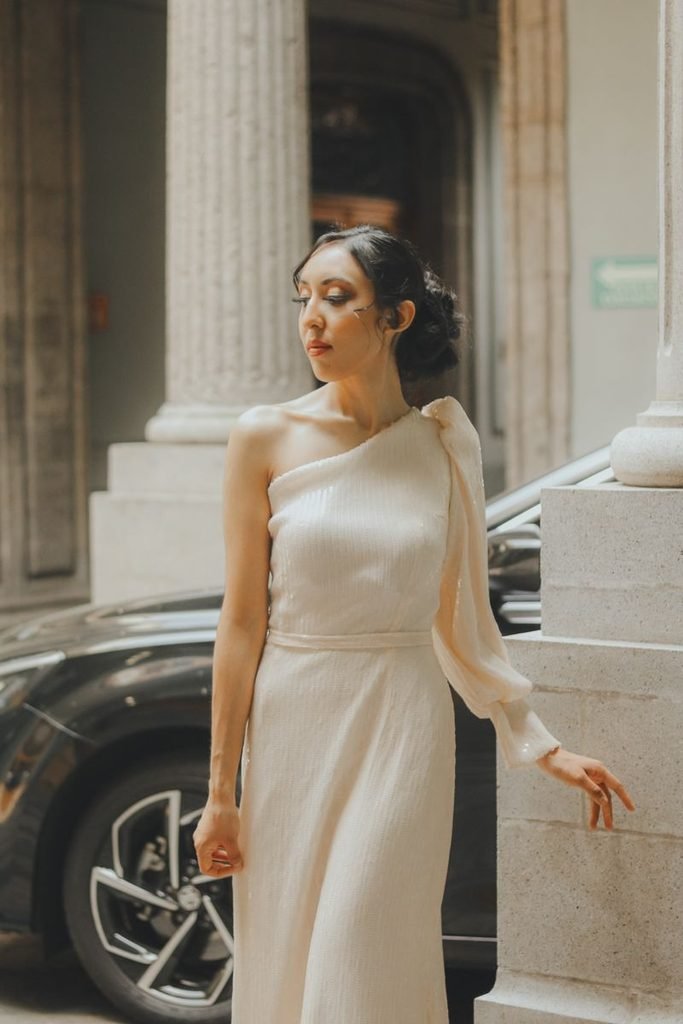
The kindest approach is to offer choice within a shared colour and fabric. A V-neckline lengthens the neck and flatters most bust sizes. A sweetheart neckline offers gentle shape without feeling revealing. Cap sleeves or short sleeves give arm coverage without the heaviness of a full sleeve, while a one-shoulder style suits bridesmaids who love a statement look.
For petite bridesmaids, a midi or a floor-length dress with a defined waist avoids overwhelming a smaller frame, and a heel that matches the hem length is essential. For taller bridesmaids, a longer hem and a bold colour block can look striking rather than severe. For curvy bridesmaids, structured bodices, supportive straps and A-line skirts offer comfort and shape. For plus-size bridesmaids, look for brands that design the same dress across a full size range rather than simply scaling up a sample size — the fit, armholes and waist placement will be noticeably better.
Encourage every bridesmaid to try her dress with the shoes and underwear she will wear on the day. A dress that fits perfectly in the shop can feel very different with a different bra, heel height or shapewear choice.
Budgets, Timelines and Who Pays
Be clear about budget from the first conversation. In the UK, bridesmaids often pay for their own dresses, but customs vary, and some brides contribute towards the cost, shoes or accessories. Whatever your arrangement, state it kindly and early, and give a realistic price range rather than a single figure that leaves no room for alterations.
Start shopping six to nine months before the wedding if dresses need to be ordered, and allow at least six to eight weeks for alterations. Order all dresses from the same dye lot where possible, because the same colour name can vary slightly between batches. Keep a note of each bridesmaid’s size, order date and alteration appointment in one shared document, so nothing is chased at the last minute.
Mix-and-Match Bridesmaid Parties That Still Look Cohesive
Mix-and-match styling is the most popular way to make every bridesmaid feel like herself. The trick is to fix at least two elements and vary only one. For example, keep the same colour and fabric but allow different necklines; keep the same silhouette but use different shades within one colour family; or keep the same length and let each bridesmaid choose her preferred sleeve style.
Photograph the group together before you commit, ideally in the same light you expect on the day. Small differences that look charming in a shop can look uneven in a group photograph, while a shared accessory — a similar bouquet, a delicate bracelet or matching shoes in a neutral tone — can pull varied dresses together instantly.
Bride Coordination Checklist
- Confirm the venue, season and dress code before shopping.
- Choose a colour palette and fabric family, and order swatches in daylight.
- Agree who pays, the budget range and the ordering deadline.
- Let each bridesmaid choose a neckline or silhouette within your framework.
- Book alterations early and try dresses with wedding-day shoes and underwear.
- Coordinate shoes, jewellery and bouquets so the group looks intentional.
- Ask bridesmaids to practise sitting, walking and dancing in their dresses before the day.
Guests, too, need guidance on what to wear. If friends and family are still deciding, our guide to the best wedding guest dresses offers elegant styles for every budget and dress code, without clashing with the bridal party.
Common Mistakes to Avoid
Avoid choosing a dress because it looks perfect on one person and assuming it will suit everyone. Avoid ordering too late, skipping a group photograph, or insisting on uncomfortable shoes for the sake of a photograph — unhappy bridesmaids show in pictures. Finally, avoid white, ivory or a shade too close to your own gown unless that is a deliberate, agreed choice; the bride should remain unmistakable in every photograph.
Conclusion
The best bridesmaid dresses are not the most expensive or the most dramatic — they are the ones every bridesmaid can wear with confidence for a full day. Choose your colour, fabric and formality first, offer thoughtful choice within that framework, and keep communication clear and kind. Do that, and your bridal party will look cohesive, feel comfortable, and enjoy the celebration as much as you do.
Frequently Asked Questions
How far in advance should bridesmaids order their dresses?
Bridesmaids should order their dresses six to nine months before the wedding, allowing six to eight weeks for alterations.
Should all bridesmaids wear the same dress?
No, all bridesmaids do not need to wear the same dress; keeping the same colour and fabric while allowing different necklines gives a cohesive look with a comfortable fit for everyone.
What colour bridesmaid dress suits most people?
A mid-tone colour such as sage green, dusty blue or muted mauve suits most people, because it is neither very pale nor very dark and photographs well.
Who usually pays for bridesmaid dresses in the UK?
In the UK, bridesmaids often pay for their own dresses, but the bride should confirm the budget and arrangement clearly and early to avoid awkwardness.