WolfCutforWomen:25StylishIdeas,HaircutTipsandStylingInspirationfor2026
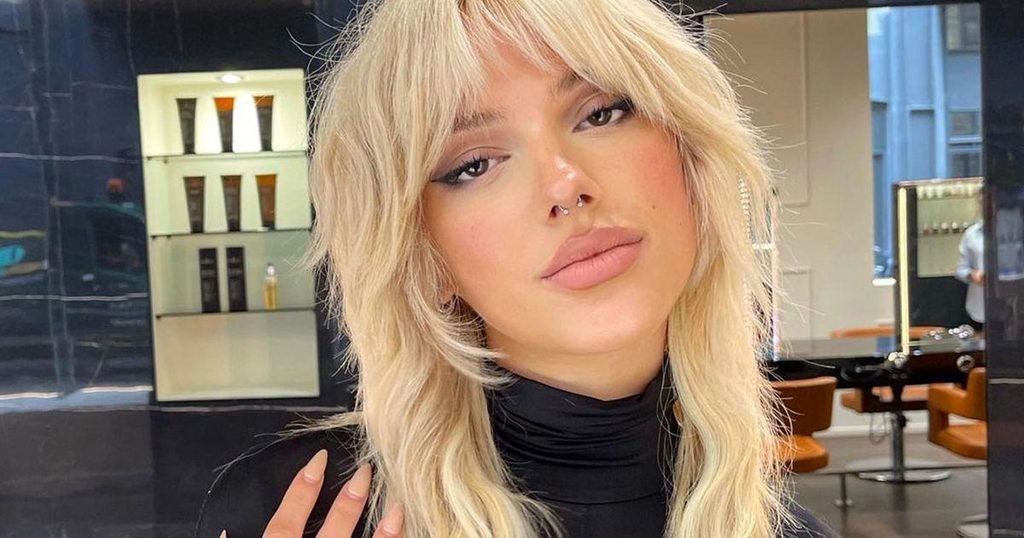
Table of Contents
The wolf cut for women has become a standout hairstyle for anyone who wants movement, texture and personality without committing to a perfectly polished look. Combining the shaggy layers of a classic shag haircut with the longer, slightly rebellious shape of a mullet, this cut creates a distinctive silhouette that feels relaxed, modern and expressive.
What makes the wolf cut especially appealing is its versatility. It can look soft and romantic with curtain bangs, bold and edgy with choppy layers, playful on short hair, or dramatic on long, thick hair. It can also be adapted to natural waves and curls, allowing different hair textures to influence the final result.
The trend has continued into 2026, with beauty publications highlighting shorter wolf cuts, softer layers and variations that balance retro character with everyday wearability. Hairstylists also emphasize that the best version depends on your hair texture, desired shape and willingness to style it.
If you are considering a new haircut, this guide explores the best wolf cut styles for women, how to choose one for your face shape and hair type, how to style it at home, and what to ask your hairstylist before making the change.
What Is a Wolf Cut?
A wolf cut is a heavily layered haircut that combines elements of two classic hairstyles: the shag and the mullet.
The top and crown usually feature shorter, choppy layers that create volume and texture. The lower sections are often longer and more feathered, producing a shape that looks fuller around the top and sides while remaining wispy toward the ends.
Unlike a traditional haircut with smooth, evenly blended layers, a wolf cut often has a deliberately undone finish. The goal is movement rather than perfection.
Its defining features include:
- Shorter, textured layers around the crown
- Longer layers toward the back
- Face-framing pieces
- Choppy or feathered ends
- Optional curtain bangs, wispy fringe or full bangs
- Natural-looking volume and movement
The final result can be subtle or dramatic. A soft wolf cut has blended layers and a gentle outline, while a more traditional, edgy version creates a stronger contrast between the crown and the length.
Why Is the Wolf Cut Still Popular in 2026?
The wolf cut has moved beyond its original social-media popularity because it offers something many people want from a modern haircut: a recognizable shape that does not need to look perfectly styled.
Its appeal comes from three main qualities.
First, it creates movement. Strategic layers can help hair look more textured and lively, particularly when the cut is adapted to the person’s natural density and texture.
Second, it is customizable. The length, fringe, crown volume and amount of layering can be adjusted to create anything from a wearable everyday haircut to a dramatic alternative style.
Third, it has a strong visual identity. Its retro influence feels familiar, but the combination of shaggy texture and mullet-inspired length gives it a contemporary edge.
In 2026, shorter versions are also gaining attention. These offer the attitude of a wolf cut in a more compact shape, making the style an option for people who do not want to keep long hair.
25 Wolf Cut Hairstyles for Women to Try in 2026
The best wolf cut is not necessarily the most dramatic one. The right version should complement your hair, suit your preferred level of styling and feel comfortable in everyday life.
Here are 25 variations to consider before your next salon appointment.
1. Classic Wolf Cut
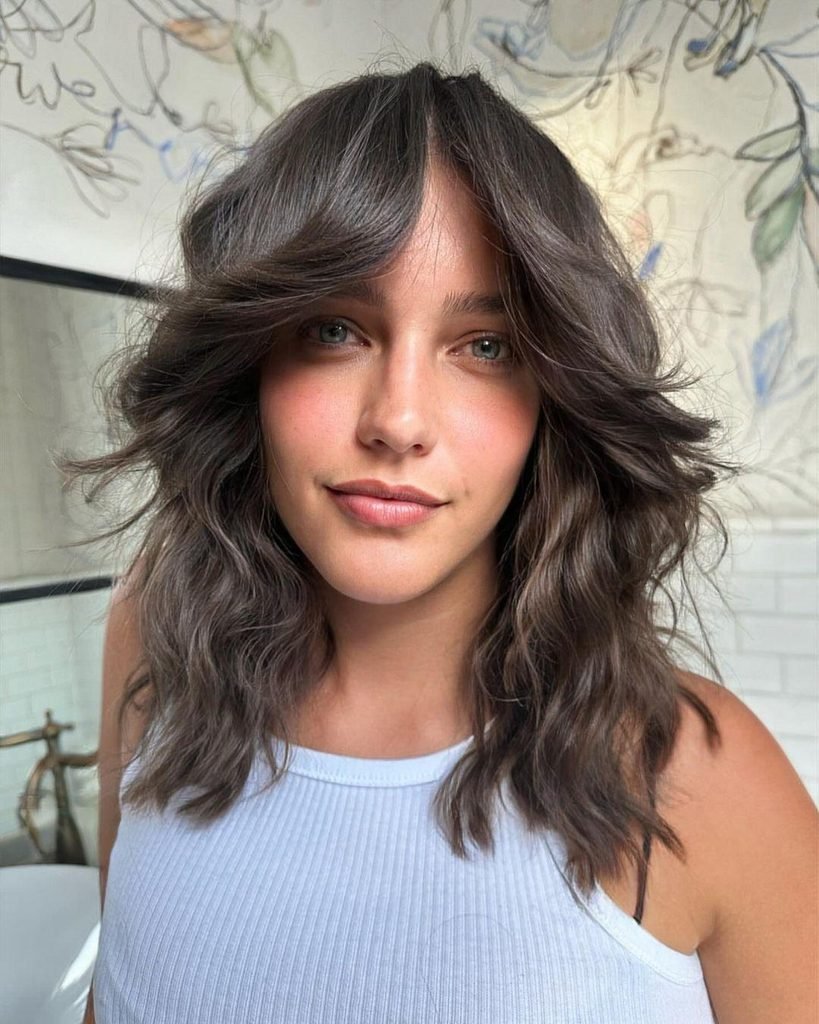
The classic wolf cut combines a voluminous crown, choppy layers, face-framing pieces and a longer, textured back. It captures the signature balance between a shag and a mullet without leaning too heavily toward either style.
This is a strong starting point if you want the recognizable wolf-cut silhouette. Bring your hairstylist a reference image showing the amount of layering you prefer, because the term can mean different things to different stylists.
Best for: Medium to thick hair, especially naturally wavy textures.
2. Soft Wolf Cut
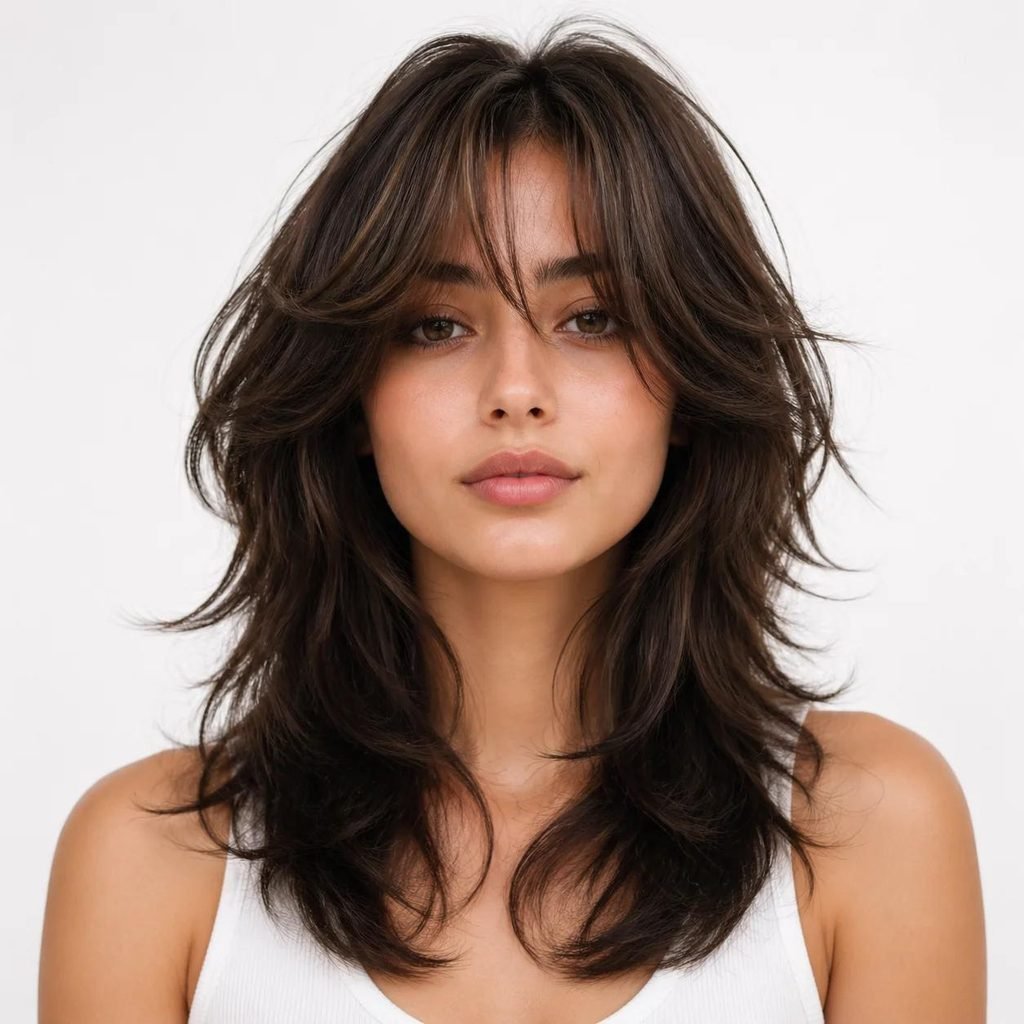
A soft wolf cut uses gentler transitions and less dramatic separation between the layers. The crown has movement, but the overall outline remains more blended than an edgy, heavily chopped version.
It is a good option if you like the trend but want something that works with everyday outfits, professional settings and different styling choices.
Ask for soft layering and face-framing pieces rather than an exaggerated mullet shape.
Best for: First-time wolf-cut wearers and anyone who prefers a more understated finish.
3. Short Wolf Cut
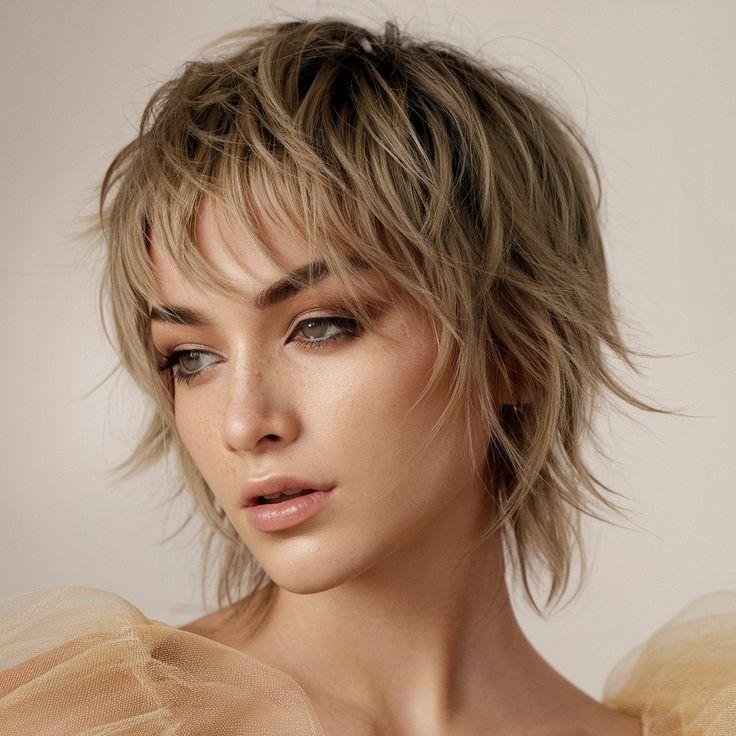
A short wolf cut brings the texture of the trend into a bob-length or jaw-length haircut. Shorter layers create lift around the crown, while wispy ends keep the shape from looking too structured.
The result can feel playful, modern and slightly rebellious without requiring long hair.
Because the silhouette depends on careful shaping, ask your stylist how the cut will look from the front, sides and back before deciding how short to go.
Best for: Women who want a noticeable change without maintaining long lengths.
4. Long Wolf Cut
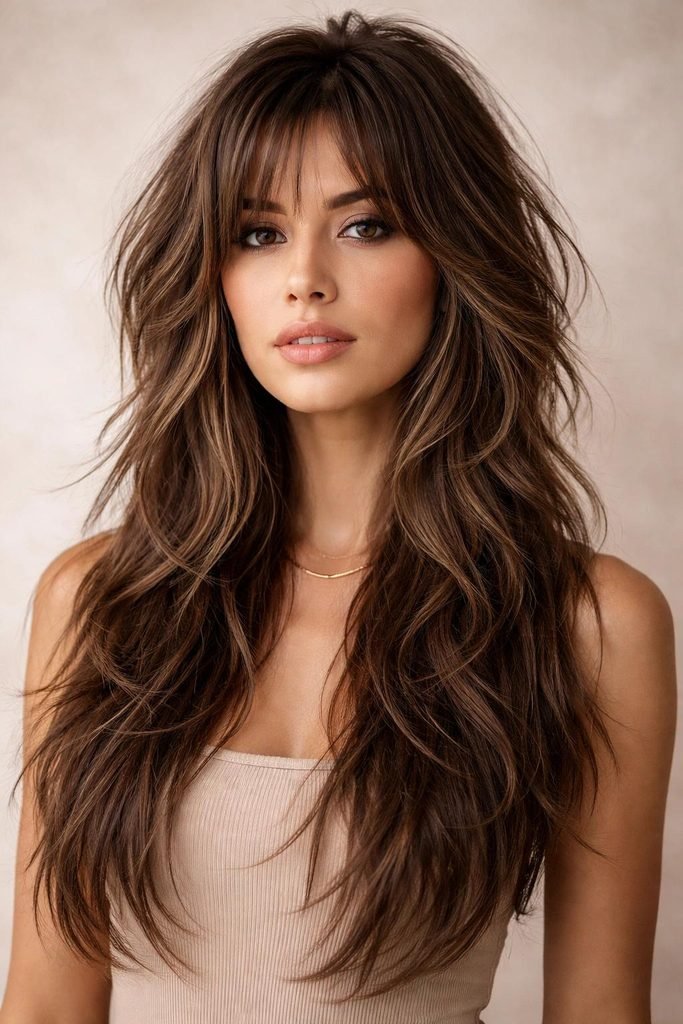
A long wolf cut preserves length while introducing shorter layers around the crown and face. The result is a more dramatic shape with movement through the upper sections and flowing ends.
This version is useful if you enjoy long hair but find one-length styles too flat or heavy.
Ask for a plan that preserves enough length through the bottom. Excessive layering can make the ends look thinner than intended, particularly if your hair is already fine.
Best for: Medium to thick hair and anyone who wants movement without losing substantial length.
5. Wolf Cut With Curtain Bangs
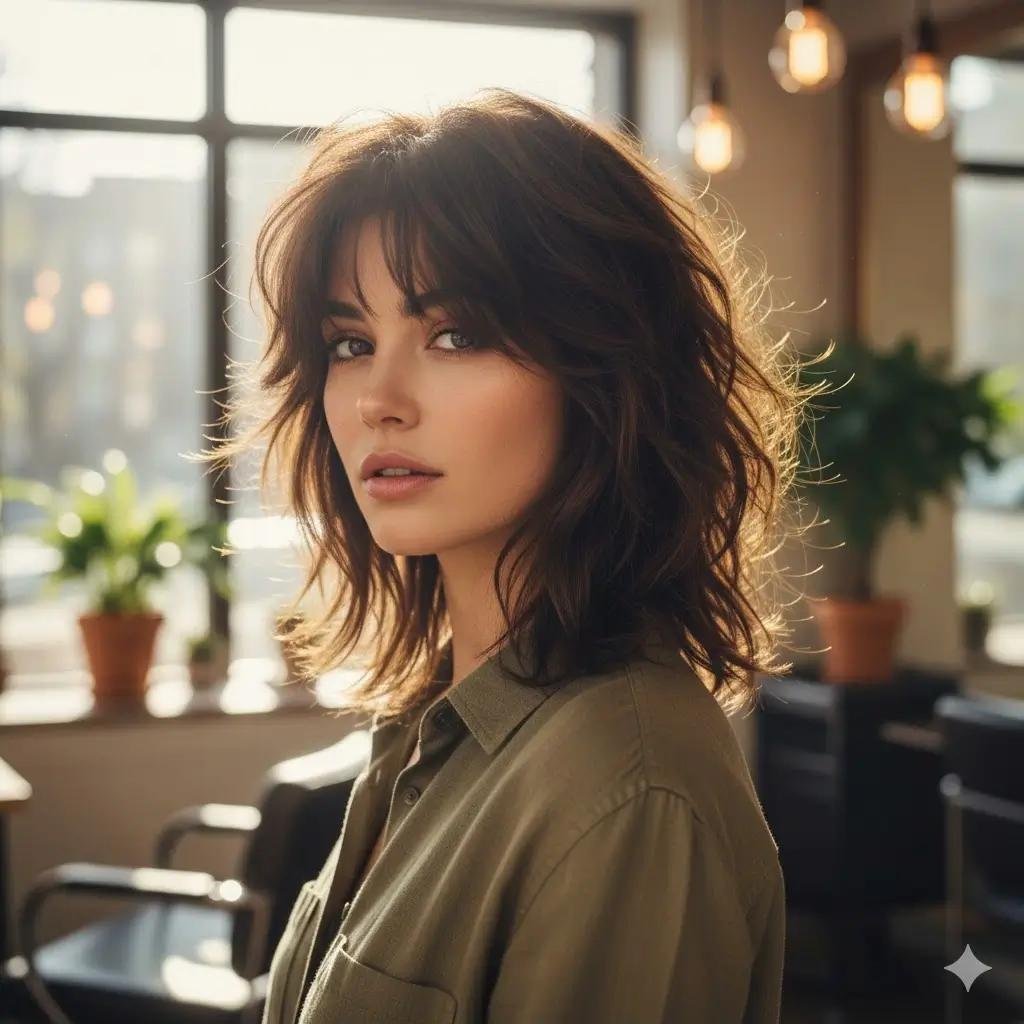
Curtain bangs are a natural partner for the wolf cut because they connect the fringe with the shorter layers around the face.
They can be parted in the middle, swept to either side or styled with a little lift at the roots. This creates a softer frame around the forehead and cheekbones.
Ask for bangs that blend into the surrounding layers rather than a separate, heavy fringe if you want an effortless finish.
Best for: Anyone who wants face-framing detail without a full straight-across fringe.
6. Wolf Cut With Wispy Bangs
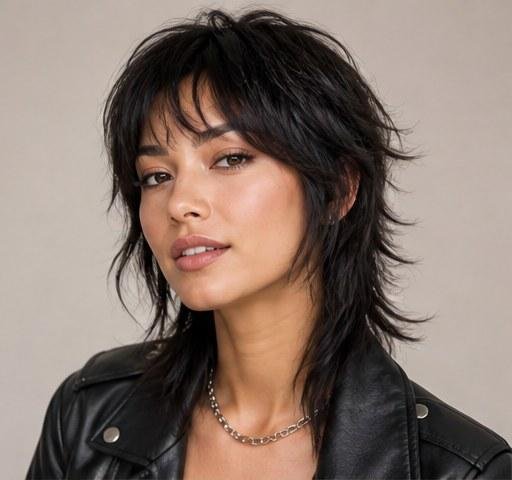
Wispy bangs give a wolf cut a lighter, more delicate appearance. Instead of a dense fringe, the hair is cut into fine pieces that allow some of the forehead to remain visible.
This can balance a heavily layered haircut and create a softer alternative to a dramatic full fringe.
Keep in mind that fringe length and density should be adjusted to your hair’s natural growth pattern and styling habits.
Best for: Women who want bangs without the visual weight of a thick fringe.
7. Wolf Cut With Full Bangs
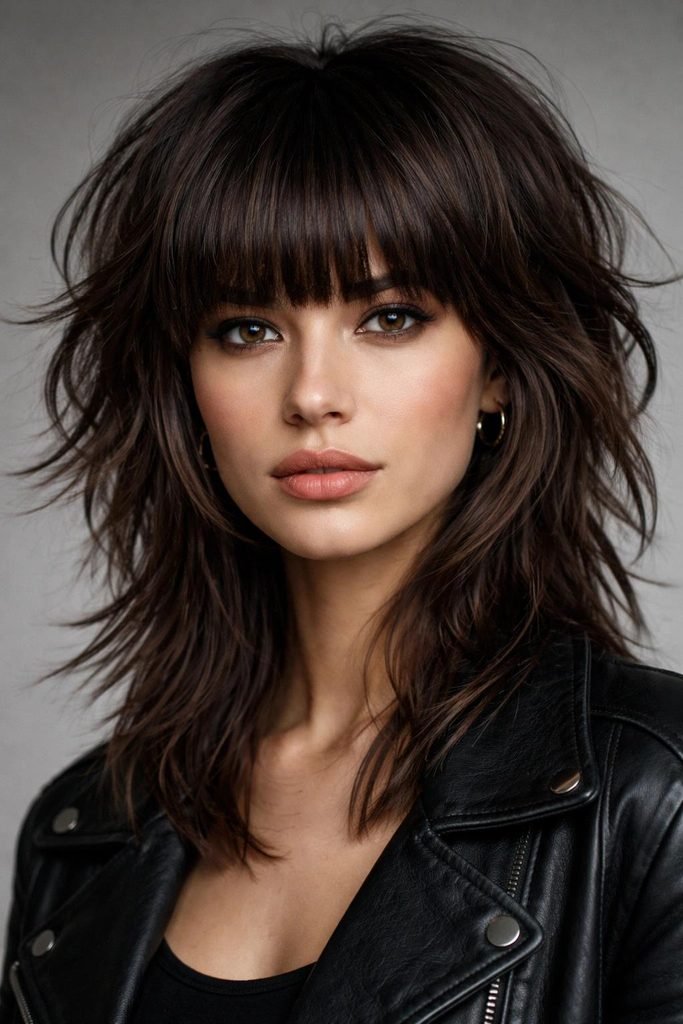
Full bangs create a stronger statement and make the wolf cut feel more editorial.
The contrast between a solid fringe and choppy layers can look especially striking with dark hair, bold makeup or vintage-inspired styling.
However, full bangs generally require more regular styling than wispy or curtain fringe. Consider how your hair behaves when exposed to humidity before choosing this version.
Best for: Anyone who enjoys a bold fringe and is comfortable maintaining it.
8. Curly Wolf Cut
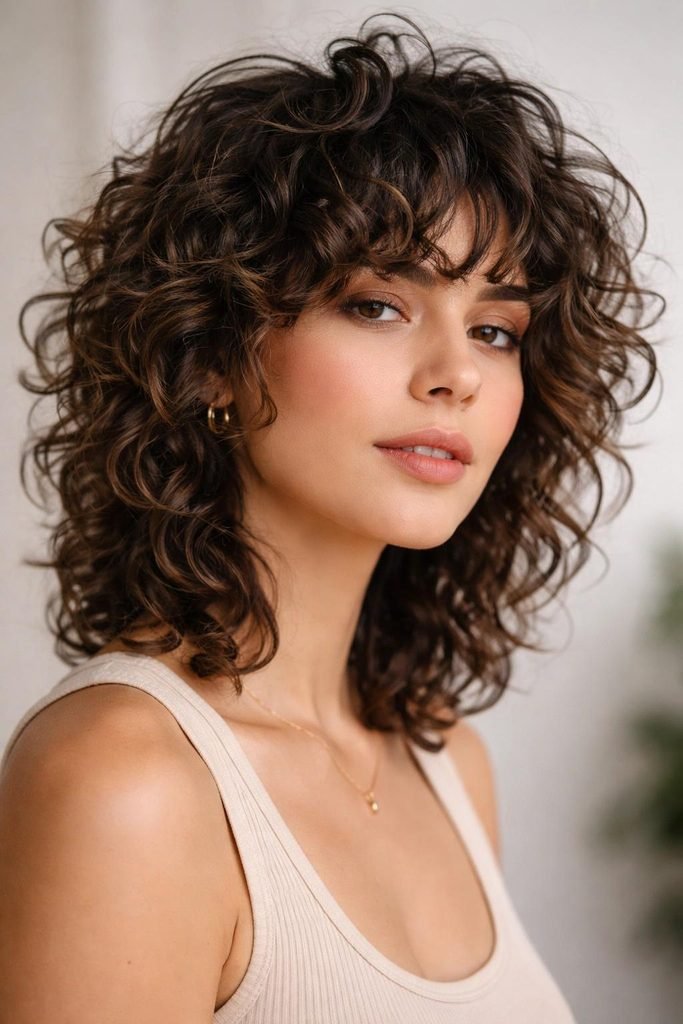
A curly wolf cut uses layers to give natural curls a more defined outline. The shorter sections can create lift at the crown, while longer layers help maintain length and shape.
The key is cutting for the way curls naturally shrink and spring upward. A stylist experienced with curly hair can help determine where layers should begin and how much weight to remove.
Do not choose a reference image based only on the hairstyle. Look for someone with a similar curl pattern and hair density.
Best for: Naturally curly hair when the layers are customized to the curl pattern.
9. Wavy Wolf Cut

Loose waves complement the wolf cut because they naturally emphasize the separation between layers.
The hairstyle can look textured with minimal effort when the hair already has a gentle bend. A small amount of mousse or texturizing spray may help define the shape without making it stiff.
If your waves disappear easily, ask for a cut that works with your natural texture rather than relying on extensive heat styling.
Best for: Naturally wavy hair and anyone who prefers an undone finish.
10. Straight Hair Wolf Cut
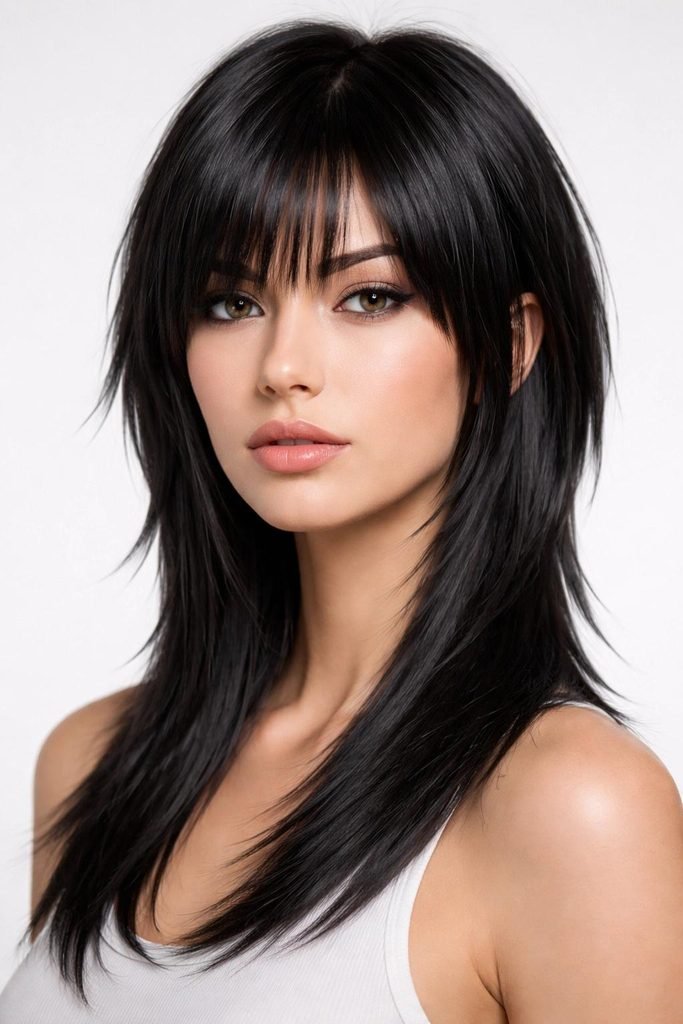
Straight hair can show the shape of a wolf cut particularly clearly, making the placement of each layer important.
Without natural waves, heavily separated layers may appear more obvious. A softer version can create movement while retaining a relatively smooth finish.
A round brush, blow-dryer or styling tool can help create flicked ends, but the haircut should still look balanced when worn naturally.
Best for: Straight hair when the layering is designed for its density and natural fall.
11. Wolf Cut for Thick Hair
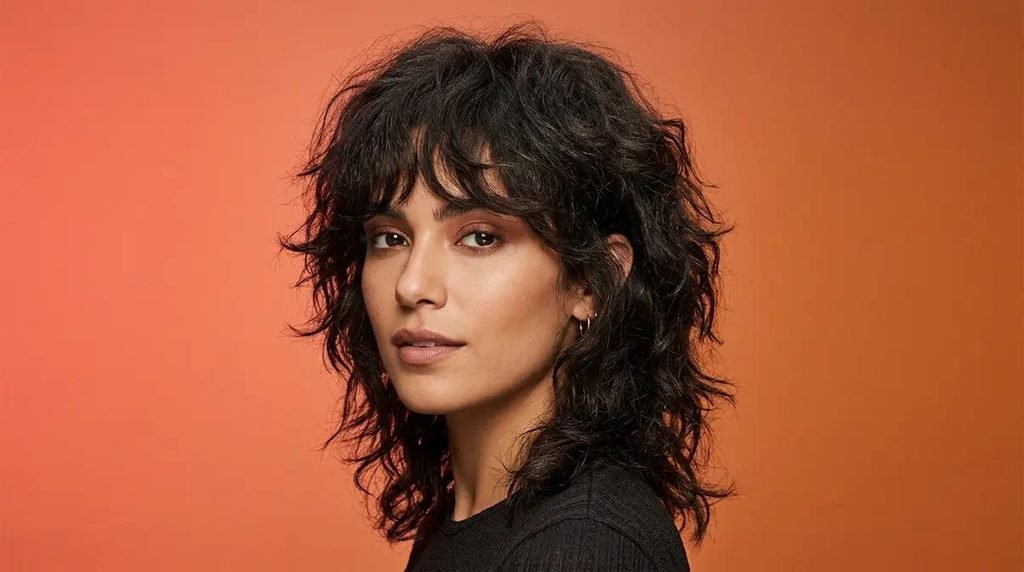
Thick hair can support a dramatic wolf cut because it often has enough density to show off multiple layers.
Strategic shaping can reduce a heavy outline and create movement through the crown, sides and ends.
The important distinction is between removing weight and removing too much density. Ask your stylist how the cut will affect the fullness of your ends before agreeing to aggressive thinning.
Best for: Thick hair that needs shape and movement.
12. Wolf Cut for Fine Hair
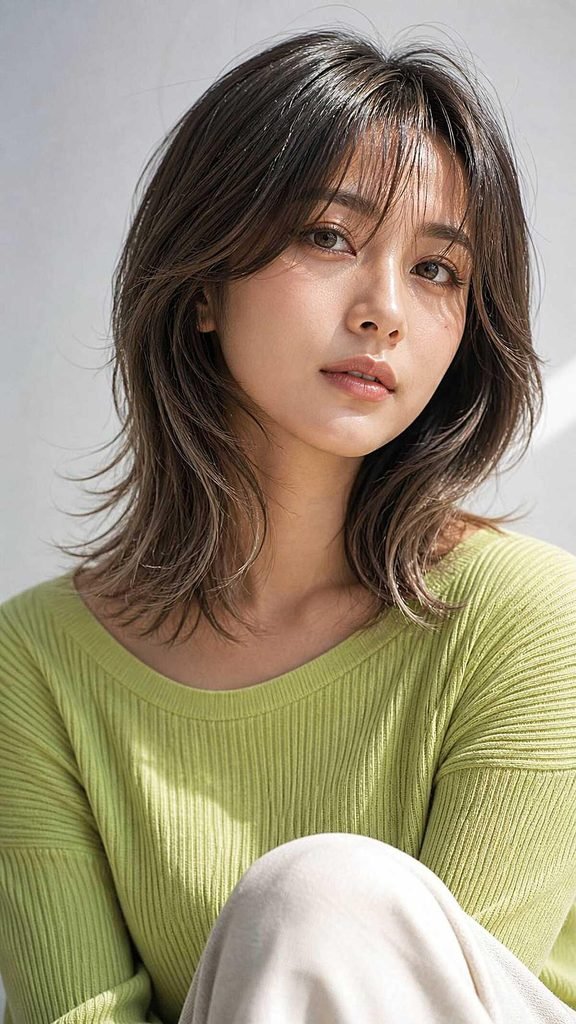
A wolf cut can work on fine hair, but it usually benefits from a more restrained approach.
Too many short layers can make the ends look sparse, while a carefully shaped cut can add visual movement and lift around the crown.
Ask for a soft wolf cut that preserves density through the bottom. Lightweight styling products can help create texture without weighing the hair down.
Best for: Fine hair when the cut is designed to preserve fullness.
13. Medium-Length Wolf Cut
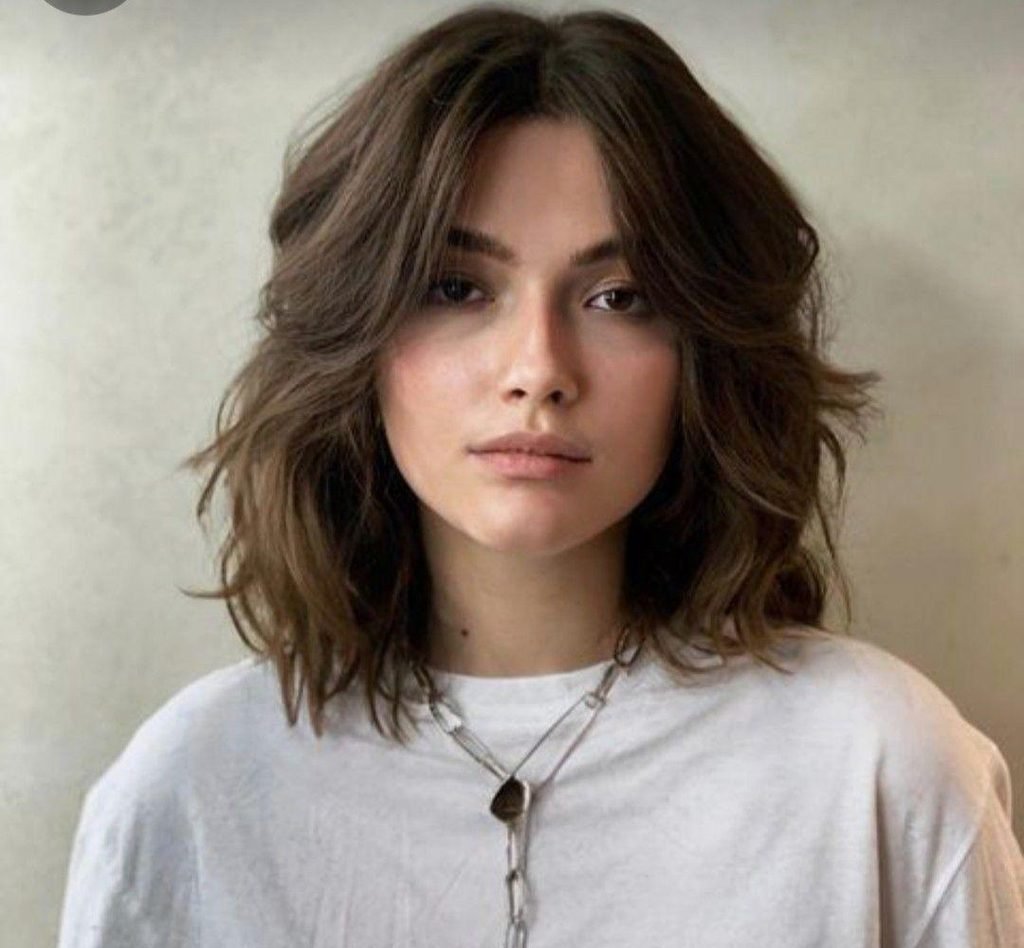
Medium-length hair offers a useful balance between the dramatic layering of a long wolf cut and the lighter shape of a short version.
The length gives the stylist room to create face-framing pieces and movement while keeping the haircut relatively easy to manage.
It can also be adapted to several finishes, from soft waves to a messier, more textured look.
Best for: Women who want a versatile haircut without going very short or keeping very long hair.
14. Shoulder-Length Wolf Cut
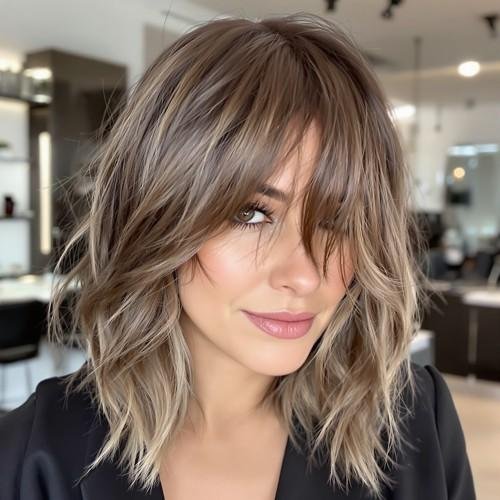
A shoulder-length wolf cut is a wearable option for anyone who wants a clear shape without sacrificing too much length.
Layers around the crown add movement, while the shoulder-length perimeter keeps the style practical for tying back or changing the finish.
This length can also be a good starting point if you are transitioning from a one-length haircut.
Best for: Everyday wear, medium-density hair and people who want a manageable length.
15. Wolf Cut Bob
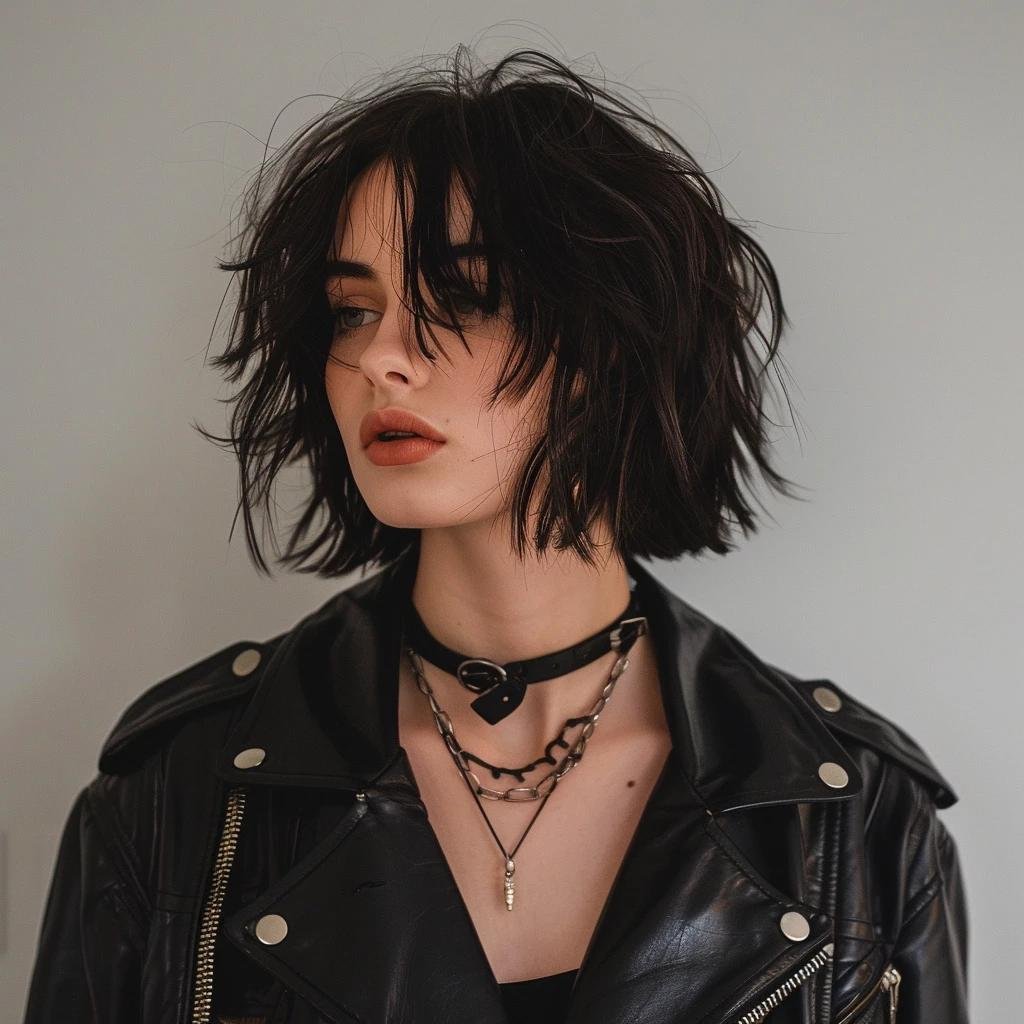
The wolf cut bob combines the compact outline of a bob with the texture of a shag.
Rather than a perfectly blunt finish, it features movement around the crown and softer, irregular ends. The result can look more relaxed than a traditional bob.
Show your stylist how much length you want to retain around the nape, because that detail can change the overall shape considerably.
Best for: Anyone who likes short hair but wants more texture than a classic bob.
16. Shaggy Wolf Cut
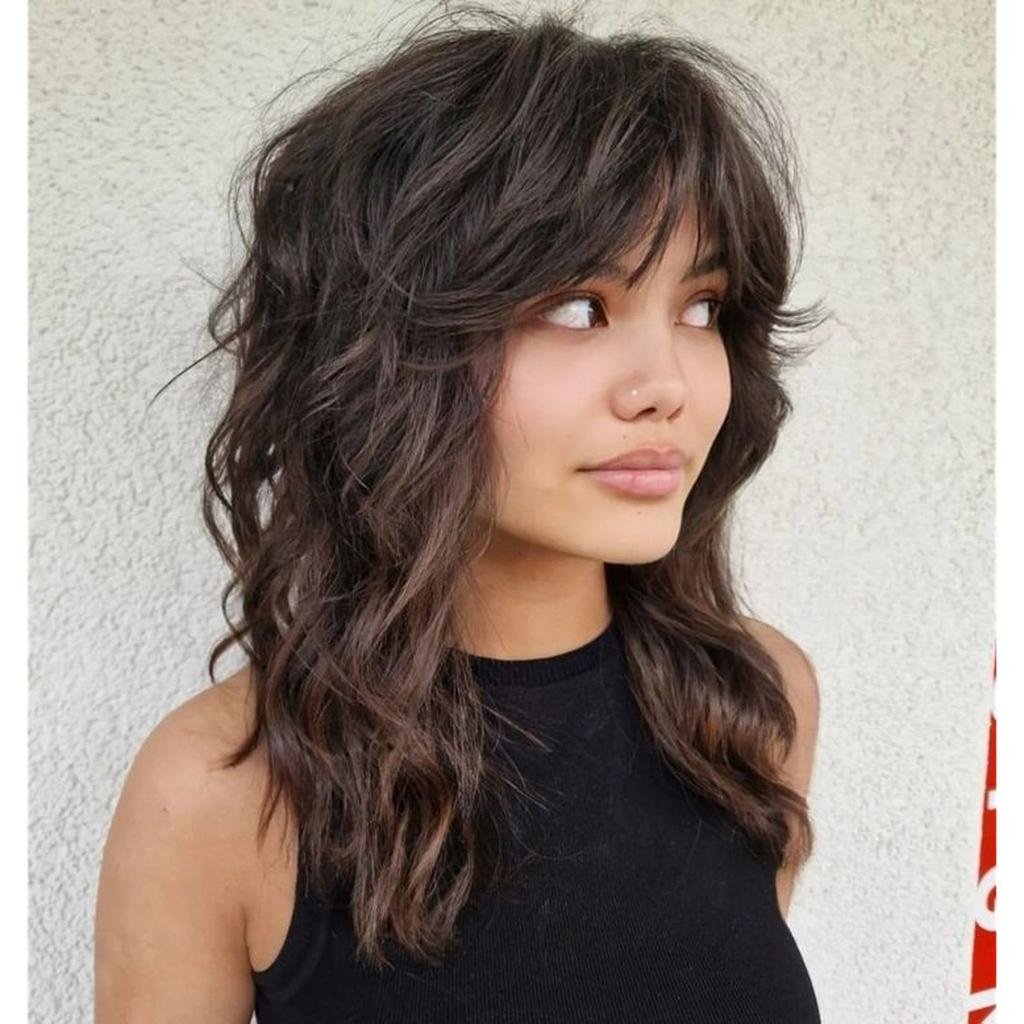
The shaggy wolf cut leans into the haircut’s retro roots with visible layers, a textured fringe and an intentionally undone finish.
It works particularly well when the hair has enough natural movement to show the different sections without extensive styling.
For a softer version, ask for blended layers. For a stronger statement, discuss more separation between the crown and the longer back sections.
Best for: Women who enjoy vintage-inspired or alternative fashion.
17. Korean-Inspired Wolf Cut
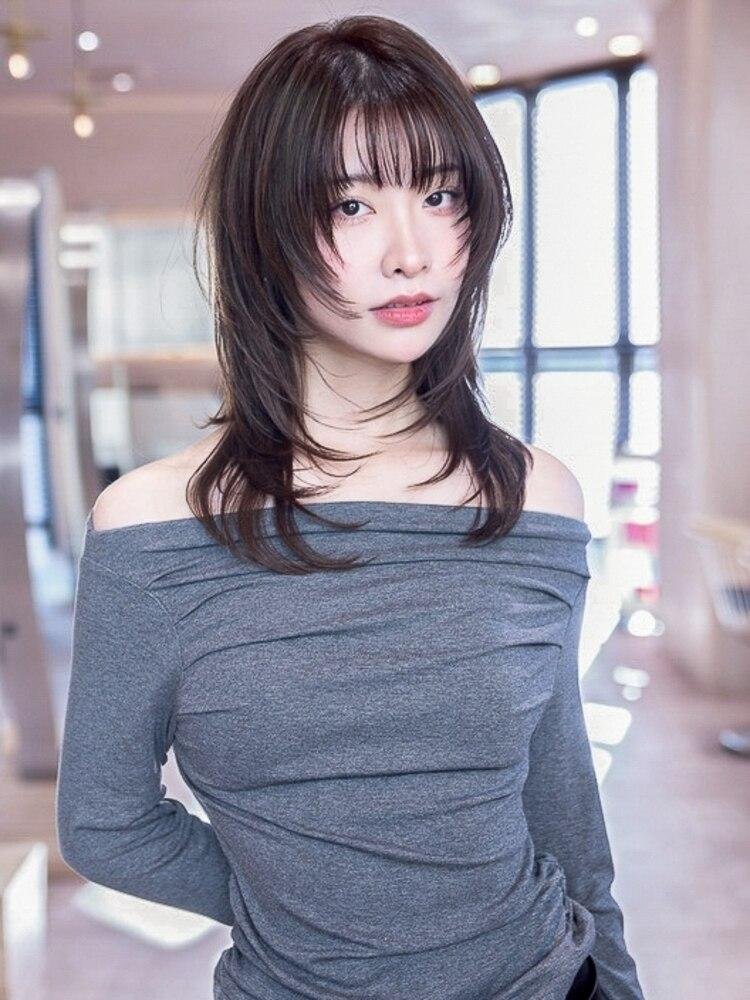
A Korean-inspired wolf cut often emphasizes a softer silhouette, airy fringe and face-framing layers.
Compared with more dramatic interpretations, this version can look more blended around the sides and less pronounced at the back.
The exact finish varies, so bring a reference image that reflects the amount of volume and fringe you want rather than relying on the label alone.
Best for: Anyone who prefers a softer, polished interpretation of the trend.
18. Alternative or Punk Wolf Cut
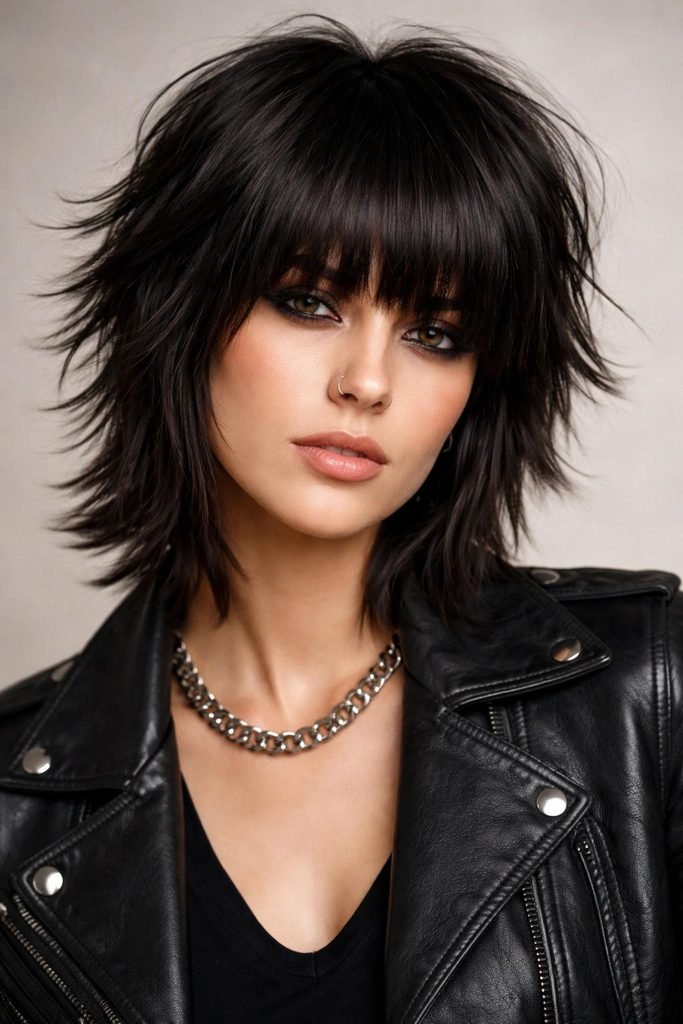
For a more dramatic look, an alternative wolf cut can feature stronger disconnection, shorter crown layers, a more pronounced fringe or deliberately uneven-looking texture.
It pairs naturally with punk, grunge and alternative styling, although the haircut itself can be adapted to different clothing aesthetics.
Before going for a highly dramatic version, discuss how it will grow out and whether you are comfortable with the maintenance involved.
Best for: Women who want their haircut to make a strong visual statement.
19. Blonde Wolf Cut
Blonde hair can highlight the movement of a wolf cut because lighter sections may make the individual layers more visible.
The effect depends on the shade and finish. A single blonde tone can look soft and understated, while highlights can emphasize the textured shape.
If you are planning a major colour change as well as a haircut, discuss the condition of your hair with your stylist before adding chemical services.
Best for: Anyone who wants the layers to stand out through colour and texture.
20. Brunette Wolf Cut
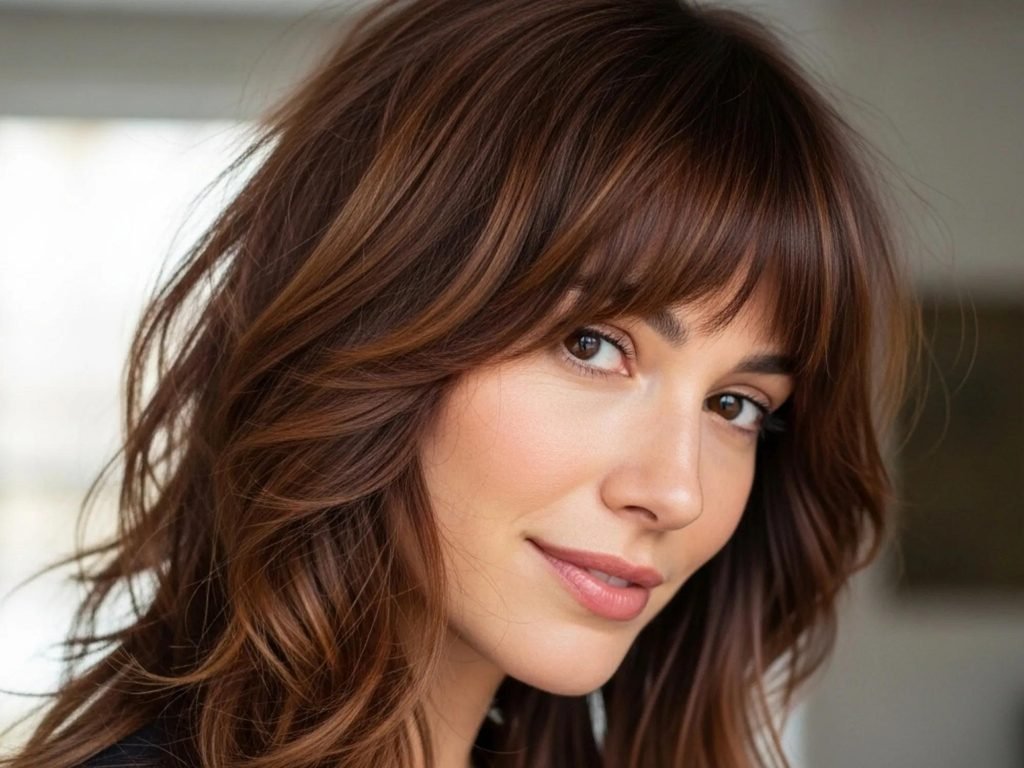
A brunette wolf cut can create a polished, dimensional look without needing a dramatic colour transformation.
The contrast between light and shadow across the layers may be especially visible when the hair has a glossy finish and the cut has been shaped carefully.
Subtle highlights are optional; the haircut can look equally effective with a single rich brown shade.
Best for: Women who prefer a classic colour with a modern haircut.
21. Wolf Cut With Highlights
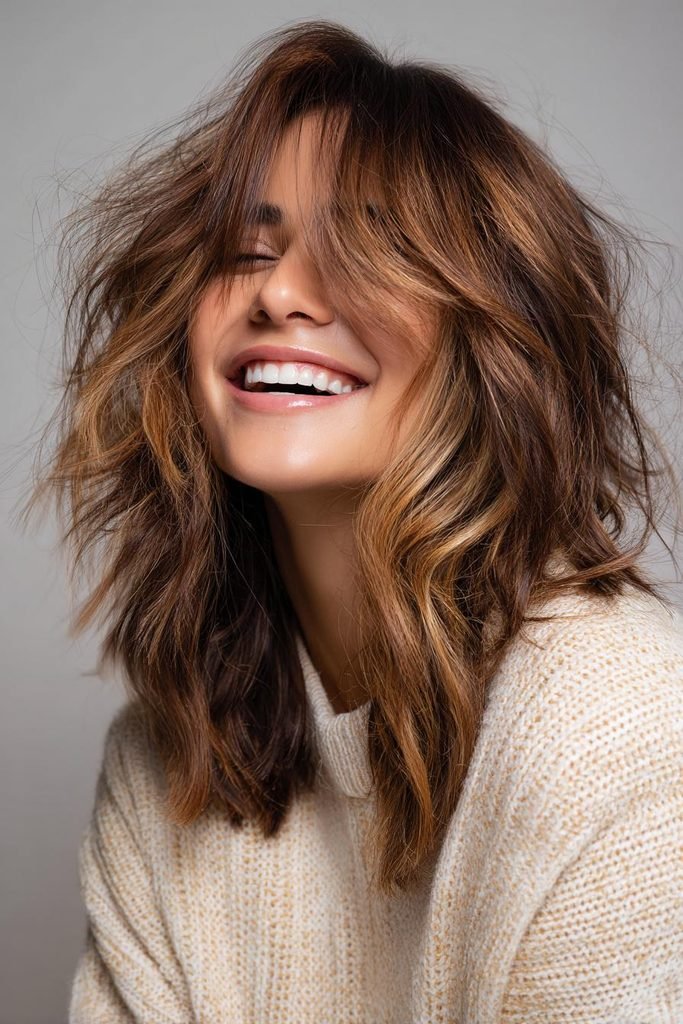
Highlights can emphasize the separation between layers and make the haircut appear more dimensional.
Caramel, honey, beige or cooler-toned highlights can each create a different effect depending on the base colour and desired contrast.
Colour placement should follow the haircut rather than compete with it. Face-framing highlights, for example, can draw attention to the fringe and front layers.
Best for: Anyone who wants extra dimension without changing their entire base colour.
22. Wolf Cut With Flipped Ends
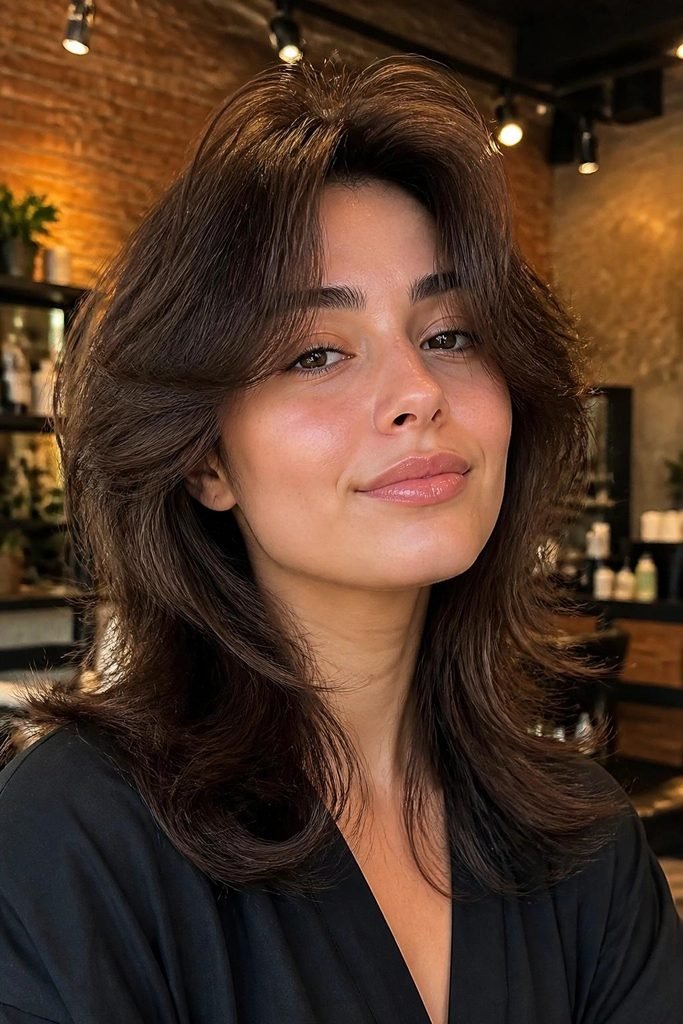
Flipped ends give a wolf cut a more deliberate, retro finish.
The ends can be turned outward with a round brush or styling tool, emphasizing the movement of the layers and creating a playful silhouette.
This style works especially well for people who enjoy a blowout, but it can require more styling than a naturally tousled version.
Best for: Anyone who enjoys retro-inspired styling and a more defined finish.
23. Voluminous Wolf Cut
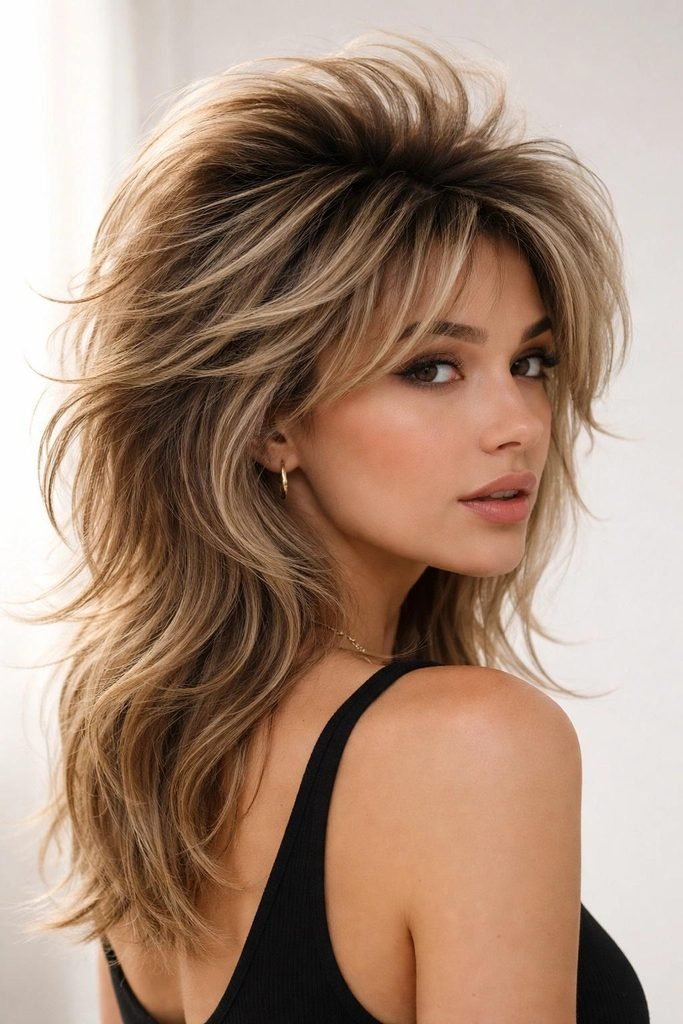
A voluminous wolf cut emphasizes lift at the crown and movement around the sides.
The shape can be enhanced with lightweight mousse, a round brush or a diffuser, depending on the hair’s natural texture.
If your hair is naturally dense, your stylist may need to balance the crown volume with the shape of the sides so the overall silhouette feels intentional.
Best for: Hair that can support extra volume without becoming difficult to manage.
24. Minimal-Styling Wolf Cu
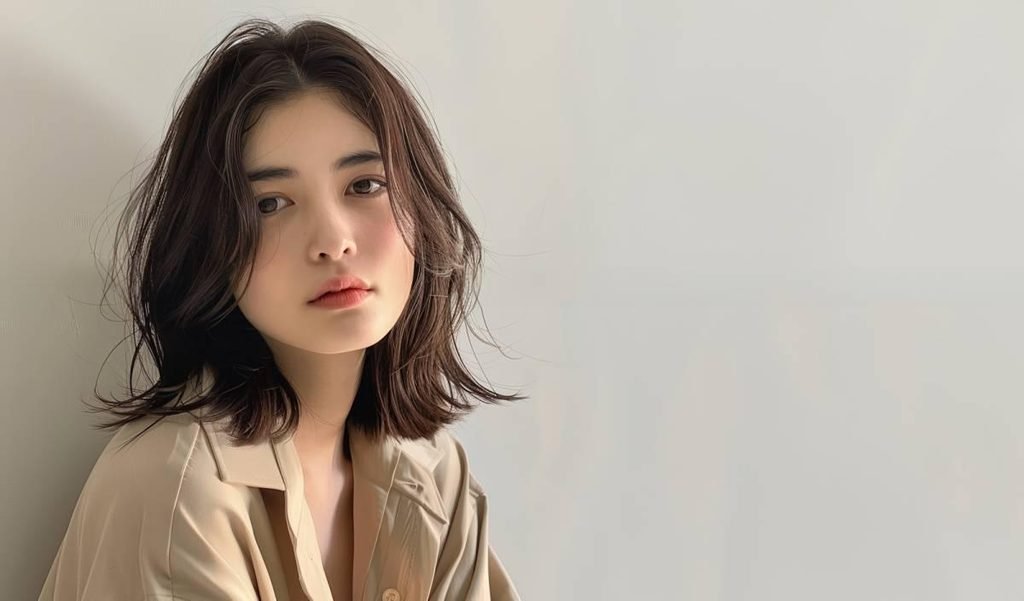
A minimal-styling wolf cut is designed around your natural texture rather than a perfect blowout.
The haircut should fall into a flattering shape with limited effort, although the result will depend on your hair type and the skill of the cut.
Use a lightweight styling product if needed, and ask your stylist to demonstrate how to recreate the finish at home before leaving the salon.
Best for: People who prefer a relaxed routine and do not want to style their hair every day.
25. Soft Glam Wolf Cut
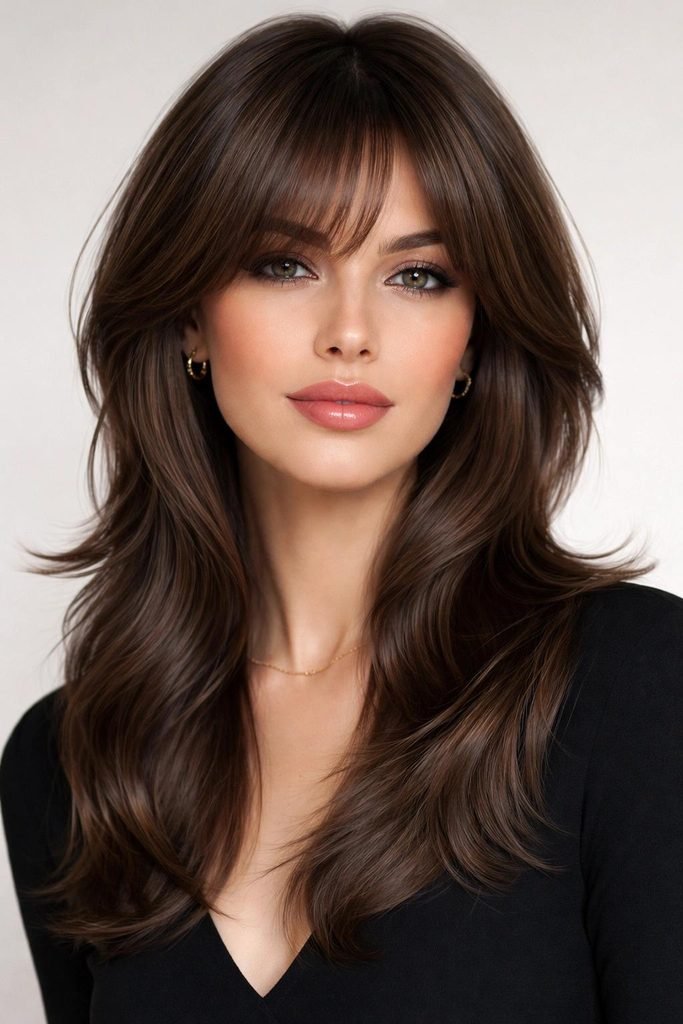
A soft glam wolf cut combines the layered structure of the haircut with smoother waves, polished ends and controlled volume.
It can be worn for celebrations, evening events or everyday occasions when you want a more refined finish.
The key is to preserve the movement of the layers while making the overall shape look intentional rather than overly messy.
Best for: Anyone who wants a versatile haircut that can move between casual and dressed-up styling.
Which Wolf Cut Is Best for Your Face Shape?
A wolf cut can be customized for different face shapes, but face shape is only one part of the decision. Hair density, natural texture, fringe preferences and the amount of volume you want also influence the result.
Wolf Cut for a Round Face
Longer face-framing layers and volume near the crown can create a more elongated-looking silhouette. If you prefer bangs, consider curtain bangs that blend into the sides rather than a very wide, heavy fringe.
You do not need to avoid short hair altogether. The placement of the layers matters more than simply choosing a longer haircut.
Wolf Cut for an Oval Face
Oval faces can generally accommodate a wide range of wolf cut variations. You can experiment with short or long lengths, curtain bangs, wispy fringe and stronger crown layers.
Choose the version that suits your hair texture and personal style rather than feeling limited to one particular shape.
Wolf Cut for a Square Face
Soft, textured layers around the sides can complement a more angular jawline. Wispy bangs or curtain bangs may also create a gentle transition between the forehead and the sides of the haircut.
If you want a softer effect, ask your stylist to avoid placing excessive bulk directly at the widest part of your jaw.
Wolf Cut for a Heart-Shaped Face
A heart-shaped face often has a wider forehead and a narrower chin. Face-framing layers and a suitable fringe can help balance the overall silhouette.
Discuss where the layers should begin, particularly if you want to avoid too much volume around the forehead.
Wolf Cut for a Long Face
A fringe, curtain bangs or softer volume around the sides can create a more balanced-looking shape. A very high crown combined with long, narrow side sections may emphasize facial length, so discuss the proportions with your stylist.
Professional hairstyle guidance generally recommends adjusting the cut to the individual rather than relying on a fixed rule for each face shape.
Which Hair Types Work Best With a Wolf Cut?
The wolf cut can be adapted to many textures, but the result will differ depending on how the hair naturally falls.
| Hair type | What to consider |
|---|---|
| Straight hair | Softer layers may help prevent the ends from looking too thin or disconnected. |
| Wavy hair | Natural movement can emphasize the layered shape with relatively little styling. |
| Curly hair | Layers should account for curl shrinkage and the way curls spring upward. |
| Fine hair | Preserve density through the ends and avoid excessive layering. |
| Thick hair | Strategic layering can create movement and reduce a heavy outline. |
| Very textured hair | Work with a stylist experienced in your specific curl pattern and density. |
L’Oréal Paris describes the wolf cut as adaptable across different lengths and textures, while professional styling guidance emphasizes adjusting the layers to the hair’s natural characteristics.
How to Style a Wolf Cut at Home
One of the advantages of a wolf cut is that it does not always need a perfectly polished finish. A little texture and movement are part of its character.
Step 1: Start With Damp Hair
After washing, gently remove excess water with a towel. Avoid rough rubbing, particularly if your hair is curly or prone to frizz.
Step 2: Apply a Suitable Styling Product
Choose a lightweight product based on your hair type.
- Fine hair may benefit from a light volumizing mousse.
- Wavy hair may respond well to a texturizing spray.
- Curly hair may need a curl cream or leave-in conditioner.
- Thick hair may benefit from a lightweight styling balm.
Start with a small amount to avoid making the hair feel heavy.
Step 3: Create Volume at the Crown
Use a blow-dryer and round brush if you want a lifted finish. For a more natural look, use your fingers to lift the roots while drying.
If your hair is curly or wavy, a diffuser can help retain its natural pattern.
Step 4: Define the Layers
Use your fingers to separate the layers and encourage their natural movement. A curling wand or straightener can create subtle bends or flipped ends, but heat styling is optional.
Step 5: Finish Lightly
A small amount of texturizing product can help define the ends. Finish with a light-hold hairspray if you need extra control.
The goal is to enhance the haircut’s natural shape rather than make every strand sit perfectly. Styling guidance from Dyson also recommends working with the wolf cut’s texture, volume and deliberately relaxed finish.
How to Maintain a Wolf Cut
Wolf cuts can be relatively relaxed hairstyles, but their shape still changes as the hair grows.
Your maintenance routine will depend on the length, fringe and amount of layering.
Keep your fringe in shape. Bangs may need trimming more frequently than the rest of the haircut.
Protect your hair’s condition. Conditioner and appropriate styling products can help maintain softness, especially if you use heat tools.
Avoid unnecessary thinning. If your ends are already fine, excessive thinning can make them appear even less full.
Discuss your trim schedule. Ask your stylist when the crown layers, fringe and perimeter are likely to need reshaping. There is no single schedule that suits everyone.
Bring reference photos to appointments. A picture of the exact silhouette you like can help your stylist understand how much volume, length and texture you want.
What to Ask Your Hairstylist Before Getting a Wolf Cut
Before committing to the haircut, discuss the practical details.
Ask these questions during your consultation:
- Will this wolf cut work with my natural hair texture?
- How much length will I lose?
- How short will the crown layers be?
- Will the ends still look full?
- Which type of bangs would suit the shape I want?
- How much daily styling will this cut require?
- Will it work if I air-dry my hair?
- How will it look as it grows out?
- Can we start with a softer version and add more layers later?
It is also helpful to bring two reference images: one showing what you like and another showing a result you want to avoid.
This gives the stylist a clearer idea of your preferences and helps prevent misunderstandings about what the term wolf cut means.
Is a Wolf Cut High-Maintenance?
Not necessarily.
A softer wolf cut that works with your natural texture may need relatively little styling. A dramatic version with short crown layers, a full fringe or a highly defined silhouette may require more effort to maintain its intended shape.
Your routine will depend on:
- How your hair dries naturally
- Whether you have bangs
- How much volume you want
- Whether you use heat tools
- How quickly your hair grows
- How precise you want the shape to remain
If you prefer to wash your hair and let it air-dry, tell your stylist before the cut. The haircut should be designed around your real routine, not just how it looks after a professional blowout.
Is the Wolf Cut Still in Style in 2026?
Yes. The wolf cut remains a visible hairstyle trend in 2026, with beauty publications highlighting both shorter versions and more adaptable, wearable interpretations.
The current appeal is not limited to one exact haircut. It includes softer layers, short wolf-cut bobs, natural curls, curtain bangs and more dramatic, retro-inspired shapes.
That variety makes the style easier to personalize. Rather than copying a celebrity’s haircut exactly, you can choose the elements you like and adapt them to your own hair.
Wolf Cut vs. Shag vs. Mullet: What’s the Difference?
These hairstyles share some features, but their overall shapes are different.
| Hairstyle | Main characteristics | Overall effect |
|---|---|---|
| Wolf cut | Choppy crown layers, face-framing pieces and a longer, textured back | Edgy, voluminous and undone |
| Shag | Layers distributed throughout the hair with a generally softer outline | Relaxed, textured and often feathered |
| Mullet | A more pronounced contrast between shorter hair at the front and sides and longer hair at the back | Bold and strongly defined |
The boundaries are not strict. A wolf cut can look closer to a shag or a mullet depending on how the stylist shapes the layers.
Frequently Asked Questions About Wolf Cuts for Women
What is the best wolf cut for women?
The best version depends on your hair texture, desired length and personal style. A soft wolf cut is a useful starting point for beginners, while a classic or shaggy wolf cut offers a more dramatic layered shape.
Does a wolf cut suit thin hair?
It can, but the layering needs to be carefully planned. Too many short layers can make fine hair look less dense, so ask your stylist to preserve fullness through the ends.
Is a wolf cut good for curly hair?
Yes, a wolf cut can work beautifully with curls when the stylist accounts for curl pattern, shrinkage and natural volume. Choose someone experienced in cutting curly hair.
Can women with straight hair get a wolf cut?
Yes. Straight hair can show the shape of the layers clearly. A softer cut may be preferable if you want movement without a heavily separated appearance.
Does a wolf cut require daily styling?
Not always. A version designed around your natural texture may need minimal styling, while dramatic layers or bangs can require more attention.
What is the difference between a wolf cut and a shag?
A shag generally has a softer, more evenly distributed layered shape. A wolf cut often has more pronounced crown volume and a stronger contrast between the upper layers and longer back sections.
Can I get a wolf cut without bangs?
Yes. A wolf cut does not require bangs. You can choose a fringe-free version with longer face-framing layers for a more open appearance.
Is a short wolf cut a good choice for women?
A short wolf cut is a strong option if you want a textured, modern haircut without keeping long hair. Ask your stylist to explain how the shape will sit around the ears, jaw and nape.
How do I explain a wolf cut to my hairstylist?
Bring reference photographs and explain the length, crown volume, fringe and level of layering you want. Mention how much time you are willing to spend styling your hair.
Can I get a wolf cut while keeping my hair long?
Yes. A long wolf cut adds layers and movement while retaining length through the bottom. Ask your stylist to show you how much length will remain before cutting.
Final Thoughts
The wolf cut for women offers a refreshing alternative to traditional, evenly layered hairstyles. Its combination of shaggy texture, crown volume and longer, feathered sections creates a shape that can feel soft, rebellious, polished or playful depending on how it is cut and styled.
The secret is choosing a version that works with your natural hair rather than fighting against it. Fine hair may need gentler layering, thick hair may benefit from carefully distributed weight, and curls need a shape that respects their natural movement.
Before your appointment, save a few reference photos, think about your daily routine and discuss the amount of length you are comfortable losing.
The best wolf cut is not simply the trendiest one. It is the version that makes your hair feel more like you.