
- How Do Credit Cards Work?
- Types of Credit Cards in the UK
- How Much Can I Spend with a Credit Card?
- Pros and Cons of Using Credit Cards
- How a Credit Card Can Build Better Credit
- How Does a Credit Card Protect You?
- Debit Card vs Credit Card: Key Differences
- How to Apply for a Credit Card in the UK
- Common Mistakes to Avoid with Credit Cards
- Is a Credit Card Worth It for UK Users?
- Key Factors to Consider Before Choosing a Credit Card
- Real UK-Based Examples
- Internal Linking Suggestions
- 💳 Credit cards (UK) – your questions answered
credit card is a financial product issued by banks, building societies, and other UK lenders that allows you to borrow money up to a set limit to make purchases, pay bills, or withdraw cash. Unlike debit cards, which use funds directly from your bank account, credit cards let you borrow first and repay later, usually with an option to pay in full each month to avoid interest.
In the United Kingdom, credit cards are regulated by the Financial Conduct Authority (FCA) and authorised by the Prudential Regulation Authority (PRA). These rules ensure transparency, responsible lending, and consumer protection. Credit cards are widely used for everyday shopping, online payments, and financial flexibility. When used responsibly, they can also help you build a positive credit history and access rewards or cashback benefits.
How Do Credit Cards Work?
Credit cards operate by providing a revolving line of credit, allowing you to borrow up to an agreed limit. Here’s how they function in the UK:
Making Purchases and Borrowing
When you use a credit card, the lender pays the merchant on your behalf. You are then obliged to repay the amount, either in full or over time. Purchases can be made in-store, online, or even abroad, usually in GBP but sometimes in foreign currencies (which may include conversion fees).
Monthly Billing and Payments
Credit card issuers send monthly statements summarising your transactions, outstanding balance, minimum payment, and any interest due. You can repay the full balance to avoid interest charges or make minimum payments to keep the account in good standing.
Interest and Fees
Interest is applied to balances that are not paid in full each month. Rates in the UK vary widely depending on card type, creditworthiness, and lender. Common fees include late payment charges, cash withdrawal fees, and annual charges for premium cards.
Interest-Free Period Explained
Most UK credit cards offer a grace period (usually 20–56 days) where purchases do not accrue interest if the balance is paid in full by the statement due date. This allows short-term borrowing without additional costs.
Types of Credit Cards in the UK
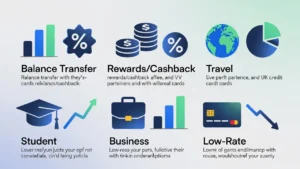
Different credit cards are designed for various needs. The main types include:
Standard Credit Cards
Basic cards with no-frills benefits, typically with standard APRs and minimal fees.
Rewards and Cashback Cards
These offer cashback or points for spending, which can be redeemed for travel, shopping, or statement credits.
Balance Transfer Credit Cards
Allow you to transfer an existing balance from another card, often at 0% interest for an introductory period, helping to reduce interest payments.
Premium Credit Cards
Provide additional perks such as travel insurance, concierge services, or higher rewards rates, often with annual fees.
Secured or Student Credit Cards
Designed for individuals with limited or no credit history. A security deposit may be required to set the credit limit.
How Much Can I Spend with a Credit Card?
Credit Limit Explained
The credit limit is the maximum amount you can borrow at any time. It is set by the lender based on your income, credit history, and affordability.
Factors That Affect Your Limit
- Credit score and history
- Income and employment status
- Existing debt obligations
- Type of credit card
Responsible Spending Tips
- Track your expenses regularly
- Avoid maxing out your limit
- Keep a buffer to cover unexpected charges
Pros and Cons of Using Credit Cards
| Pros | Cons |
|---|---|
| Convenient for in-store and online purchases | High interest if balances are carried |
| Helps build credit history when used responsibly | Late payment fees and penalties |
| Access to rewards, cashback, or travel benefits | Potential for overspending and debt |
| Flexible short-term borrowing | Some cards have annual fees |
How a Credit Card Can Build Better Credit
Importance of Credit History
Regular use of a credit card, with timely repayments, helps establish a positive credit record.
Making Timely Payments
Paying at least the minimum each month avoids penalties and interest while supporting your credit score.
Using Credit Responsibly
Keeping balances low relative to your limit, avoiding excessive applications, and making payments on time improve creditworthiness over time.
How Does a Credit Card Protect You?
Fraud Protection
UK credit cards are protected under FCA regulations. Unauthorised transactions are usually covered if reported promptly.
Consumer Rights (FCA Rules, Chargeback Process)
The chargeback process allows consumers to reclaim money if goods or services are not delivered or are faulty. This adds an extra layer of protection compared to cash or debit payments.
Debit Card vs Credit Card: Key Differences
Spending Money You Have vs Borrowing
Debit cards draw directly from your bank account, while credit cards allow short-term borrowing.
Fees and Interest
Debit cards rarely incur fees, but credit cards may charge interest and other costs if balances are not paid.
Building Credit
Credit cards help establish and improve your credit history; debit cards do not affect credit scores.
How to Apply for a Credit Card in the UK
Eligibility Criteria
- Be 18 years or older
- UK resident with proof of income
- Satisfactory credit history
Documents Needed
- Proof of ID (passport or driving licence)
- Proof of address (utility bill or bank statement)
- Income verification (payslips or tax returns)
Steps to Apply
- Research suitable credit card options
- Check eligibility and fees
- Complete online or in-branch application
- Receive approval and credit limit notification
Special Cases (No Credit History / First-Time Applicants)
- Consider student cards or secured credit cards
- Some lenders may accept references from utility payments or bank accounts
Common Mistakes to Avoid with Credit Cards
- Only paying the minimum balance
- Overspending beyond your credit limit
- Ignoring interest-free periods
- Applying for multiple cards at once
Is a Credit Card Worth It for UK Users?
Credit cards can be highly beneficial when used responsibly. They are useful for:
- Building credit history
- Accessing short-term borrowing
- Earning rewards or cashback
However, they may not suit individuals who struggle with budgeting or carry high balances, as interest can accumulate quickly. Understanding costs, limits, and repayment schedules is key to making credit cards work in your favour.
Key Factors to Consider Before Choosing a Credit Card
- APR and fees
- Rewards and perks
- Credit limit
- Interest-free periods
- Lender reputation and FCA compliance
Real UK-Based Examples
Example 1: Cashback Card – Spend £400 per month at a supermarket and earn £5 cashback monthly.
Example 2: Balance Transfer Card – Transfer £3,000 from a high-interest card to a 0% APR card for 18 months, saving on interest.
Example 3: Student/First-Time Credit Card – Limited credit (£500–£1,000) to build credit history with small, manageable spending.
Internal Linking Suggestions
- UK credit card comparisons
- How to improve your credit score in the UK
- Balance transfer strategies
- Cashback and rewards guides
💳 Credit cards (UK) – your questions answered
Are credit cards safe in the UK?
Yes, they are protected by strong FCA regulations. UK credit cards include fraud protection, Section 75 for purchases (£100–£30,000), and secure payment standards (Strong Customer Authentication). You’re not liable for unauthorised transactions if reported promptly.
Can I have multiple credit cards?
Yes, you can hold several cards — many people use one for everyday spending and another for balance transfers or rewards. However, be disciplined: manage repayments in full each month to avoid interest and credit score damage. Multiple applications in a short time can temporarily lower your score.
Do all credit cards offer rewards?
No — rewards are not universal. Many cards focus on low interest, 0% purchase periods, or helping to build credit. Rewards cards (cashback, points, air miles) often charge higher interest or annual fees. Choose based on your spending habits and whether you clear the balance monthly.
How does a credit card affect my credit score?
Used responsibly, it builds your credit history. Key factors: paying on time (each month), keeping credit utilisation below 30%, and having the account for a long period help your score. Late payments, missed payments, or maxing out the limit will lower it.
What happens if I miss a payment?
You’ll likely incur a late payment fee (typically £12–£15) and your interest-free offer may be revoked. A missed payment reported to credit agencies can stay on your file for up to six years. Contact your issuer immediately — some have hardship teams and may agree to a payment plan.