
- Understanding large purchases on a credit card
- When using a credit card makes sense
- Section 75 protection for large purchases
- Choosing the right card for big purchases
- Costs and features to compare
- Risks to be aware of
- Practical UK example
- Tips for responsible use
- Final thoughts
- Frequently Asked Questions
Understanding large purchases on a credit card
Using a credit card for large purchases such as electronics, furniture, or home appliances is common in the UK. It allows you to spread the cost over time instead of paying the full amount up front. This can be useful for planned expenses like a new laptop, sofa, or washing machine, especially when cash flow is limited.
However, using credit for high-value items requires careful planning. While it offers flexibility, it also introduces the risk of interest charges if the balance is not managed properly. Credit cards in the UK are regulated by the Financial Conduct Authority, which ensures transparency around interest rates, fees, and consumer protections.
When using a credit card makes sense
A credit card may be a practical option if you already have a repayment plan in place. For example, if you are purchasing a £1,000 television and can repay £200 per month, you may clear the balance within five months.
Cards with promotional offers, such as 0% purchase periods, can make large purchases more manageable if used within the interest-free timeframe. This approach works best when spending is controlled and repayments are consistent.
Section 75 protection for large purchases
One key advantage of using a credit card in the UK is legal protection under Section 75 of the Consumer Credit Act. This applies when you purchase goods costing between £100 and £30,000.
If something goes wrong with your purchase, such as faulty goods or a retailer failing to deliver, you may be able to claim a refund directly from the credit card provider. This adds an extra layer of protection compared to debit card payments.
Choosing the right card for big purchases
Not all credit cards are suitable for high-value spending. The right option depends on your financial situation and repayment strategy.
You should consider the length of any 0% offer, the standard APR after the promotional period, and your available credit limit. Some cards also include purchase protection or extended warranties, which may add value when buying expensive items.
It is also important to avoid using a card that has a high interest rate if you expect to carry a balance. In such cases, interest costs can increase the total price of your purchase significantly.
Costs and features to compare
| It can be high if the balance remains | Benefit | Risk |
|---|---|---|
| 0% Purchase Offer | Spread cost without interest | Interest applies after promo ends |
| Section 75 Protection | Legal protection on purchases | Only applies within limits |
| High Credit Limit | Ability to buy expensive items | Risk of overspending |
| Reward Points | Earn cashback or rewards | May encourage extra spending |
| Standard APR | Clear cost of borrowing | Can be high if balance remains |
This table highlights that benefits are only valuable when the card is used carefully.
Risks to be aware of
Large purchases can quickly increase your credit utilisation, which is the percentage of your available credit that you are using. A high utilisation rate may affect your credit profile and future borrowing ability.
Another risk is paying only the minimum amount each month. This may seem manageable, but it can significantly extend repayment time and increase total interest costs. credit-card-eligibility-checker.
Missing payments can also result in late fees and may be recorded by UK credit reference agencies such as Experian, Equifax, and TransUnion.
Practical UK example
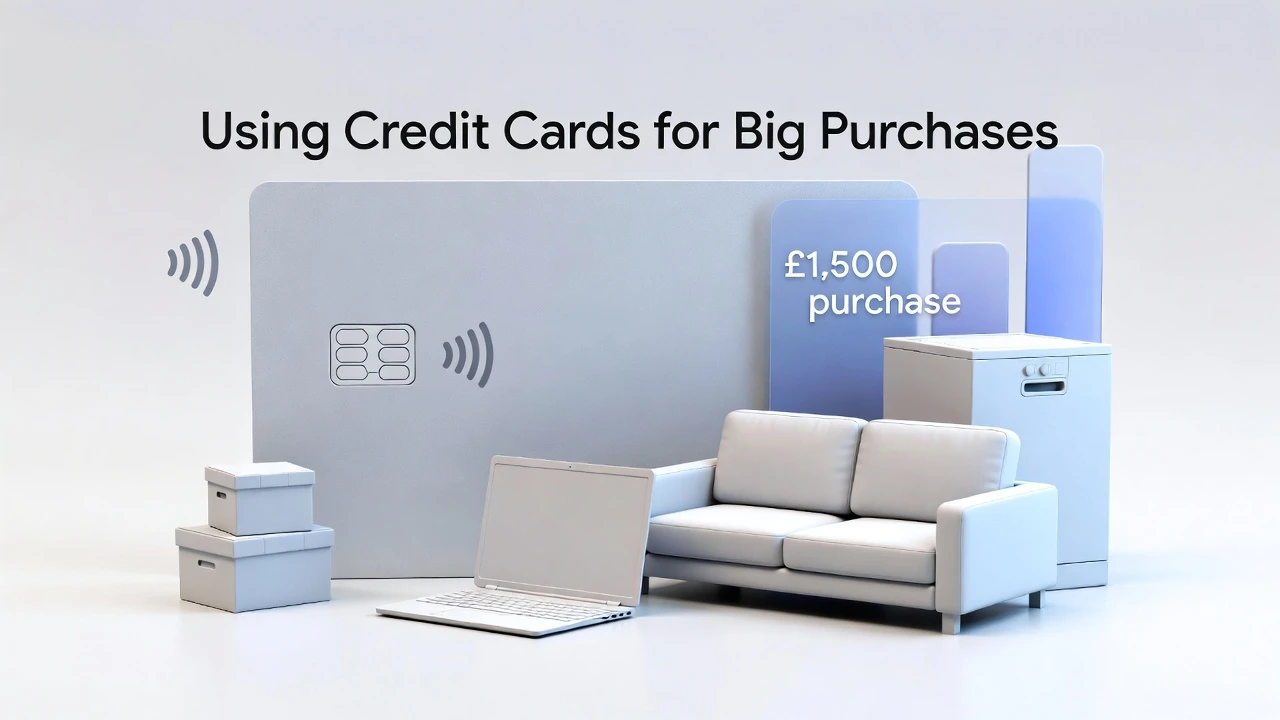
Imagine you purchase a £1,500 sofa using a credit card with a 12-month 0% offer. If you repay £125 per month, you can clear the balance within the promotional period and avoid interest.
However, if you only pay the minimum amount, you may still owe a large portion after 12 months. At that point, the standard APR applies, increasing the total cost of the purchase.
This example shows how planning repayments from the start is essential when using credit for big purchases.
Tips for responsible use
Using a credit card for large purchases can be effective if you follow a structured approach. Set a repayment schedule before making the purchase and stick to it. Avoid using the same card for additional spending unless you are confident you can manage the total balance.
Check your statement regularly to track progress and ensure payments are made on time. Setting up a direct debit can reduce the risk of missed payments.
Final thoughts
Credit cards can be a useful tool for managing large purchases in the UK, offering flexibility and consumer protection. However, they are most effective when used with a clear repayment strategy. Understanding interest rates, fees and legal protections such as Section 75 can help you make informed decisions and avoid unnecessary costs.
Frequently Asked Questions
1. Is it safe to use a credit card for large purchases in the UK?
Yes, it can be safe if used responsibly. Credit cards offer added protection under Section 75 for purchases between £100 and £30,000, which can provide a refund if something goes wrong.
🔒 Section 75 is a UK statutory protection – your card provider is jointly liable.2. What is Section 75 protection?
Section 75 is a UK law that makes your credit card provider jointly responsible with the retailer if there is a problem with your purchase, such as faulty goods or non-delivery.
It applies to single items costing between £100 and £30,000 – even if you only paid a deposit by credit card.
3. Should I use a 0% credit card for big purchases?
A 0% purchase card can be useful if you can repay the balance within the promotional period. Otherwise, interest may apply after the offer ends.
Always check the length of the 0% window and the APR that applies afterwards.
4. Will a large purchase affect my credit score?
It can. A high balance may increase your credit utilisation ratio, which could temporarily affect your credit score if not managed carefully. Keeping utilisation below 25–30% is generally recommended.
5. Is it better to pay in full or in instalments?
Paying in full avoids interest charges. If you choose instalments, it’s important to have a clear repayment plan to prevent long-term debt. Even with 0% offers, always budget for the final payment date.