

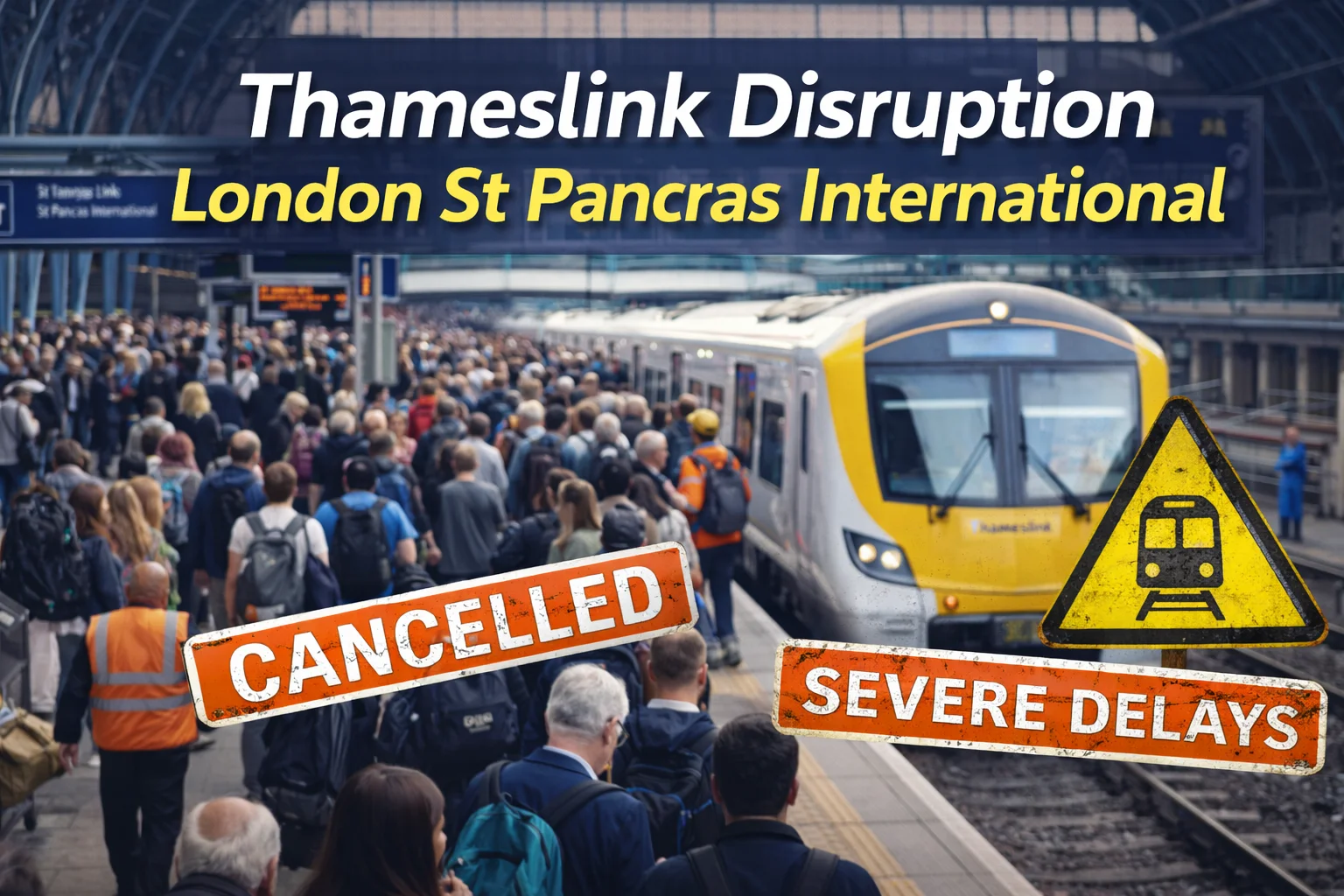
Rail passengers travelling through London have recently experienced significant delays after disruption hit one of the capital’s busiest transport hubs. Services running through St Pancras International have been affected, causing longer travel times and frustration for commuters.
The disruption has drawn widespread attention because the station connects major north-south routes, meaning even minor faults can create ripple effects across the network. For daily travellers, staying informed has become essential to avoid unexpected delays.
What Caused the Thameslink Disruption?
Recent reports indicate that overhead wire damage near Elstree triggered major delays between the London and Luton routes, impacting both Thameslink and other operators.
Another update confirmed that the fault led to cancelled services and widespread disruption, with alternative routes being recommended for affected passengers.
Rail networks can also face interruptions from signalling problems, derailments, and infrastructure failures — all of which have contributed to previous “do not travel” alerts across the franchise.
Routes and Services Affected
- Lines between London St Pancras and Luton Airport Parkway experienced delays and cancellations.
- Some journeys faced hour-long delays as engineers worked to repair damaged equipment.
Because Thameslink links multiple commuter towns to central London, disruptions often extend far beyond the original fault location.
Impact on Passengers
Travel interruptions can quickly lead to:
- Platform congestion during peak hours
- Missed onward connections
- Increased journey times
- Higher demand for alternative transport
For commuters relying on tight schedules, even short delays can disrupt workdays and appointments.
Alternative Travel Options
When rail services are disrupted, travellers may consider:
- Using Underground connections where available
- Checking ticket acceptance on other rail operators
- Switching to buses or ride-share services
- Travelling outside peak periods
Planning ahead is one of the most effective ways to minimise disruption stress.
Passenger Rights and Refunds
UK rail passengers are often eligible for compensation if delays exceed a certain threshold. Delay Repay schemes typically allow travellers to claim partial refunds depending on how long the journey was affected.
Keeping tickets and recording travel times can make the claims process faster and smoother.
Travel Tips During Rail Disruption
Check live updates: Transport conditions can change quickly.
Leave earlier: Extra time helps absorb unexpected delays.
Use journey planners: Real-time apps provide rerouting options.
Stay flexible: Alternative stations or routes may save time.
How Often Do Thameslink Disruptions Happen?
Rail disruptions are not uncommon in major cities. Contributing factors include:
- Ageing infrastructure
- High passenger demand
- Engineering upgrades
- Weather conditions
Large-scale improvement projects can also temporarily affect services while modernisation work is completed.
Future Improvements to Reduce Disruptions
Ongoing rail upgrades aim to enhance signalling systems and track reliability. For example, digital signalling projects and overhead line work are designed to modernise routes, though they may temporarily extend journey times during construction phases.
Over time, these investments should improve punctuality and reduce large-scale service interruptions.
Final Thoughts
Thameslink disruption at St Pancras International highlights how interconnected modern rail systems are, as a single equipment failure can impact thousands of journeys within hours.
For travellers, the best defence is preparation: monitor updates, allow extra time, and remain flexible with travel plans. While disruptions are frustrating, continued investment in infrastructure suggests a more reliable future for London’s transport network.