
- What Is a Minimum Payment?
- What Happens When You Pay the Full Balance?
- How Interest Builds When Only Minimum Payments Are Made
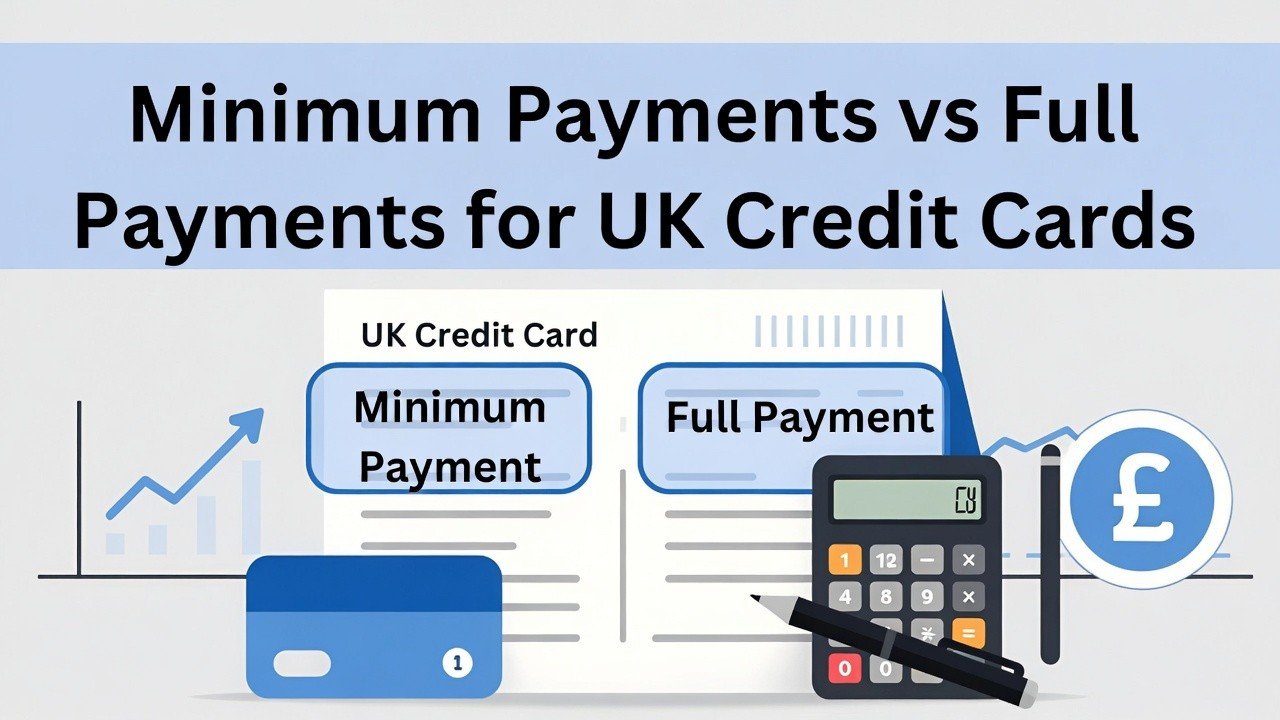
- Key Differences Between Minimum and Full Payments
- When Minimum Payments May Be Useful
- Practical Ways to Manage Credit Card Repayments
- Choosing the Right Repayment Approach
- Frequently Asked Questions — UK credit cards
Credit cards allow people in the UK to borrow money for purchases and repay it later. Each month, the card provider sends a statement showing the total balance, the minimum payment required, and the payment due date. Cardholders can choose to pay the full balance or make the minimum payment. While both options keep the account active, they have very different financial outcomes.
Many people prefer the flexibility of paying the minimum amount because it reduces the immediate financial pressure. However, interest usually applies to the remaining balance if the full amount is not cleared. Understanding how these two repayment approaches work can help cardholders manage borrowing more effectively and avoid unnecessary costs over time.
What Is a Minimum Payment?
A minimum payment is the smallest amount a credit card provider requires each month to keep the account in good standing. In the UK, this amount is usually calculated as a small percentage of the outstanding balance, often around 2% to 3%, or a fixed amount such as £5, whichever is higher.
Making the minimum payment prevents late payment fees and reduces the risk of damaging your credit history. However, because only a small portion of the balance is repaid, the remaining amount continues to accrue interest. Over time, this can significantly increase the total cost of borrowing, especially if the balance remains high.
What Happens When You Pay the Full Balance?
Paying the full statement balance means clearing all purchases made during the billing cycle before the payment deadline. When this happens, most UK credit cards offer an interest-free period on purchases. This means cardholders can use the card without paying interest, provided the balance is cleared in full each month.
Many financially cautious users adopt this approach because it allows them to benefit from the convenience of credit cards without building long-term debt. Paying the full balance regularly also demonstrates responsible financial behaviour, which may contribute positively to a person’s credit profile.
How Interest Builds When Only Minimum Payments Are Made
When the minimum payment is made, the remaining balance is carried forward to the next billing cycle. Interest is then applied to that balance according to the card’s Annual Percentage Rate (APR). Because interest is calculated on the remaining balance, the repayment process becomes slower and more expensive. Credit Card Eligibility Checker.
For example, someone with a £1,000 balance who pays only the minimum each month may take several years to clear the debt. During this time, interest charges can add hundreds of pounds to the original spending amount. This is why financial educators often emphasise the importance of paying more than the minimum whenever possible.
Key Differences Between Minimum and Full Payments
| Feature | Minimum Payment | Full Payment |
|---|---|---|
| Amount Paid Monthly | Small percentage of balance | Entire statement balance |
| Interest Charges | Usually applied to remaining balance | Typically avoided if paid on time |
| Debt Duration | Can take many months or years to clear | Balance cleared each month |
| Impact on Budget | Lower short-term payment | Higher immediate payment |
| Long-Term Cost | Higher due to interest | Lower overall borrowing cost |
This comparison highlights how repayment choices can influence the long-term cost of using a credit card.
When Minimum Payments May Be Useful
There are situations where paying the minimum amount may help cardholders manage temporary financial pressure. For example, unexpected expenses or short-term income changes might make it difficult to pay the full balance in a particular month. In these cases, making at least the minimum payment helps avoid late payment penalties and protects the account status.
However, relying on minimum payments for extended periods may increase borrowing costs. Many financial advisers encourage cardholders to treat the minimum amount as a safety net rather than a long-term repayment strategy.
Practical Ways to Manage Credit Card Repayments
Some UK cardholders use simple budgeting strategies to keep credit card balances manageable. One common approach is setting up a direct debit to automatically pay the full balance each month. This reduces the risk of forgetting payment dates and helps maintain an interest-free borrowing period.
Another approach is to pay more than the minimum payment whenever possible. Even small additional payments can reduce the outstanding balance faster and lower interest charges over time. Monitoring monthly statements and tracking spending habits can also help maintain better control over credit card usage.
Choosing the Right Repayment Approach
The decision between minimum and full payments often depends on financial circumstances and spending habits. Individuals who regularly clear their balance can benefit from the convenience of credit cards without accumulating interest. On the other hand, those who carry balances may need to focus on structured repayment plans to gradually reduce debt.
Understanding the long-term impact of repayment choices is an important step toward responsible credit card use. By reviewing statements carefully and planning repayments in advance, cardholders can maintain financial stability while continuing to use credit cards as a flexible payment tool.
Frequently Asked Questions — UK credit cards
What is the minimum payment on a UK credit card?
The minimum payment is the smallest amount you must pay each month to keep your credit card account in good standing. In the UK, this is usually around 1–3% of the outstanding balance or about £5, whichever is higher, depending on the lender’s terms.
Is it better to pay the full balance on a credit card?
Paying the full balance each month usually helps avoid interest charges on purchases during the interest-free period. It can also help maintain a healthier credit record because it shows lenders that you manage borrowing responsibly.
What happens if I only make the minimum payment every month?
If you only pay the minimum amount, the remaining balance continues to accumulate interest. This can significantly increase the total cost of borrowing and extend the time it takes to clear the debt.
Does paying the full balance improve my credit score in the UK?
Regularly paying your balance in full and on time may support a positive payment history, which is one of the factors lenders consider when reviewing your credit profile.
Other factors include total debt, credit utilisation, and length of credit history.
What happens if I miss a credit card payment in the UK?
Missing a payment may result in late fees and interest charges. It can also be reported to UK credit reference agencies such as Experian, Equifax, or TransUnion, which could affect your credit file for a period of time.
If it’s a one-off mistake, contact your provider – they might not report it if you pay quickly and explain.