

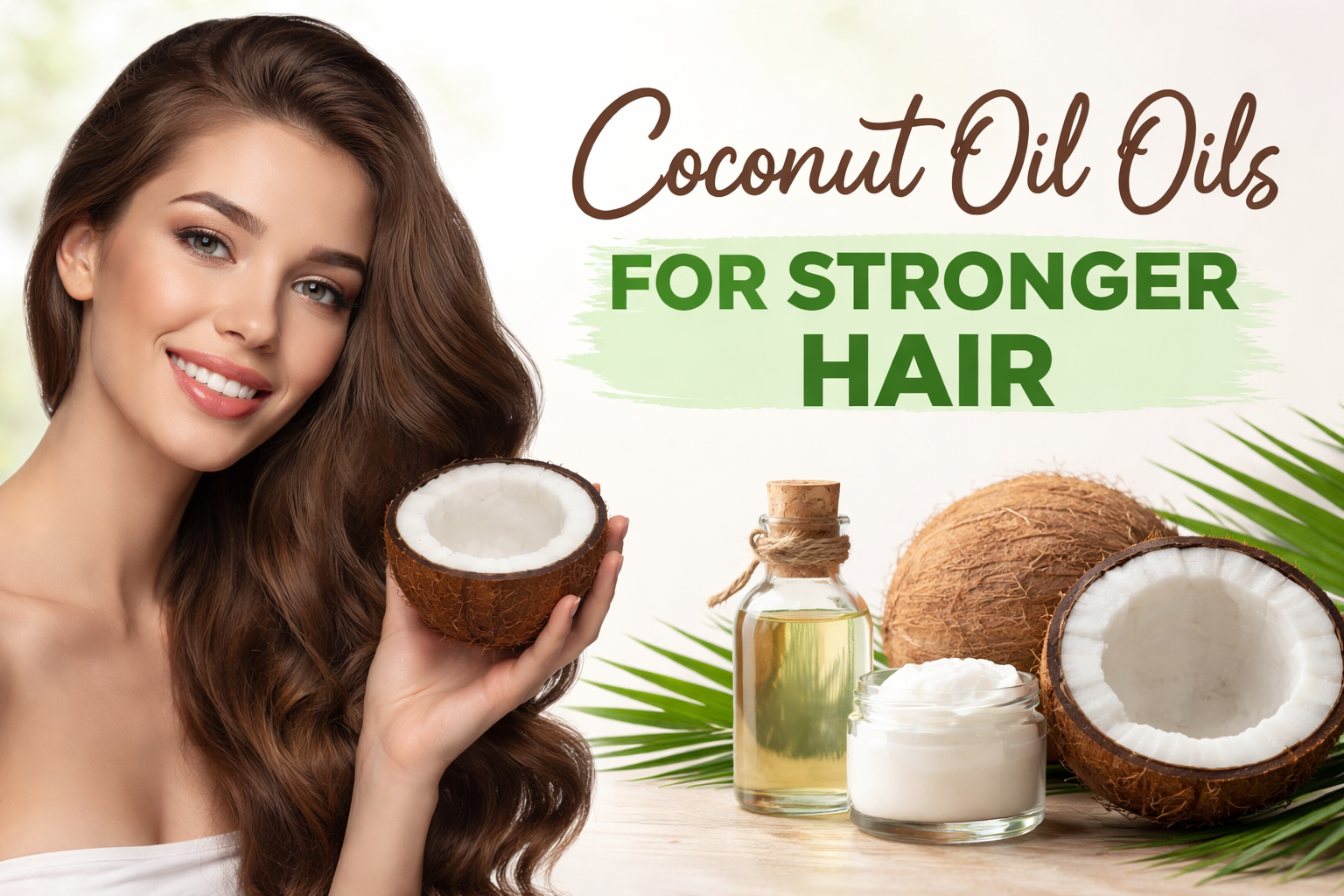
- What Are Coconut Oil Oils?
- Benefits of Coconut Oil Oils for Hair
- How to Use Coconut Oil Oils for Stronger Hair (Step-by-Step)
- Best Ways to Apply Coconut Oil Oils on Hair
- How Often Should You Use Coconut Oil Oils?
- Common Mistakes to Avoid When Using Coconut Oil Oils
- Is Coconut Oil Oils Suitable for All Hair Types?
- Coconut Oil Oils vs Other Hair Oils
- Conclusion
- FAQs
Strong, healthy hair is a common goal for many people, and natural remedies are becoming more popular than ever. One such trusted solution is coconut oil oils, which have been used for centuries to nourish and protect hair. Known for their deep moisturising and strengthening properties, coconut oil oils help reduce hair breakage, improve shine, and support overall scalp health. Unlike chemical-based hair products, coconut oil oils penetrate deep into the hair shaft, preventing protein loss and making hair stronger from the roots to the tips. Whether you are dealing with dry hair, frizz, split ends, or hair weakness caused by heat styling and pollution, learning how to use coconut oil oils correctly can make a noticeable difference. In this guide, we will explain the best ways to apply coconut oil oils for stronger hair, suitable for different hair types and everyday routines.
What Are Coconut Oil Oils?
Coconut oil oils are natural oils extracted from the meat of mature coconuts. They are rich in medium-chain fatty acids (MCFAs), especially lauric acid, which penetrates the hair shaft and strengthens hair from within. Coconut oil oils are popular in the UK for their moisturising, protective, and conditioning properties.
People use coconut oil oils not only for hair but also for skin care, cooking, and overall wellness. For hair, coconut oil oils work by reducing protein loss, preventing damage caused by heat styling, and locking in moisture.
Types of Coconut Oil Oils (Virgin, Cold-Pressed, Refined)
- Virgin Coconut Oil Oils: Extracted from fresh coconut meat without chemicals or high heat. Best for hair because it retains natural nutrients.
- Cold-Pressed Coconut Oil Oils: Made by pressing fresh coconut meat at low temperatures. Preserves vitamins and minerals, ideal for scalp health.
- Refined Coconut Oil Oils: Made from dried coconut (copra) and processed using heat or chemicals. Less fragrant and slightly lower in nutrients but still effective for hair care.
Why Coconut Oil Oils Are Popular in the UK
Coconut oil oils are widely available in UK supermarkets, health stores, and online shops. The natural and chemical-free profile makes them attractive for people seeking sustainable, effective hair care. With growing awareness about hair health and natural beauty remedies, coconut oil oils have become a staple in many households.
Benefits of Coconut Oil Oils for Hair
Coconut oil oils are more than just a natural moisturizer—they provide multiple benefits that help strengthen hair, prevent damage, and improve overall hair health. Regular use can transform weak, dry, or brittle hair into strong, shiny, and healthy locks.
Strengthens Hair Roots Naturally
The lauric acid in coconut oil oils penetrates the hair shaft and nourishes the hair from the root. This strengthens the hair follicles, reduces breakage, and promotes healthier growth over time. Massaging coconut oil oils into the scalp improves blood circulation, which supports stronger hair roots.
Reduces Hair Breakage and Split Ends
Coconut oil oils form a protective barrier around each hair strand, reducing protein loss and preventing damage from daily wear and tear. Applying coconut oil oils regularly helps repair minor damage, making hair less prone to split ends and breakage.
Improves Hair Shine and Smoothness
Thanks to its moisturizing properties, coconut oil oils add natural shine and softness to hair. They smooth the hair cuticle, which not only makes hair look glossy but also makes it easier to manage and style.
Prevents Protein Loss in Hair
Hair is made mostly of protein (keratin), and frequent washing, heat styling, or chemical treatments can strip it away. Coconut oil oils penetrate deep into hair shafts, replenishing lost protein and maintaining hair strength. This is especially useful for hair that is coloured, bleached, or heat-treated.
How to Use Coconut Oil Oils for Stronger Hair (Step-by-Step)
Using coconut oil oils correctly is key to getting stronger, healthier hair. Follow these simple steps to maximize benefits:
Step 1 – Choose the Right Coconut Oil Oils
Not all coconut oil oils are created equal. For hair, virgin or cold-pressed coconut oil oils are the best options because they retain the most nutrients. Avoid heavily refined oils, as they may have fewer benefits.
Step 2 – Warm the Oil Correctly
Slightly warming the coconut oil oils makes it easier to apply and helps it penetrate the hair shaft. You can warm a small amount by rubbing it between your palms or briefly heating in a bowl over hot water. Do not overheat, as high temperatures can damage the oil and your scalp.
Step 3 – Apply Coconut Oil Oils to Scalp
Start by parting your hair into sections and gently massaging the oil onto your scalp. Focus on areas that feel dry or weak. This massage stimulates blood circulation, supporting hair growth and stronger roots.
Step 4 – Massage for Hair Growth
Use your fingertips to massage in circular motions for 5–10 minutes. This not only distributes the oil evenly but also relaxes the scalp and promotes healthy follicle activity.
Step 5 – Leave-In Time for Best Results
Allow the coconut oil oils to penetrate the hair for at least 30 minutes. For deep conditioning, leave it overnight using a shower cap or towel to protect your bedding. Overnight application works best for dry or damaged hair.
Step 6 – Wash Hair Properly
After treatment, wash your hair with a mild shampoo to remove excess oil. You may need to shampoo twice if your hair feels greasy. Finish with a conditioner if desired. Avoid using very hot water, as it can strip the hair of natural oils.
Best Ways to Apply Coconut Oil Oils on Hair
Coconut oil oils can be applied in various ways depending on your hair type, needs, and time. Choosing the right method ensures maximum benefits for stronger, healthier hair.
Coconut Oil Oils as a Pre-Wash Treatment
Applying coconut oil oils before shampooing helps protect hair from moisture loss during washing.
- Massage a small amount into your scalp and hair strands.
- Leave it for 30–60 minutes.
- Wash and condition as usual.
This method strengthens hair, prevents breakage, and keeps it soft and manageable. It’s ideal for normal to oily hair types.
Coconut Oil Oils as an Overnight Hair Mask
For dry or damaged hair, an overnight treatment works best.
- Apply coconut oil oils from roots to tips.
- Wrap hair in a towel or use a shower cap to avoid staining bedding.
- Wash out in the morning using a mild shampoo.
This deep conditioning method repairs damage, improves shine, and restores moisture.
Coconut Oil Oils for Dry and Damaged Hair
If you have split ends or frizz, apply a small amount of coconut oil oils directly to hair tips.
- Focus on the ends, not the scalp, to avoid a greasy look.
- Use daily or a few times a week as needed.
How Often Should You Use Coconut Oil Oils?
The frequency of using coconut oil oils depends on your hair type, texture, and condition. Overuse can make hair greasy, while underuse may reduce benefits. Here’s a simple guide:
Coconut Oil Oils for Dry Hair
Dry hair benefits from 2–3 applications per week.
- Apply as an overnight mask or pre-wash treatment.
- Focus on hair ends and dry areas to restore moisture and prevent breakage.
Coconut Oil Oils for Oily Hair
Oily hair needs lighter application once a week or every 10 days.
- Avoid applying directly to the scalp; instead, focus on mid-lengths and tips.
- Use as a pre-wash treatment to protect hair without increasing oiliness.
Coconut Oil Oils for Curly or Thick Hair
Curly or thick hair may require 2–4 applications per week, depending on dryness.
- Coconut oil oils help define curls, reduce frizz, and maintain elasticity.
- Combine with leave-in conditioners or hair masks for extra hydration.
Common Mistakes to Avoid When Using Coconut Oil Oils
Using coconut oil oils incorrectly can reduce its benefits or even make hair greasy or heavy. Here are the most common mistakes and how to avoid them:
Using Too Much Oil
Many people overapply coconut oil oils, thinking more is better.
- Only a small amount is needed, especially for fine or short hair.
- Too much oil can make hair look greasy and weigh it down.
Applying on Dirty Scalp
Applying coconut oil oils on unwashed hair with product buildup can trap dirt and bacteria, leading to scalp irritation.
- Always start with clean or lightly damp hair for best absorption.
Not Washing Properly After Use
Leaving excess coconut oil oils in hair can make it greasy and attract dust.
- Use a mild shampoo and, if necessary, a second wash.
- Avoid harsh shampoos that strip natural oils, as this can counteract benefits.
Ignoring Hair Type Differences
Coconut oil oils work differently on fine, thick, curly, or oily hair.
- Adjust the amount and frequency based on your hair type.
- For example, fine hair needs less oil than thick or curly hair to avoid heaviness.
Is Coconut Oil Oils Suitable for All Hair Types?
Coconut oil oils are versatile, but how they are used should depend on your hair type. Here’s a breakdown:
Coconut Oil Oils for Fine Hair
Fine hair can get weighed down easily by too much oil.
- Use a tiny amount, focusing only on the hair ends.
- Apply as a pre-wash treatment or a light leave-in mask.
- Helps strengthen hair without making it greasy.
Coconut Oil Oils for Thick Hair
Thick hair benefits from more generous application.
- Massage from roots to tips for full hydration.
- Can be used 2–3 times per week as an overnight mask.
- Helps reduce frizz, improve manageability, and protect from heat damage.
Coconut Oil Oils for Coloured or Chemically Treated Hair
Coconut oil oils are safe for coloured or treated hair and help repair damage.
- Focus on dry ends to prevent breakage.
- Use cold-pressed or virgin coconut oil oils to retain nutrients.
- Protects hair from colour fading and chemical damage.
Coconut Oil Oils vs Other Hair Oils
Coconut oil oils are one of the most popular natural hair oils, but how do they compare to other commonly used oils? Here’s a detailed look:
Coconut Oil Oils vs Argan Oil
- Coconut Oil Oils: Penetrates hair shaft, strengthens roots, reduces protein loss, excellent for deep conditioning.
- Argan Oil: Rich in vitamin E and antioxidants, mainly improves hair shine and smoothness.
- Conclusion: Use coconut oil oils for strength and repair, argan oil for shine and surface smoothness. Combining both can give best results.
Coconut Oil Oils vs Olive Oil
- Coconut Oil Oils: Lightweight, absorbs quickly, protects hair from damage.
- Olive Oil: Heavier, great for dry hair, primarily locks in moisture on the surface.
- Conclusion: Coconut oil oils are better for daily use or fine hair, while olive oil works well for thick, extremely dry, or coarse hair.
Coconut Oil Oils vs Other Popular Oils (Castor, Jojoba, Almond)
- Castor Oil: Promotes hair growth but is very thick and sticky.
- Jojoba Oil: Closely mimics natural scalp oils, good for balancing sebum.
- Almond Oil: Adds softness and shine, less effective for deep strengthening.
- Conclusion: Coconut oil oils are versatile, nourishing, and suitable for most hair types, making them an essential part of natural hair care routines.
Conclusion
Coconut oil oils are a natural, effective, and versatile solution for anyone looking to strengthen and nourish their hair. From reducing breakage and split ends to improving shine and scalp health, these oils offer multiple benefits for all hair types. By choosing the right type of coconut oil oils, applying it correctly, and following a regular routine, you can achieve healthier, stronger hair over time.
Remember, the key is moderation and consistency. Use small amounts, adjust the frequency according to your hair type, and combine with other natural care practices for the best results. Whether you have fine, thick, curly, or coloured hair, coconut oil oils can become a trusted part of your hair care routine, leaving your hair soft, strong, and naturally radiant.
FAQs
Here are the most commonly asked questions about using coconut oil oils for stronger, healthier hair:
Can Coconut Oil Oils Help Hair Growth?
Yes! Coconut oil oils strengthen hair from the root, nourish follicles, and improve scalp circulation, all of which support healthy hair growth over time. While it doesn’t make hair grow faster overnight, regular use can reduce breakage, leading to longer, fuller hair.
Is Coconut Oil Oils Safe for Daily Use?
For most hair types, coconut oil oils can be used 1–3 times per week. Fine or oily hair should use smaller amounts to avoid greasiness, while dry or thick hair can tolerate more frequent applications. Daily use is generally not necessary and may make hair look heavy.
Can Coconut Oil Oils Cause Hair Fall?
Coconut oil oils do not cause hair fall. In fact, they prevent breakage. However, using too much oil or not washing it out properly can weigh hair down, which may look like hair fall. Always use the right amount for your hair type.
Can I Use Coconut Oil Oils with Other Hair Products?
Yes! Coconut oil oils work well with conditioners, serums, and styling products. Apply the oil first as a mask or pre-wash treatment, then follow your normal hair routine. Avoid mixing with heavy silicone-based products if your goal is deep nourishment.