HowtoChooseWeddingShoes:Comfort,HeelHeightandStyleforEveryWedding
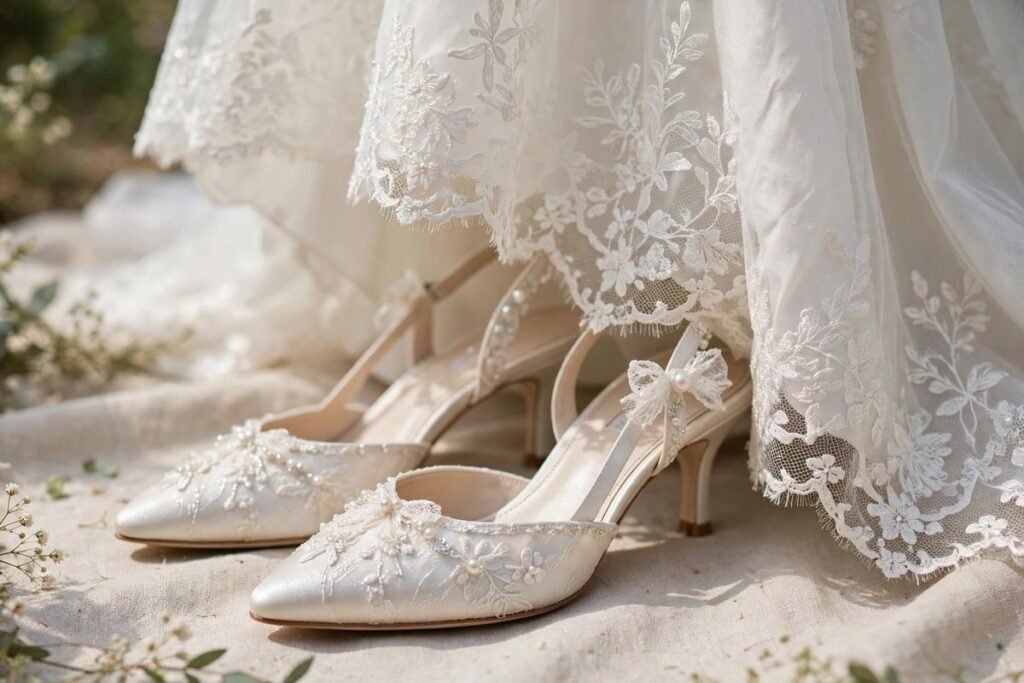
Table of Contents
Choosing wedding shoes is one of the most practical decisions in wedding planning, yet it is often left until the last minute. The right pair should look beautiful with your outfit, feel comfortable after hours on your feet, and suit the ground you will walk on, from a church aisle to a garden lawn. The wrong pair, however beautiful in the box, can turn a joyful day into a long exercise in endurance.
This guide explains how to choose wedding shoes step by step: heel height, style, colour, material, fit and venue. Whether you are the bride, a bridesmaid or a guest, you will finish with a clear shortlist and a plan for breaking your shoes in before the big day.
Start With Your Dress and Your Venue
Your dress length is the first clue. A floor-length gown hides most of the shoe, so comfort and height matter more than intricate detail, while a midi or tea-length dress puts your shoes firmly on display. In either case, take your shoes to dress fittings: the hem should be measured with the exact heel height you plan to wear, not with a pair that is about the same.
Your venue matters just as much. A ballroom with a smooth floor suits almost any heel, while grass, gravel, sand and cobbles demand a wider base. If you are unsure, ask the venue about surfaces for the ceremony, photographs and reception, and read our guide to how to choose a wedding dress before finalising the whole outfit, so dress, shoes and accessories work as one look.
Wedding Shoe Heel Heights Explained
Low heels and kitten heels
Low heels, roughly 2 to 4 centimetres, and kitten heels, around 5 centimetres, are the easiest wedding shoes to wear all day. They give a little lift and polish without throwing your weight forward, and they suit long ceremonies, outdoor venues and anyone who rarely wears heels. A pointed or almond toe keeps a low heel looking elegant rather than casual.
Mid heels and block heels
Mid heels, around 5 to 7 centimetres, are the sweet spot for many brides. A block heel spreads weight over a larger area, which makes it far more stable on grass and uneven ground than a stiletto of the same height. If you want height without wobbling, start here.
High heels and stilettos
High heels look dramatic and lengthen the leg, but they demand practice. If you choose a heel above 8 centimetres, wear it around the house, on different floors and for at least a full evening before the wedding. A platform sole can make a high heel feel lower, because it reduces the angle of the foot, but it also adds weight, so try walking, standing and dancing in the exact pair.
Flats and wedges
Flats are a perfectly bridal choice, especially for beach weddings, long receptions and second outfits. Look for ballet flats, pointed flats or embellished sandals with a cushioned insole and a secure strap, rather than a flimsy slip-on. Wedges offer height with stability and are a strong option for garden weddings, because the sole does not sink into soft ground.
Wedding Shoe Styles to Consider
Classic pumps are the most versatile wedding shoes. A pointed pump in ivory satin suits a traditional gown, while a block-heel pump works for a modern or minimalist dress. Strappy sandals feel lighter and suit summer and destination weddings, but check that straps do not dig in after a few hours. Slingbacks combine elegance with security, because the back strap keeps the shoe in place, and mules are easy to slip on, although they can slip off while dancing.
Embellishment should complement, not compete with, your dress. If your gown is heavily beaded, choose a simpler shoe; if your dress is plain, a crystal buckle, pearl detail or lace overlay can add interest. For fresh inspiration, Vogue Weddings regularly showcases bridal footwear alongside dresses, which can help you spot the balance between shoe and gown.
Colour and Material: Getting the Match Right
White is not one colour. Bridal shoes come in bright white, ivory, champagne, blush, nude and metallic tones, and the wrong shade can clash with your dress in photographs. Hold the shoe fabric next to your dress fabric in natural light, not just under shop lighting, and remember that satin reflects light differently from lace or crepe. If an exact match proves difficult, a metallic shoe in gold, silver or rose gold is a forgiving alternative that works with many dress shades.
Material affects comfort as well as appearance. Satin looks luxurious but can mark easily and may feel slippery on polished floors, so check the sole grip. Soft leather moulds to the foot and breathes better on a long day, while suede offers a softer look but needs protection from rain. Dyeable shoes are worth considering if you want a precise colour match for bridesmaids, but order early and dye a test swatch first.
The Comfort Checklist
- Shop in the afternoon, when feet are slightly swollen, as they will be by the evening of the wedding.
- Wear the hosiery or socks you plan to wear on the day, and try both shoes, not just one.
- Check the toe box: toes should not be squeezed, and the widest part of your foot should sit on the widest part of the shoe.
- Look for a cushioned insole, a secure ankle or toe strap, and a sole with enough grip for the dance floor.
- Walk on a hard floor, stand still for five minutes, and practise stairs, turning and sitting down.
- Pack gel insoles, heel grips and blister plasters in your wedding-day emergency kit, just in case.
Wedding Shoes by Venue and Season
For a garden or outdoor wedding, choose block heels, wedges or flats, and consider heel protectors that stop narrow heels sinking into grass. For a beach wedding, flat sandals, embellished slides or even barefoot sandals for photographs are more practical than any heel, with a smarter pair kept for the reception. In winter, a closed-toe shoe, a low boot or a shoe with a warmer lining is sensible, especially if photographs are outdoors, and a pair of overshoes can protect satin from rain on the way to the venue.
Season also affects material. Breathable leather or open sandals suit summer, while satin and closed toes suit cooler months. If your wedding spans indoors and outdoors, choose a pair that works on both surfaces rather than changing shoes halfway through the ceremony, which can disrupt the hem and the photographs.
How to Break In Wedding Shoes
Never wear brand-new wedding shoes for the first time on your wedding day. Start two to three weeks beforehand, wearing them indoors for short periods with socks to stretch tight spots gently. Walk, stand and dance in them, and note any rubbing early enough to add heel grips, stretch the shoe or choose a different pair. A cobbler can stretch leather shoes and add a grippier sole, which is often money well spent.
Many brides also plan a second pair for the evening: a comfortable flat or block heel for dancing. If you do, make sure your dress hem still works with the lower height, or choose a second pair with a similar heel height. Keep the changeover simple, and leave the dancing shoes somewhere easy to reach, so you do not spend the first dance hunting for them.
Budget and Shopping Tips
Wedding shoes do not need to cost a fortune to look beautiful, but they are worth prioritising in your budget because you will wear them for ten hours or more. Set a realistic range, then compare fit and comfort before brand names. Check the return policy carefully, especially for dyed or personalised shoes, which may not be returnable, and order early enough for exchanges, alterations or a second pair.
If you are buying for a whole bridal party, agree on colour and heel height guidelines early, but allow individual fits. Bridesmaids with different feet will not all suit the same shoe, and a shared colour with a choice of heel heights looks coordinated without causing discomfort.
Wedding Shoes for Guests and Grooms
Guests should follow the dress code and the venue, not just the season. A block heel or elegant flat is a safe choice for a garden wedding, while a polished pump suits a formal evening reception. Grooms, meanwhile, should break in dress shoes in the same way, polish them before the day, and consider a second pair of insoles for comfort. Well-chosen wedding shoes, whoever is wearing them, should disappear into the celebration, leaving you free to enjoy it.
Frequently Asked Questions
What heel height is best for wedding shoes?
For most people, a mid heel of 5 to 7 centimetres, especially a block heel, offers the best balance of elegance, stability and all-day comfort.
Should wedding shoes match the dress exactly?
Ideally, yes in tone, but an exact fabric match is not essential. Compare shades in natural light, and consider metallics if a perfect match is hard to find.
How do I stop wedding shoes hurting?
Choose the right fit and heel height, break the shoes in over two to three weeks, add cushioned insoles or heel grips, and keep a comfortable second pair for dancing.
What wedding shoes are best for grass?
Block heels, wedges and flats work best on grass. Avoid stilettos, or use heel protectors to stop narrow heels sinking.
Can I wear flats to a wedding?
Yes. Elegant pointed flats, embellished sandals and bridal ballet flats are all appropriate, especially for beach, garden and long evening celebrations.
Final Thoughts
The best wedding shoes are the ones you forget you are wearing. Choose a heel you can walk, stand and dance in, a colour that flatters your dress, and a style that suits your venue, then break them in properly. Pair them with wedding hairstyles for brides that suit your neckline and veil, and your whole look will feel considered, comfortable and ready for a very long, very happy day.