

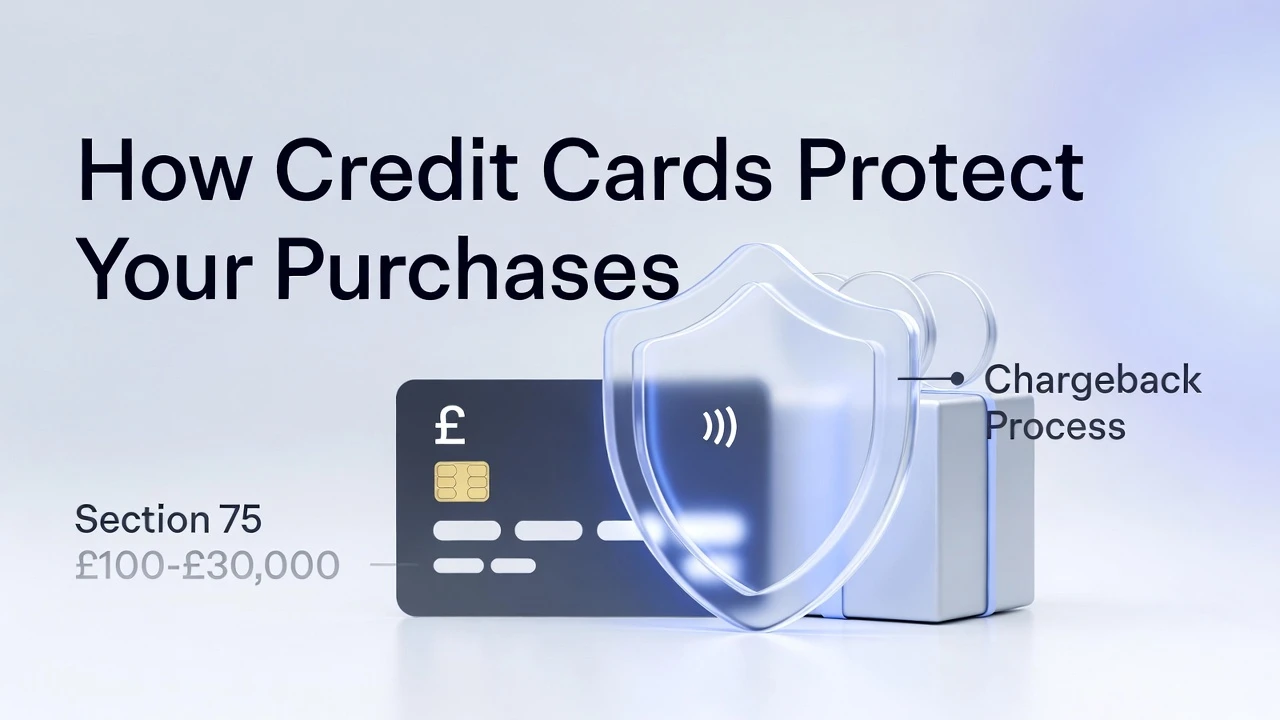
- Section 75 protection explained
- Chargeback process and how it works
- When credit card protection applies
- Key differences between Section 75 and chargeback
- Additional protections offered by credit cards
- Practical UK example
- Common mistakes to avoid
- When credit card protection may not apply
- Final thoughts
- Frequently Asked Questions
Credit cards in the UK offer more than just a way to pay. They also provide built-in protections when something goes wrong with a purchase. Whether it’s faulty goods, undelivered items, or disputes with a retailer, credit cards can offer an extra layer of security compared to other payment methods.
Understanding how this protection works can help you shop with more confidence. However, it’s important to know the conditions, limits, and processes involved so you can use these protections effectively.
Section 75 protection explained
One of the most important protections in the UK is Section 75 of the Consumer Credit Act. This rule makes the credit card provider jointly responsible with the retailer if something goes wrong with a purchase.
It applies when you buy goods or services costing between £100 and £30,000, even if you only paid part of the cost using your credit card. For example, if you pay a £200 deposit on a £2,000 item using your credit card and the retailer fails to deliver, you may still be able to claim the full amount.
This protection can cover situations such as faulty products, items not arriving, or services not being provided as agreed.
Chargeback process and how it works
Chargeback is another way to dispute a transaction, although it is not a legal right like Section 75. Instead, it is a scheme operated by card networks. It allows your card provider to attempt to recover money from the retailer’s bank if a transaction is disputed.
Chargeback may apply to a wider range of purchases, including those under £100. However, there are time limits, and success is not guaranteed. It is often used for issues like duplicate charges, unauthorised transactions, or non-delivery of goods.
When credit card protection applies
Credit card protection does not cover every situation. It generally applies when there has been a breach of contract or misrepresentation by the seller. This means the product or service must not match what was promised.
To make a claim, you usually need to show evidence such as receipts, order confirmations, or communication with the retailer. Acting quickly is important, especially for chargeback claims, which have strict deadlines.
Key differences between Section 75 and chargeback
| Feature | Section 75 | Chargeback |
|---|---|---|
| Legal status | Legal right under UK law | Scheme-based process |
| Purchase value | £100 to £30,000 | No strict minimum |
| Responsibility | Card provider shares liability | Bank attempts recovery |
| Guarantee of outcome | Stronger legal protection | Not guaranteed |
| Time limits | Longer claim periods | Shorter deadlines |
This comparison shows why Section 75 is often considered a stronger form of protection, while chargeback can be useful for smaller transactions.
Additional protections offered by credit cards
Some UK credit cards include extra purchase protections beyond legal requirements. These may include extended warranties, purchase protection against accidental damage or theft, and fraud monitoring systems.
These benefits vary by provider and card type. Premium cards may offer broader coverage, but it is important to read the terms carefully to understand what is included and what exclusions apply.
Practical UK example
Imagine you order a £600 smartphone online and pay using your credit card. The item never arrives, and the retailer stops responding. In this case, you could raise a claim under Section 75 because the purchase falls within the required value range. credit-card-eligibility-checker.
If you had paid £80 for an item that was not delivered, Section 75 would not apply, but you might still be able to use chargeback through your card provider to try to recover the funds.
Common mistakes to avoid
Many people assume all purchases are automatically protected, which is not always the case. Payments made through third-party services or intermediaries may not qualify for Section 75 protection.
Another common mistake is delaying action. Waiting too long to report a problem can reduce your chances of a successful claim, particularly for a chargeback.
It is also important to keep records of purchases and communication with sellers. Without evidence, it can be difficult to support your claim.
When credit card protection may not apply
There are situations where protection may be limited. For example, if you pay using a debit card instead of a credit card, Section 75 does not apply. Similarly, purchases below £100 are not covered under Section 75, although a chargeback may still be available.
Using digital wallets or payment intermediaries can sometimes break the direct relationship between you and the retailer, which may affect eligibility for certain protections.
Final thoughts
Credit card protection in the UK provides valuable support when purchases go wrong. Section 75 offers strong legal backing for higher-value transactions, while chargeback can help with smaller disputes. Together, these features make credit cards a more secure payment option in many situations.
Understanding how these protections work, when they apply, and what evidence is required can help you make better use of them. Used correctly, they can provide reassurance and reduce financial risk when shopping.
Frequently Asked Questions
Section 75 is a legal protection under the Consumer Credit Act that makes your credit card provider jointly responsible if something goes wrong with a purchase between £100 and £30,000. It covers issues like faulty goods, non-delivery, or misrepresentation.
✔ Applies to credit cards only (and some other lenders)No, chargeback is not a legal right. It is a process used by card networks to try to recover money from a retailer’s bank. It can apply to smaller purchases, but outcomes are not guaranteed.
⏳ time limit often 120 days – no statutory protectionNot all purchases are covered. Section 75 only applies to transactions between £100 and £30,000 and requires a direct relationship between the buyer, card provider, and retailer. Some third-party payments may not qualify.
For Section 75, you generally have up to six years to make a claim in England and Wales. Chargeback claims usually have much shorter time limits, often around 120 days, depending on the situation.
Yes, as long as the total purchase value is within the qualifying range, you can still claim under Section 75 even if you only paid part of the amount using your credit card.
💡 deposit counts – total price must be £100–30,000