
Understanding the two options
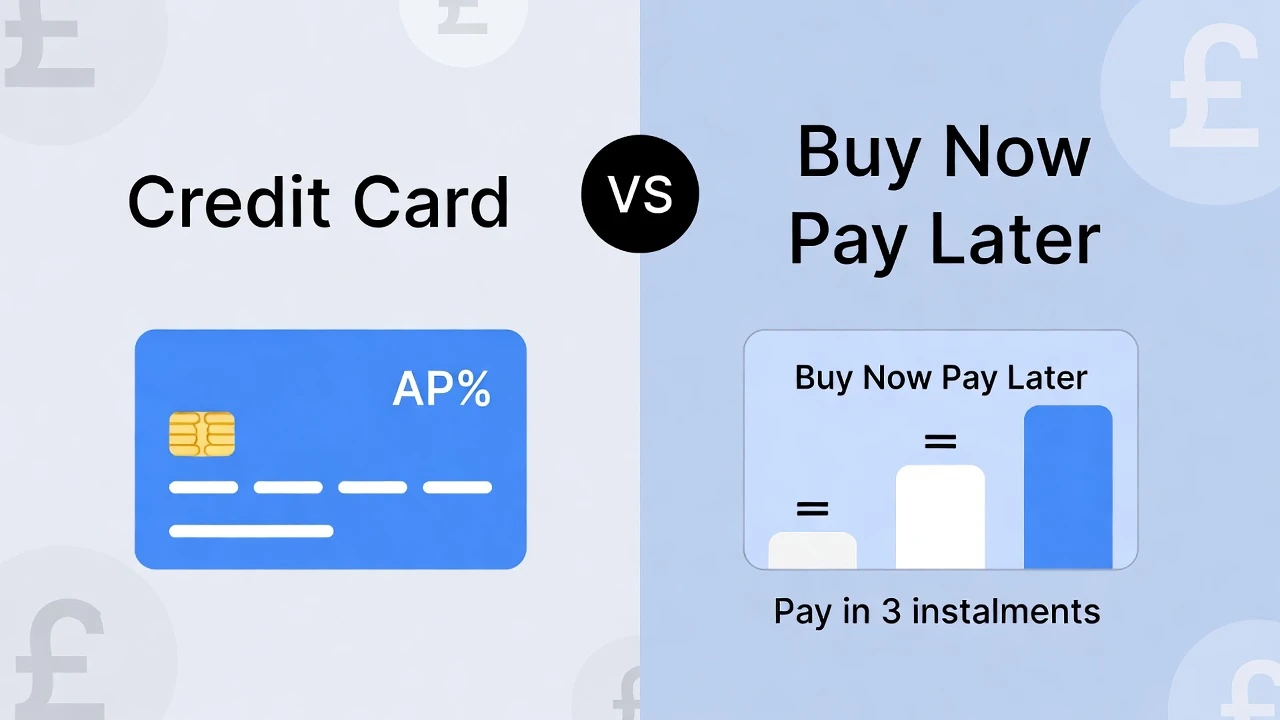
Credit cards and Buy Now Pay Later (BNPL) services are both widely used in the UK for managing short-term spending. A credit card provides a revolving line of credit with a monthly billing cycle, while BNPL allows you to split payments into smaller instalments over a fixed period.
Although both options can offer flexibility, they work differently in terms of cost, regulation, and long-term impact. Credit cards are regulated by the Financial Conduct Authority, while BNPL regulation has been evolving and may not always offer the same level of protection.
How credit cards work
A credit card allows you to borrow up to a set limit and repay either in full or over time. Most UK cards offer an interest-free period on purchases if you clear the balance each month. If you carry a balance, interest is charged based on the representative APR.
Credit cards also provide additional features such as fraud protection and, in some cases, purchase protection under Section 75 for qualifying transactions. This can add a layer of security when making larger purchases.
How Buy Now Pay Later works
BNPL services allow you to split a purchase into several instalments, often without interest if payments are made on time. Common structures include paying in three instalments or spreading the cost over several months.
While this can make budgeting easier for short-term purchases, late payments may result in fees. Some BNPL providers may not report activity to credit reference agencies, meaning it may not help build your credit history in the same way as a credit card.
Key differences between credit cards and BNPL
| Feature | Credit Cards | Buy Now Pay Later |
|---|---|---|
| Payment Structure | Flexible monthly repayments | Fixed instalments |
| Interest | 0% period or APR applies | Often 0% if paid on time |
| Credit Building | Reported to credit agencies | May not always be reported |
| Protection | Section 75 on eligible purchases | Limited consumer protection |
| Flexibility | Ongoing credit line | One purchase at a time |
This comparison highlights that credit cards offer more flexibility, while BNPL focuses on short-term, structured payments.
Costs and risks to consider
Credit cards can become expensive if you only make minimum payments, as interest accumulates over time. However, they also offer structured repayment options and transparency around APR and fees.
BNPL may appear simpler, but missed instalments can lead to late fees and potential debt accumulation across multiple purchases. Because payments are split into smaller amounts, it can be easier to lose track of total spending.
Both options require careful budgeting. Neither should be seen as free money, even if no interest is charged initially.
Impact on your credit profile
Using a credit card responsibly can help build your credit history. Payments are typically reported to UK credit reference agencies such as Experian, Equifax, and TransUnion. This can support future applications for loans or mortgages.
BNPL services may not always report payment activity in the same way. While some providers have started sharing data, it is not yet consistent across the market. This means BNPL may have less impact on building a long-term credit profile.
When each option may be suitable
A credit card may be suitable if you want ongoing flexibility, protection on larger purchases, and the ability to build your credit history. It can also be useful for regular spending if balances are cleared monthly.
BNPL may be suitable for short-term purchases where you prefer fixed instalments and can commit to paying on time. It may help with budgeting for a single purchase without needing a long-term credit facility.
Which is better for UK users?
There is no single answer that applies to everyone. Credit cards tend to offer broader benefits, including stronger consumer protection and the ability to build credit over time. However, they require discipline to avoid interest charges.
BNPL can be convenient for smaller purchases and short repayment periods, but it may not provide the same level of protection or long-term financial benefit.
Choosing between the two depends on your spending habits, repayment ability, and whether you value flexibility or structured payments. Understanding how each option works can help you make a more informed decision without taking on unnecessary financial risk.
Frequently asked questions
1. Is Buy Now Pay Later safer than a credit card in the UK?
Credit cards generally offer stronger consumer protection, especially for larger purchases through Section 75. BNPL can be convenient, but protection levels may vary depending on the provider and current UK regulations.
2. Which option is better for building a credit score?
Credit cards are typically better for building a credit history because payments are reported to agencies like Experian, Equifax and TransUnion. BNPL may not always contribute to your credit profile.
3. Do credit cards charge more interest than BNPL?
Credit cards charge interest if you do not repay the full balance, while many BNPL services offer interest-free instalments. However, missed BNPL payments can still result in fees, so both require careful use.
4. Can I use both credit cards and BNPL together?
Yes, some people use both depending on the situation. However, managing multiple payment commitments can increase the risk of overspending, so it’s important to track all repayments carefully.
5. Which is better for large purchases in the UK?
Credit cards are often preferred for larger purchases due to added protection (Section 75) and flexibility. BNPL is usually more suitable for smaller, short-term purchases with fixed repayment plans.