
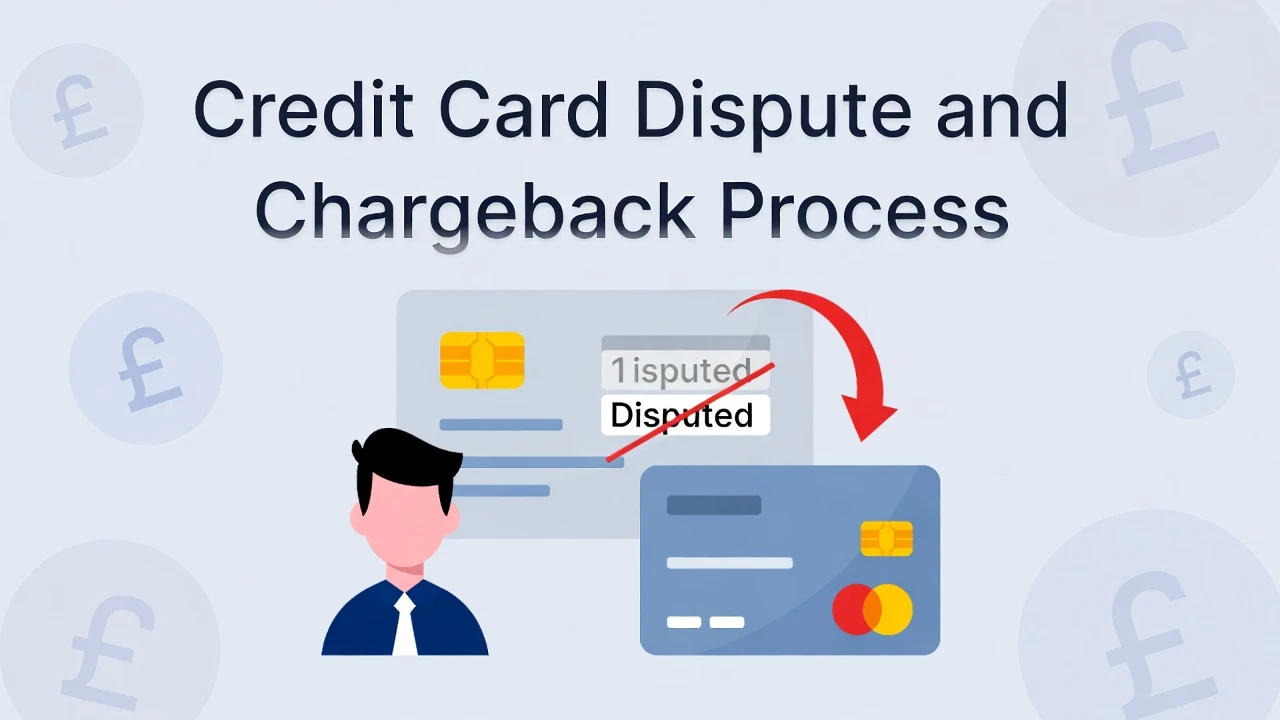
Credit cards provide consumer protection when a purchase goes wrong. If a product is not delivered, is faulty, or a transaction appears incorrect, cardholders in the UK can raise a dispute with their card provider. This process may lead to a chargeback, which is a mechanism used by card networks to reverse a transaction while the issue is investigated.
Understanding how the dispute and chargeback process works can help cardholders respond quickly when something does not look right on their statement. UK lenders must follow rules set by the Financial Conduct Authority to ensure complaints and disputes are handled fairly and transparently.
What is a credit card dispute?
A credit card dispute occurs when a cardholder questions a transaction on their account. This might happen if the purchase amount is incorrect, the goods never arrived, or the merchant charged the card without proper authorization.
When you contact your card provider to raise a dispute, they will review the transaction and ask for supporting details. This could include receipts, order confirmations, or communication with the retailer. The goal is to determine whether the charge is legitimate and whether a reversal should be considered.
Disputes are usually handled through the card provider first. If the issue cannot be resolved directly with the merchant, the bank may start the formal chargeback process.
Understanding the chargeback process
Chargeback is the technical procedure used to reverse a card payment through the card network. It is commonly used when a transaction is unauthorised, duplicated, or linked to goods or services that were not provided as expected.
When a chargeback is initiated, the card provider temporarily credits the disputed amount back to the cardholder while contacting the merchant’s bank. The merchant is then asked to provide evidence supporting the transaction.
The process typically includes the following stages:
The cardholder reports the issue to the bank
The bank reviews the claim and requests documentation
A provisional refund may be issued
The merchant’s bank responds with evidence
The final decision is made based on available information
Chargebacks operate under rules set by card networks such as Visa and Mastercard.
Common reasons for chargebacks
Cardholders usually request a chargeback for specific types of problems with a transaction. Some of the most common reasons include:
Unauthorised transactions
Goods not received after payment
Duplicate or incorrect charges
Cancelled services that were still billed
Products that are significantly different from their description
Each situation requires supporting evidence to demonstrate why the transaction should be reversed.
Typical timeline for a dispute
The chargeback process can take time because multiple parties are involved, including the cardholder’s bank, the merchant’s bank, and the card network.
Below is a simplified overview of the process timeline:
| The cardholder reports the issue to the bank | What Happens | Typical Timeframe |
|---|---|---|
| Dispute Raised | Cardholder reports issue to bank | Within days of noticing problem |
| Initial Review | Bank checks eligibility and documentation | A few days |
| Provisional Credit | Temporary refund may be applied | During investigation |
| Merchant Response | Merchant provides evidence | Several weeks |
| Final Decision | Bank confirms outcome of dispute | Up to 8 weeks or more |
Timeframes vary depending on the complexity of the case and the information available.
Difference between chargeback and legal protection
In the UK, chargeback is different from legal consumer protections. Chargeback is a voluntary scheme provided by card networks, whereas some legal protections exist under consumer law.
For example, purchases made with credit cards between £100 and £30,000 may also qualify for protection under Section 75 of the Consumer Credit Act. This allows cardholders to hold the card provider jointly responsible if a retailer fails to deliver goods or services as promised.
While both options exist, the appropriate route depends on the specific circumstances of the transaction.
Tips for handling a dispute effectively
If you notice a transaction you do not recognise, act quickly. Review your statement carefully and contact your card provider as soon as possible. Most banks have dedicated dispute teams that can guide you through the next steps.
Keep records of receipts, emails, and order confirmations related to the purchase. These documents can help support your claim if a formal investigation becomes necessary.
It is also useful to contact the merchant directly first. Many issues can be resolved quickly without needing to start a chargeback.
Final thoughts
The credit card dispute and chargeback process exists to provide an additional layer of protection for cardholders when transactions go wrong. While the process may take several weeks, it helps ensure that payment errors and merchant disputes are investigated fairly.
Understanding how disputes work, what evidence is required, and how long the process may take allows cardholders to respond confidently if an issue appears on their statement.
Frequently Asked Questions – credit unions (UK)
What should I do if I notice an unfamiliar charge on my credit union account?
Contact your credit union immediately—most have a 24/7 fraud line. They can temporarily freeze your card, reverse the transaction (provisional credit), and investigate. Because credit unions are member-owned, they often provide more personalised support during disputes. Always check your statements regularly.
How long does a credit card chargeback usually take in the UK?
For credit union‑issued cards (Visa/Mastercard), the chargeback process typically takes 8–12 weeks. The credit union acts on your behalf, contacting the merchant’s bank. If the merchant disputes, it may extend to 120 days. However, many UK credit unions resolve straightforward claims within 30–45 days.
Do I need proof to start a credit card dispute with my credit union?
Yes. While you can report a dispute immediately, the credit union will ask for evidence: receipts, order confirmations, screenshots of communication with the seller. For credit union members, providing these quickly speeds up the process. Under FCA rules, they must treat you fairly even if documents are delayed, but evidence strengthens your case.
Can a merchant challenge a chargeback?
Absolutely. Merchants have the right to present evidence (e.g., proof of delivery, signed contract). The card scheme (Visa/Mastercard) then reviews both sides. If the merchant wins, the money is taken back from your account. Your credit union will inform you and can help you appeal if new evidence emerges.
Is a chargeback the same as Section 75 protection?
No. Chargeback is a voluntary scheme from card networks (Mastercard/Visa). Section 75 is a UK law (Consumer Credit Act) that applies only to credit cards for items between £100 and £30,000. Many credit union credit cards offer Section 75 protection, making the credit union jointly liable with the retailer. Always check with your credit union whether their card carries Section 75 – most do.
Does the FSCS protect my credit union savings?
Yes – up to £120,000 per person, per credit union. The Financial Services Compensation Scheme covers UK credit unions just like banks. So your eligible savings are protected even if the credit union fails.