
- What Is a Balance Transfer Credit Card?
- How Balance Transfer Offers Work
- Key Features to Compare
- Example of How a Balance Transfer Can Save Money
- Benefits of Balance Transfer Cards
- Potential Risks to Understand
- Tips for Using a Balance Transfer Card Responsibly
- Final Thoughts
- Frequently Asked Questions – balance transfer credit cards (UK)
Balance transfer credit cards can help reduce interest costs if you already have credit card debt. These cards allow you to move an existing balance from one card to another, usually with a promotional 0% interest period. During this time, you can focus on paying down the original balance rather than paying interest.
In the UK, balance transfer offers are regulated by the Financial Conduct Authority, which requires lenders to clearly disclose fees, interest rates, and promotional terms. While these cards can be useful tools for managing debt, they work best when used with a clear repayment plan.
What Is a Balance Transfer Credit Card?
A balance transfer credit card lets you transfer debt from one credit card to another. The new card typically offers a temporary 0% interest period, which means you won’t pay interest on the transferred balance for a limited time.
However, most providers charge a balance transfer fee, usually a small percentage of the amount transferred. For example, transferring £2,000 with a 3% fee would add £60 to your balance.
The main goal is to reduce interest costs so more of your monthly payment goes toward clearing the debt itself.
How Balance Transfer Offers Work
When you apply for a balance transfer card, the lender reviews your credit profile and income. If approved, you’ll receive a credit limit. You can then request a transfer of your existing balance from another credit card provider.
Most transfers must be completed within a specific timeframe after opening the account, often within the first 60–90 days.
Even though the interest rate may be 0% during the promotional period, you must still make minimum monthly payments. Missing payments could cancel the promotional rate.
Your repayment behaviour is usually reported to UK credit reference agencies such as Experian, Equifax, and TransUnion.
Key Features to Compare
Not all balance transfer cards are the same. Some offer longer 0% periods, while others charge lower transfer fees. Credit Card Eligibility Checker.
Here are the main factors to consider before applying:
| Feature | What It Means | Why It Matters |
|---|---|---|
| 0% Intro Period | Time you won’t pay interest on the transferred balance | Longer periods allow more time to repay |
| Balance Transfer Fee | Percentage added when you move your balance | Higher fees increase total debt |
| Standard APR | Interest rate after the promo ends | Important if balance remains |
| Credit Limit | Maximum amount you can transfer | May affect how much debt you can move |
| Eligibility Requirements | Credit score and income checks | It is important that the balance remains |
Comparing these features helps you focus on overall value rather than just the promotional headline.
Example of How a Balance Transfer Can Save Money
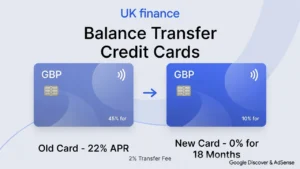
Imagine you have £3,000 on a credit card charging a 22% APR. If you transfer the balance to a card offering 0% for 18 months with a 3% transfer fee, the cost of transferring would be £90.
During the 18-month interest-free period, you could focus on reducing the balance without additional interest accumulating. If you repay around £167 per month, the balance could be cleared within the promotional period.
Without the transfer, a large portion of each payment would go toward interest instead of reducing the balance.
Benefits of Balance Transfer Cards
One of the biggest advantages is the ability to pause interest temporarily. This can make it easier to reduce debt faster.
Other benefits include:
- Consolidating multiple credit card balances
- Simplifying monthly repayments
- Potentially improving cash flow in the short term
For people managing high-interest credit card debt, these cards can provide breathing space to organise finances.
Potential Risks to Understand
Balance transfer cards are not a long-term solution if spending habits remain unchanged. If you continue using the old card after transferring the balance, you could end up with two debts instead of one.
Another risk is failing to repay the balance before the promotional rate ends. Once the introductory period expires, the standard APR applies to any remaining balance.
Late payments can also result in fees and may negatively affect your credit record.
Tips for Using a Balance Transfer Card Responsibly
If you decide to use a balance transfer card, planning your repayments from the start can make a big difference.
Helpful strategies include:
- Calculating a monthly payment that clears the balance before the 0% period ends
- Setting up a direct debit for automatic payments
- Avoid making new purchases on the card during the repayment period
- Tracking progress regularly to stay on schedule
These simple steps can help ensure the balance transfer actually reduces your debt.
Final Thoughts
Balance transfer credit cards can be useful tools for managing existing credit card debt in the UK. By reducing or temporarily eliminating interest, they allow more of your monthly payments to go toward clearing the balance.
However, they require careful planning and responsible use. Comparing promotional periods, transfer fees, and standard APRs can help you choose an option that fits your financial situation in 2026 and beyond.
Frequently Asked Questions – balance transfer credit cards (UK)
A balance transfer credit card allows you to move existing credit card debt to a new card that may offer a temporary 0% interest period. This can help reduce interest costs while you focus on paying down the balance.
Many UK balance transfer cards charge a transfer fee, usually around 1%–4% of the amount transferred. This fee is added to your new balance, so it’s important to factor it into your repayment plan.
Promotional periods vary by provider but often range between 6 and 24 months. After the introductory period ends, the card’s standard APR applies to any remaining balance.
Applying for a new card may involve a credit check, which could temporarily affect your score. However, responsibly paying down the transferred balance may improve your credit profile with agencies like Experian and Equifax.
In many cases, yes. If your new credit limit allows it, you may transfer balances from more than one card. However, each transfer may include a fee, so check the total cost before proceeding.