
- What is a balance transfer credit card?
- How balance transfers work in the UK
- Key features to compare
- When a balance transfer makes sense
- Costs and risks to consider
- Costs and benefits at a glance
- Impact on your credit score
- Practical example
- Is a balance transfer card right for you?
- Frequently Asked Questions about Credit Unions
Balance transfer credit cards are designed to help people manage existing credit card debt more efficiently. Instead of paying interest on one card, you move that balance to a new card that may offer a lower or 0% introductory interest rate for a fixed period. In the UK, these products are commonly used to reduce interest costs and simplify repayments.
Used carefully, a balance transfer card can create breathing space to pay down debt faster. However, the benefits depend on understanding fees, promotional periods, and what happens once the introductory rate ends.
What is a balance transfer credit card?
balance transfer credit card allows you to transfer outstanding debt from one or more credit cards to a new card, often with a temporary 0% interest offer. This means you can focus on repaying the amount borrowed without additional purchase interest during the promotional period.
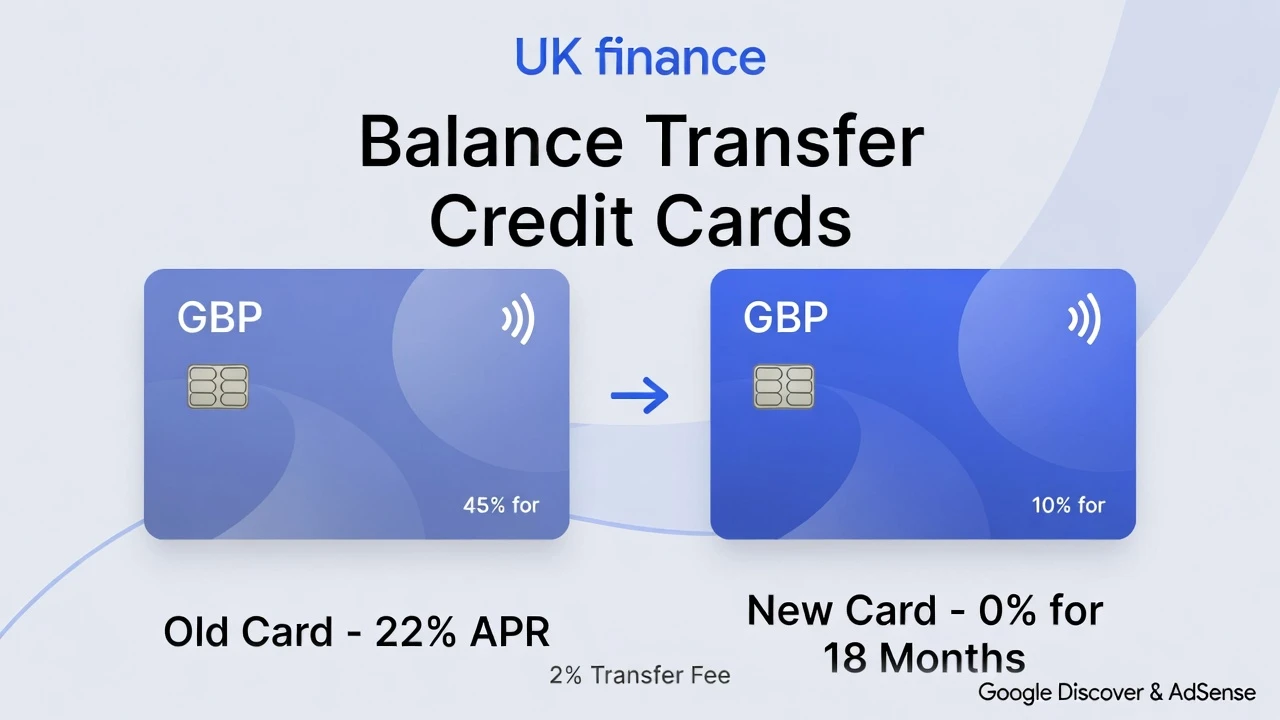
Most UK lenders advertise a representative APR, but the key feature for balance transfers is the length of the 0% period and the associated transfer fee. The transfer fee is typically a small percentage of the balance moved and is added to the total owed.
How balance transfers work in the UK
When you apply for a balance transfer card, the lender assesses your eligibility using information from UK credit reference agencies such as Experian, Equifax, and TransUnion. If approved, you request to move your existing balance to the new card.
The process usually involves:
Transferring a specified amount from your old card
Paying a transfer fee, often between 1% and 3%
Making at least the minimum monthly payment
Clearing as much of the balance as possible before the promotional period ends
It is important to remember that missing payments can result in the loss of the 0% offer. Once the promotional period ends, the standard variable APR applies to any remaining balance.
Key features to compare
Not all balance transfer cards are the same. Before choosing one, review the length of the interest-free period, the transfer fee, and the revert rate. A longer 0% period can provide more time to clear debt, but sometimes comes with a higher fee.
You should also check whether new purchases are included in the 0% offer. Many balance transfer cards charge standard interest on spending, so using the card for everyday purchases can make repayment more complicated.
When a balance transfer makes sense
A balance transfer card may be useful if you are currently paying high interest on existing debt and have a realistic plan to repay it within the promotional window. For example, if you owe £3,000 at a high APR and can afford consistent monthly repayments, moving it to a 0% card could reduce overall interest costs.
It may also help if you want to consolidate multiple card balances into one monthly payment. This can make budgeting clearer and easier to track.
However, it may not be suitable if you are likely to continue borrowing or struggle to make regular repayments. In such cases, interest savings could be offset by fees or additional debt.
Costs and risks to consider
While promotional offers can appear attractive, they are not free money. The transfer fee increases your balance from day one. If you transfer £2,000 with a 3% fee, you immediately owe £2,060.
There is also the risk of reverting to a higher APR after the introductory period. If a significant balance remains, interest can build quickly. Missing payments may trigger penalty charges and affect your credit history.
UK credit cards are regulated by the Financial Conduct Authority, which sets standards around clear disclosure of fees and representative APR. Even so, it remains your responsibility to read the credit agreement carefully.
Costs and benefits at a glance
| Feature | Potential Benefit | Possible Risk |
|---|---|---|
| 0% introductory period | Reduces interest on existing debt | Interest applies after offer ends |
| Balance transfer fee | Access to promotional rate | Increases total debt upfront |
| Consolidation of multiple cards | Easier budgeting and tracking | Temptation to reuse cleared cards |
| Fixed promotional timeframe | Clear repayment target | Missed payments may cancel offer |
This comparison highlights that balance transfer cards are tools for managing debt, not eliminating it.
Impact on your credit score
Applying for a balance transfer card usually involves a hard credit check. Too many applications within a short period can lower your credit score temporarily. Lenders also look at your credit utilisation ratio, which measures how much of your available credit you are using.
Successfully managing a balance transfer by making payments on time and reducing debt can support your credit profile over time. On the other hand, missed payments or high utilisation can make future borrowing more difficult.
Practical example
Imagine you have £4,000 spread across two cards at an average interest rate above 20%. You are paying mostly interest each month. By moving the full balance to a 0% balance transfer card with a 24-month promotional period and a small transfer fee, you could set a structured repayment plan of around £170 per month to clear the debt before interest applies.
This approach only works if you avoid adding new spending to the card and stick to the repayment plan.
Is a balance transfer card right for you?
Balance transfer credit cards can be a practical tool for managing existing debt in the UK, but they require discipline. They are most suitable for individuals who have a steady income, can commit to fixed repayments, and want to reduce interest rather than increase borrowing.
Before applying, consider whether you can realistically clear the balance within the promotional period and whether the transfer fee justifies the potential savings. Used responsibly, a balance transfer card can support structured debt reduction. Used carelessly, it can simply delay the cost of borrowing rather than reduce it.
Frequently Asked Questions about Credit Unions
Is my money safe in a UK credit union?
Yes. Credit unions are authorised and regulated by the FCA and PRA. Like banks and building societies, they are covered by the Financial Services Compensation Scheme (FSCS), protecting your savings up to £120,000 per person.
Can I join a credit union if I have bad credit?
Yes, and this is a key advantage. Credit unions often consider your personal circumstances and ability to repay, not just your credit score. They are a responsible and affordable alternative to high-cost payday lenders.
How is a credit union different from a building society?
Both are member-owned, but credit unions typically have a stricter “common bond” for membership (e.g., living in one area) and focus on small loans and basic savings. Building societies are often larger, operate nationwide, and focus on mortgages.
What happens to my loan if I leave the area I joined for?
You can remain a member and continue using services even if you no longer meet the original “common bond” criteria. You cannot be forced to leave once you are a member.
Do credit unions charge fees for current accounts?
Some do. A credit union current account with a full-function debit card may have a small monthly fee (often £1–£5). Basic savings accounts are usually free. Always check the specific fee schedule with your credit union.