HowtoFindYourBodyShapein2026:TheCompleteGuide(WithaFreeCalculator)

Table of Contents
If you have ever stood in a fitting room wondering why the same size looks wonderful in one dress and completely wrong in another, the answer is rarely your body — it is the match between the garment’s proportions and yours. Dresses, trousers and tops are cut to flatter particular proportion patterns, so the fastest way to shop smarter, return less and feel better in everything you own is to find your body shape first.
Until now, that usually meant guesswork, mirrors and a lot of trial and error. Our free body shape calculator does the maths for you: you enter four simple measurements — shoulders, bust, waist and hips — and it shows you which common shape pattern your proportions most closely match, together with styling ideas and a summary of your measurements. In this guide we walk you through measuring correctly, explain the five main body shapes, and show you exactly how to dress your result with confidence.
Key Takeaways
- Your body shape is about proportions, not weight or dress size — it is the relationship between your shoulders, bust, waist and hips.
- You only need a soft tape measure and four numbers; the free calculator gives you your closest shape pattern in under a minute.
- The five main shapes are hourglass, pear, apple, rectangle and inverted triangle — and many women sit between two of them.
- Measure at the fullest or widest point of each area, keep the tape level and comfortably snug, and use one unit (centimetres or inches) throughout.
- Dressing your shape is about balance: highlight what you love and create the proportions you want with necklines, waistlines and fabric.
What Is a Body Shape Calculator — and Why Use One?
A body shape calculator compares the relative proportions of your shoulders, bust, waist and hips and looks for patterns: a clearly defined waist, fuller hips, a fuller midsection, or upper- and lower-body measurements that are broadly similar. Instead of measuring yourself against a single “ideal”, it simply tells you which of the classic shape families your own proportions sit closest to.
Try it now: open our free body shape calculator, choose centimetres or inches, type in your four measurements and press “Calculate my shape”. You will see your closest proportion pattern, a set of styling ideas chosen for that pattern, and a summary of the measurements you entered.
It is worth remembering what the tool is — and is not. As the calculator itself states, it is an approximate fashion styling guide, not a scientific or medical assessment. Real bodies are diverse, and plenty of women fall between categories. Think of your result as a shortcut for shopping: it tells you which necklines, waistlines and silhouettes are most likely to work first time, whether you are choosing everyday outfits, refreshing a work wardrobe or picking from the best wedding guest dresses for a big event.
How to Find Your Body Shape: Step by Step
All you need is a soft dressmaker’s tape measure and a mirror. Measure over light clothing or underwear — thick jumpers and jeans will distort your numbers — and stand relaxed, breathing normally. Here is exactly how to take each measurement the way the calculator expects:
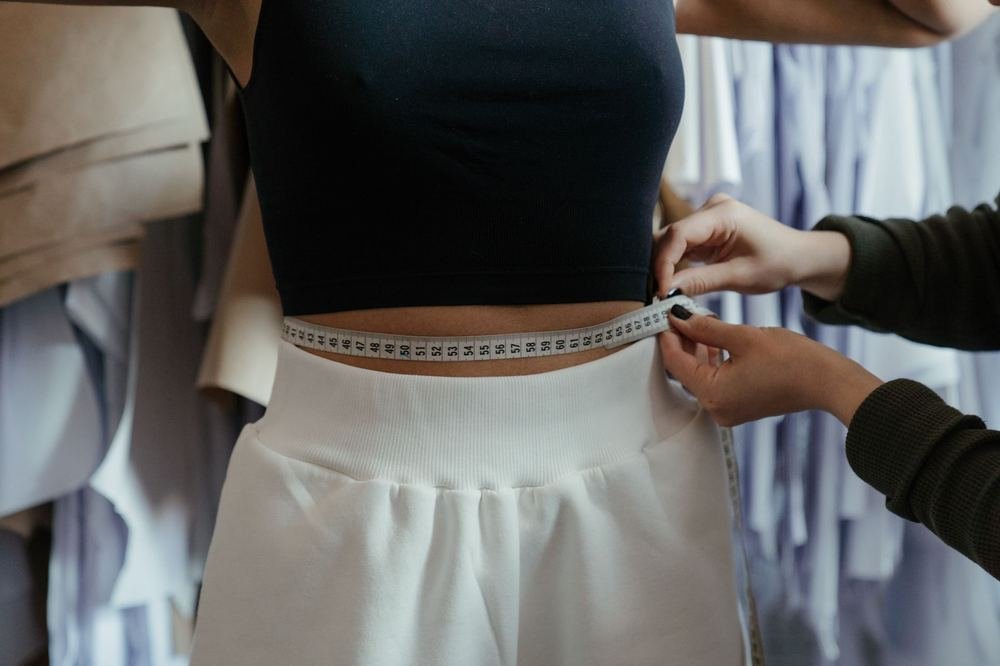
- Choose your unit first. The calculator lets you switch between centimetres and inches. Pick one and use it for all four measurements — mixing units is the most common reason for a strange result.
- Shoulders. Measure around the widest part of your shoulder line, passing the tape around your back and across the top of your arms. This is a full circle measurement, not a straight line from shoulder tip to shoulder tip.
- Bust. Measure around the fullest part of your bust, keeping the tape level under your arms and across your shoulder blades. It should sit comfortably snug — never tight enough to compress.
- Waist. Find your natural waist: the narrowest part of your torso, between your ribs and your hips (usually just above your belly button). Wrap the tape around it, level and relaxed. Do not pull your stomach in — the calculator needs your real proportions, not your best impression of them.
- Hips. Stand with your feet together and measure around the fullest, widest point of your hips and bottom, keeping the tape level all the way round.
- Enter your numbers. Type the four measurements into the calculator and press “Calculate my shape”. Your result shows your closest proportion pattern, styling ideas for it, and a summary you can screenshot before you go shopping.
If your result surprises you, measure once more — a tape that has slipped or twisted is usually the culprit. And if you land between two shapes, that is completely normal: read both sets of styling ideas and borrow from each.
The 5 Main Body Shapes, Explained
Stylists group female proportions into five broad families (you can read more about the history of these female body shape classifications on Wikipedia). Here is how to recognise each one — and, more importantly, how to dress it.
Hourglass
The pattern: bust and hips are broadly similar in measurement, with a clearly defined, noticeably smaller waist. Dress it: follow your natural lines rather than hiding them. Fitted and belted styles, pencil skirts and our favourite wrap dress outfits were made for you. Choose soft, fluid fabrics that skim rather than swamp, and avoid very boxy, shapeless cuts that bury your waist.
Pear (Triangle)
The pattern: hips are wider than your bust and shoulders, usually with a defined waist. Dress it: draw the eye upwards and balance your lower half. A-line and fit-and-flare skirts skim the hips beautifully, while structured shoulders, boat necks, embellished tops and brighter colours on top restore proportion. Keep bottoms simple and darker if you want a streamlined look.
Apple (Round)
The pattern: a fuller midsection and bust, with a less defined waist and often slimmer legs and arms. Dress it: create length and a gentle line through the middle. Empire-line and swing dresses, V-necks, open structured jackets and tops that finish at the hip all work well. Show off your legs with knee-length hems, and choose fabrics with drape rather than cling around the tummy.
Rectangle
The pattern: shoulders, bust, waist and hips are fairly similar, with a waist that is only slightly smaller. Dress it: your job is to create curves and definition. Peplums, belts at the waist, ruffles, pleats and layered looks all add shape, and softly tailored drop-waist dresses give an elegant line. Both fitted and flowing styles suit you — just add a focal point at the waist.
Inverted Triangle
The pattern: shoulders and bust are broader than your hips. Dress it: keep tops simple and add interest and volume below the waist. Full, A-line and pleated skirts, wide-leg trousers and lighter or brighter bottoms balance strong shoulders beautifully. V-necks and scoop necks soften the upper body; go easy on shoulder pads, halter necks and heavy embellishment at the shoulder line.
How to Dress Your Result: 4 Rules That Work for Every Shape

Whatever pattern the calculator gives you, the same four principles apply. First, aim for balance: if one half of your body is visually stronger, use cut, colour and detail to give the other half presence. Second, decide on your waist — either highlight it, create one with belts and seaming, or deliberately skim past it; indecision is what makes outfits feel “off”. Third, let fabric help: structured fabrics hold a shape where you want one, while fluid fabrics soften and flow. Fourth, fit beats size — a £30 dress altered to your proportions will always outshine a designer label that pulls or sags. When you rebuild your wardrobe around these rules, a small, well-chosen capsule wardrobe for women becomes much easier to plan, because every piece is chosen for the body you actually have.
5 Common Mistakes When Measuring Your Body Shape
- Measuring over bulky clothes. Jeans, padded bras and thick knitwear add centimetres in exactly the wrong places. Measure over underwear or a thin layer.
- Pulling the tape tight — or holding your breath. A tape that digs in (or a sucked-in stomach) gives you the proportions of a deep breath, not of you. Keep it level, snug and relaxed.
- Measuring your waist where your trousers sit. Your natural waist is the narrowest point of your torso, between ribs and hips — for most women that is higher than a waistband.
- Mixing centimetres and inches. Three measurements in cm and one in inches will produce a nonsense shape. Choose one unit in the calculator and stick to it.
- Treating the result as a rulebook or a label. Your shape is a styling shortcut, not an identity. If you love a “wrong for your shape” outfit and feel great in it, wear it — confidence outperforms every guideline in this article.
Frequently Asked Questions
Where exactly should I measure my waist?
Measure around your natural waist — usually the narrowest part of your torso, between your ribs and your hips, roughly at or just above your belly button. Keep the tape level and relaxed, and breathe out normally before you read the number.
Can my result fall between two body shapes?
Yes, and it is very common. The calculator’s categories simplify a wide range of natural proportions, so it shows your closest broad pattern, not a fixed identity. If you sit between two shapes, use the styling ideas from both.
Do I need to use centimetres?
No. The calculator lets you select inches or centimetres before you start. Just use one unit consistently for all four measurements — shoulders, bust, waist and hips.
How often should I re-measure?
Whenever your body changes noticeably — after weight gain or loss, pregnancy, or a new exercise routine — and before a big purchase such as a wedding dress or an expensive coat. A quick re-check once a year keeps your result honest.
Does my body shape change as I gain or lose weight?
Your measurements change, and the balance between them can shift, so your closest pattern may move (a rectangle may read as an hourglass, for example). Many women stay in the same family, but it is worth re-running the calculator rather than assuming.
Which body shape is the most flattering?
There isn’t one. Every shape can look elegant, polished and striking when the proportions of the outfit balance the proportions of the body. The goal is not a different shape — it is clothes that work with yours.
I don’t own a tape measure. Can I still find my body shape?
Yes — use a belt, ribbon or even a phone charging cable, mark the length, then lay it flat and measure it against a ruler. A soft dressmaker’s tape is more accurate, costs very little, and is worth keeping in your sewing or bedside drawer.
Ready to Find Your Body Shape?
Four measurements, one minute, and a much easier life in front of the wardrobe mirror. Run your numbers through the body shape calculator now, note your closest pattern and its styling ideas, and take them with you next time you shop — whether that is online at midnight or in a fitting room on Saturday.
Related: plus size wedding guest dresses · bodycon dress outfits · how to style wide-leg trousers
About Business Outstanders: Business Outstanders is a UK fashion guide for women, publishing daily outfit ideas, wedding and bridal style, nail designs and hairstyles, alongside free fashion tools such as our body shape and bra size calculators. Every guide is written by the Business Outstanders editorial team to help women in the UK, US and Canada dress with confidence.