VelvetDresses:HowtoChoose,StyleandCareforThem
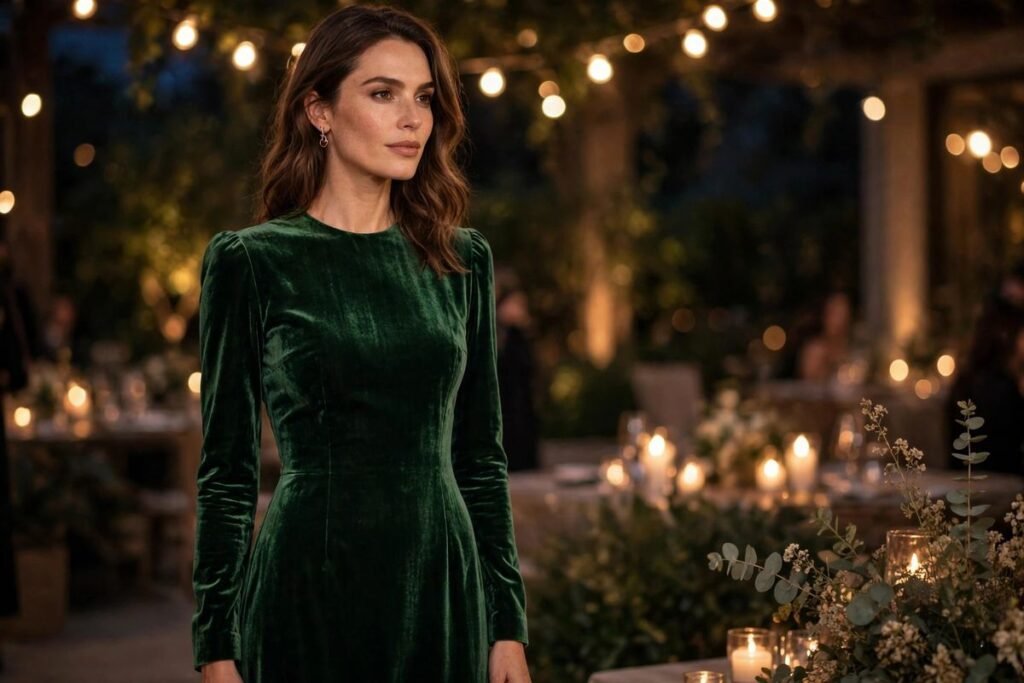
Table of Contents
Velvet dresses have a rare quality: they look dressed up without trying too hard. The fabric catches the light, feels soft against the skin and instantly makes a simple silhouette feel special. That is why velvet dresses return every autumn and winter, and why they suit so many occasions, from a festive party to a winter wedding, a smart dinner or even a dressed-up day out. The trick is choosing the right style for your shape, occasion and comfort, then styling it so the velvet stays the star without overwhelming the outfit.
Why Velvet Dresses Work So Well in Winter
Velvet is a pile fabric, which means it has a soft, raised surface that gives it depth and warmth. Unlike satin, which can feel cool and slippery, velvet feels cosy and substantial, so it is naturally suited to colder months. It also photographs beautifully: the way light moves across the pile gives a rich, dimensional effect that flat fabrics cannot match. A well-chosen velvet dress can therefore do the work of a whole outfit, needing only simple shoes and a few accessories to look complete.
Velvet dresses also come in a huge range of styles. There are fluid bias-cut slips, structured wrap dresses, long-sleeved midis, dramatic maxis and playful minis. That variety is good news, because it means there is a velvet dress for almost every body shape and dress code. The key is not to buy velvet simply because it looks beautiful on the hanger. Check the fit, the weight and the way the fabric falls on you, because velvet shows every seam and drape more clearly than a matte cotton or crepe.
Choosing the Right Velvet Dress
Find a silhouette that flatters you
A wrap dress is one of the most forgiving velvet styles. It defines the waist, allows you to adjust the fit, and suits hourglass, pear and apple shapes alike. An A-line midi is another safe choice: it skims the hips, gives movement when you walk and works well with both heels and boots. If you love a sleeker look, a bias-cut slip dress in velvet is elegant, but it shows more of your shape, so choose a heavier velvet with a little stretch and consider a slip underneath for a smooth finish.
Choose the right length for the occasion
Length changes the whole mood of a velvet dress. A mini velvet dress feels youthful and party-ready, especially in black or burgundy with tights and ankle boots. A midi length is the most versatile: it works for weddings, dinners, work events and parties, and it pairs easily with coats. A maxi velvet dress is the most dramatic option and is best saved for formal evenings, black-tie events and winter weddings, where its sweeping fabric can really shine.
Pick a colour you will actually wear
Black velvet is timeless and slimming, but it is not the only option. Burgundy, forest green, navy and plum are rich winter colours that flatter most skin tones and feel festive without being loud. Emerald green suits warm and cool skin tones alike, while deep teal is a beautiful alternative to black for evening. If you prefer lighter colours, blush and dusty pink velvet can look soft and romantic, though they show marks more easily, so they are best for shorter events rather than all-day wear.
Velvet Dresses for Every Occasion
For a Christmas or festive party
For a festive party, lean into the glamour of velvet. A fitted midi or a wrap dress in burgundy or emerald, paired with heeled sandals or pointed courts, is a reliable formula. Add a small clutch, delicate gold or silver jewellery and a touch of sparkle, but keep it to one statement piece so the outfit does not compete with itself. Our guide to Christmas party dresses has more ideas for pairing velvet with sequins, satin and festive accessories.
For a winter wedding
Velvet is an excellent choice for a winter wedding guest, provided you avoid white, ivory and anything that could be mistaken for bridal wear. A long-sleeved midi in a jewel tone, worn with heeled boots or courts and a structured coat, looks polished and warm enough for a church or a country venue. Choose a dress that allows you to move and sit comfortably for a long day, and avoid very dark colours at a daytime wedding if the dress code is lighter and more relaxed.
For work and smart daytime events
Velvet can work for the office if you keep the styling restrained. Choose a knee-length or midi dress in navy, black or dark green, with long sleeves or a tailored blazer over the top. Pair it with opaque tights and low-heeled boots, and keep jewellery minimal. The result is smart and seasonal without looking like evening wear. Avoid very short hemlines, deep necklines and overly shiny accessories in a professional setting.
For a casual day out
Velvet does not have to be formal. A simple velvet midi or a velvet slip dress layered over a fine roll neck, worn with ankle boots and a leather jacket or a wool coat, makes a stylish daytime outfit. Keep the rest of the look relaxed: a crossbody bag, minimal jewellery and natural make-up. This kind of layering also makes velvet practical in changeable weather, because you can add or remove layers as the day warms up.
How to Style a Velvet Dress
Shoes that work with velvet
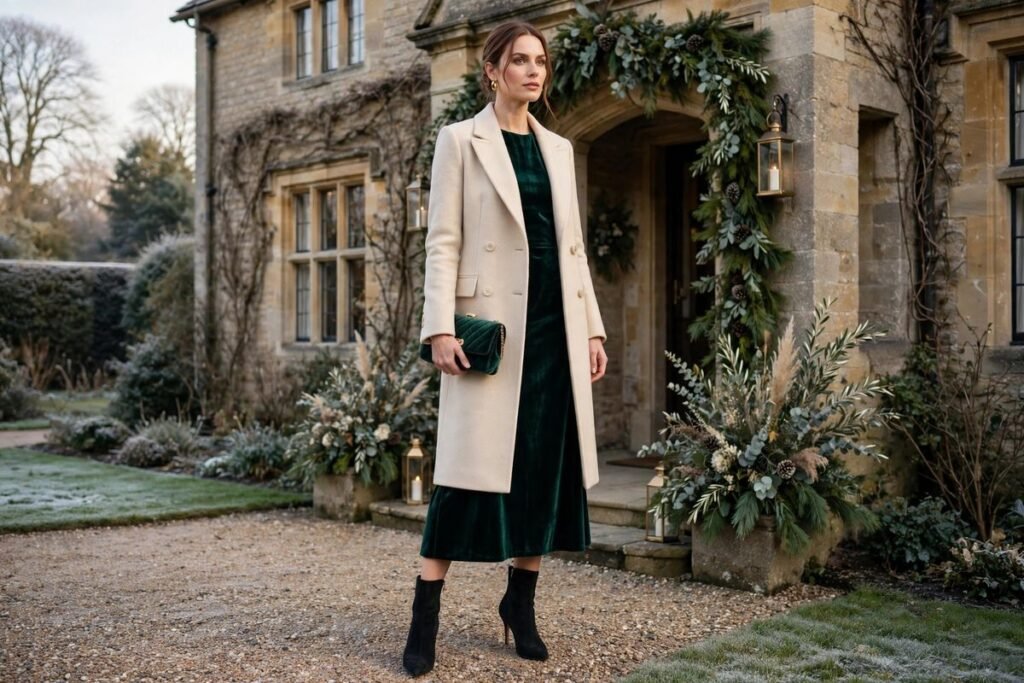
The right shoes balance the richness of velvet. For evening, pointed courts, strappy heels or heeled sandals in a neutral or metallic shade work best. For winter events, knee-high or ankle boots in leather or suede add warmth and a modern edge, especially with a midi dress. Avoid very chunky trainers or heavy boots with a formal velvet maxi, as they can drag the outfit down. If you will be on your feet for hours, a block heel is a kinder choice than a stiletto and still looks elegant.
Layers and coats
Because velvet is already textured, choose outerwear in a contrasting fabric. A tailored wool coat, a classic trench or a faux fur stole all work beautifully, while a velvet coat over a velvet dress can look too heavy. For milder days, a trench coat layered over a velvet midi is a lighter, polished option. Indoors, a fitted blazer, a cropped cardigan or a delicate shawl can keep you warm without hiding the dress entirely.
Jewellery, bags and finishing touches
Velvet pairs best with simple, refined accessories. Gold jewellery warms up burgundy, green and black velvet, while silver suits navy, plum and cool-toned dresses. Pearls add a classic touch for weddings and formal dinners. Choose one focal point, such as statement earrings or a bold cuff, rather than wearing a necklace, earrings, bracelet and ring all at once. A small structured bag in leather or satin completes the look, and a touch of velvet in your accessories, such as a velvet hairband, should be used sparingly.
For more inspiration on giving velvet a modern, street-style edge rather than a purely traditional feel, Vogue’s guide to velvet dressing shows how the fabric can be mixed with denim, lace and tailoring for a fresher look.
Velvet Care: Washing, Steaming and Storage
Velvet needs a little more care than everyday fabrics, but it is not difficult to look after. Always check the care label first: many velvet dresses are dry-clean only, especially if they are made from silk velvet or have delicate linings. Cotton and polyester velvets can often be hand-washed in cool water, but never wring them out, as this can crush the pile. Instead, press out excess water gently with a clean towel and lay the dress flat to dry.
To remove creases, use a steamer held a few inches away from the fabric, or hang the dress in a steamy bathroom. Avoid pressing a hot iron directly onto velvet, as it can flatten the pile and leave shiny marks. If you must iron, use a low heat, iron on the reverse side, and place a pressing cloth between the iron and the fabric. For storage, hang velvet dresses on padded hangers rather than folding them, and keep them out of direct sunlight, which can fade rich colours over time.
Common Velvet Mistakes to Avoid
The most common mistake is wearing too much velvet at once. One velvet piece is usually enough; pairing a velvet dress with velvet shoes, a velvet bag and a velvet coat can look costume-like. Another mistake is choosing a dress that is too tight. Velvet has less give than jersey, and a tight fit can pull across the bust and hips and show every line underneath. Choose your usual size, or size up if you are between sizes, and wear smooth, well-fitting underwear. Finally, avoid over-accessorising: velvet already has texture and shine, so it needs less decoration than a plain dress.
Frequently Asked Questions
Are velvet dresses in style for winter?
Yes. Velvet dresses return every winter for parties, weddings and festive events because the fabric is warm, rich and photogenic.
Can you wear a velvet dress to a wedding?
Yes, especially in winter. Choose a midi or maxi in a jewel tone, avoid white and ivory, and check the dress code before choosing a very formal style.
What shoes go best with a velvet dress?
Pointed courts, strappy heels and heeled sandals suit evening velvet dresses, while ankle boots and knee-high boots work well for winter and daytime styling.
How do you wash a velvet dress?
Check the label first. Many velvet dresses need dry cleaning. If hand-washing is allowed, use cool water, do not wring the fabric, and lay it flat to dry.
Can velvet dresses be worn casually?
Yes. Layer a simple velvet midi or slip dress over a roll neck, add ankle boots and a leather jacket or wool coat, and keep accessories relaxed.
Velvet dresses earn their place in a winter wardrobe because they are versatile, flattering and effortlessly elegant. Choose a silhouette and colour you love, style it with simple shoes and refined accessories, and look after the fabric, and a good velvet dress will carry you through parties, weddings and smart days out for many seasons.