
- Overview
- Introduction
- Key Takeaways
- What is Foreign Transaction Fee? (A UK Guide for Beginners)
- How Foreign Transaction Fees Work in the UK
- Real UK Examples & Scenarios
- Pros and Cons of Foreign Transaction Fees
- Key Factors That Affect Foreign Transaction Fees in the UK
- Common Mistakes UK Consumers Make
- Expert Insight Box
- Is Foreign Transaction Fee Worth It for UK Users?
- UK Regulatory Information
- Conclusion
Overview
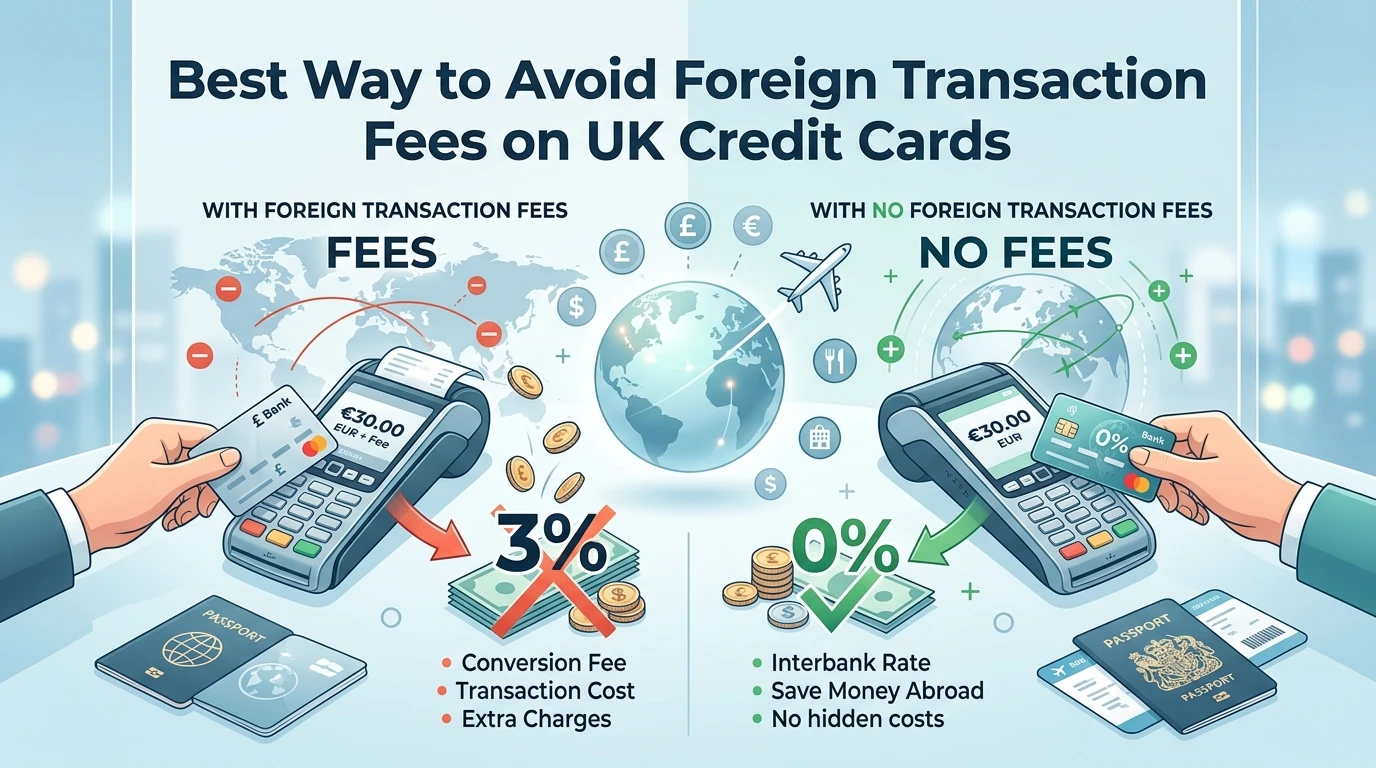
What is the best way to avoid foreign transaction fees on UK credit cards? Quick Answer: The most effective way is to use a fee-free or 0% foreign transaction credit card, always pay in the local currency (avoid dynamic currency conversion), and compare credit card exchange rates before travelling. This helps you avoid hidden overseas spending charges and unnecessary currency conversion costs.
Introduction
If you’ve ever paid for a coffee in Paris or booked a hotel in Spain using your UK credit card, you may have unknowingly paid extra fees. These are known as foreign transaction fees, and they can quietly add up during your trip.
According to MoneyHelper (UK), many UK credit cards charge around 2.75% to 3% per transaction abroad, which can significantly increase your travel costs. In today’s global travel environment—where online purchases and overseas spending are common—understanding these charges is essential.
This guide explains how foreign transaction fees UK work, how to avoid them, and what smarter alternatives exist. You’ll also learn about dynamic currency conversion, travel credit cards UK, and practical tips to minimise costs while spending abroad.
[IMAGE: Infographic showing how foreign transaction fees add up on £1,000 overseas spend]
Key Takeaways
- Most UK cards charge 2.75%–3% foreign transaction fees on overseas spending
- Using a fee-free credit card is the simplest way to avoid charges
- Always choose local currency over GBP to avoid dynamic currency conversion
- Even “reward cards” may cost more due to hidden overseas fees
- Surprisingly, some debit cards may be cheaper than credit cards abroad
What is Foreign Transaction Fee? (A UK Guide for Beginners)
A foreign transaction fee—also known as a non-sterling transaction fee or currency conversion fee—is a charge applied when you use your UK card in a non-GBP currency.
This applies when:
- You spend abroad (e.g. in euros or dollars)
- You shop online from international retailers
- You withdraw cash overseas
These fees usually combine:
- A currency conversion fee (exchange rate markup)
- A card issuer fee (typically 2–3%)
UK consumers encounter these fees because most standard credit cards are designed primarily for domestic use. Unless specified, they are not optimised for international spending.
How Foreign Transaction Fees Work in the UK
Here’s a step-by-step breakdown of how overseas spending charges apply:
- You make a purchase in a foreign currency (e.g. €100 in Spain)
- The payment network (Visa/Mastercard) converts it into GBP
- Your card provider adds a currency conversion fee (typically ~2.99%)
- The transaction appears on your statement in GBP
- Additional ATM fees may apply if withdrawing cash
- Interest may apply immediately on cash withdrawals
- Fees are regulated under Financial Conduct Authority (FCA) transparency rules
Example:
€100 purchase → Converted to £85 → +2.99% fee → Final cost: ~£87.54
Takeaway: Even small fees can add up quickly across multiple transactions.
Real UK Examples & Scenarios
Scenario Breakdown
| Scenario | Situation | Outcome | Key Lesson |
|---|---|---|---|
| London Tourist | Uses standard credit card in France | Pays ~£30 extra on £1,000 spend | Fees add up quickly |
| Manchester Student | Uses fee-free travel card | Pays £0 in fees | Best option for frequent travellers |
| Birmingham Family | Chooses GBP at checkout abroad | Pays hidden DCC fees | Always choose local currency |
Example Details
- Emma (London): Uses a standard UK card in Italy and pays nearly £30 extra due to fees
- Ali (Manchester): Uses a travel credit card UK with 0% fees and saves money
- Sarah (Birmingham): Selects GBP instead of euros and pays more due to dynamic currency conversion
Pros and Cons of Foreign Transaction Fees
| Pros | Cons |
|---|---|
| Convenient for global spending | Adds 2–3% cost per transaction |
| No need for currency exchange beforehand | Hidden fees reduce transparency |
| Widely accepted worldwide | Poor exchange rates compared to specialists |
| Useful in emergencies | ATM withdrawals incur extra charges |
Key Factors That Affect Foreign Transaction Fees in the UK
- Card Type: Fee-free travel cards eliminate most charges
- Exchange Rate Provider: Visa/Mastercard rates vary slightly
- Dynamic Currency Conversion: Often worse than bank rates
- ATM Usage: Cash withdrawals trigger additional fees
- FCA Regulations: Require transparency but not fee limits
- Credit Profile: Determines access to better travel cards
- Spending Behaviour: Frequent travellers benefit more from fee-free cards
Tip: Compare options regularly and check terms before travelling.
Common Mistakes UK Consumers Make
- Choosing GBP instead of local currency abroad
- Assuming all cards have the same exchange rates
- Ignoring ATM withdrawal fees
- Using reward cards with high overseas fees
- Not checking terms before travel
Avoidance Tip: Always review your card’s foreign transaction fee UK policy before using it overseas.
Expert Insight Box
“When paying abroad, always choose the local currency. This avoids dynamic currency conversion, which can be significantly more expensive than your card provider’s exchange rate.”
— MoneyHelper UK
Is Foreign Transaction Fee Worth It for UK Users?
For occasional travellers, these fees may seem minor. However, frequent travellers or online international shoppers can lose significant money over time.
Consider it if:
- You rarely travel abroad
- You value convenience over cost
Avoid it if:
- You travel frequently
- You make regular overseas purchases
Alternatives:
- Fee-free travel credit cards
- Multi-currency accounts
- Digital banks
UK Regulatory Information
The Financial Conduct Authority (FCA) regulates UK financial providers and ensures transparency in fees. Card issuers must clearly disclose foreign transaction fees UK.
Consumers are protected under:
- FCA transparency rules
- Consumer Credit Act protections
- Chargeback rights
For official guidance, visit:
- MoneyHelper (UK government-backed service)
- FCA official website
Conclusion
Avoiding foreign transaction fees is simple with the right approach:
- Use a fee-free credit card
- Always pay in local currency
- Compare credit card exchange rates
Before your next trip:
- Check your card’s fee structure
- Consider switching to a travel-friendly option
- Monitor your spending abroad
A foreign transaction fee is a charge applied when you spend in a non-GBP currency. It typically includes a conversion fee and a card issuer fee, usually around 2.75%–3% of the transaction amount. This fee applies to purchases made abroad or online with merchants in foreign currencies.
Use a fee-free credit card designed for travellers, always pay in the local currency (never accept GBP conversion at the terminal), and avoid ATM withdrawals abroad with cards that charge cash advance fees. Some digital banks and specialist cards offer zero foreign transaction fees across Europe and worldwide.
Dynamic currency conversion (DCC) lets you pay in GBP while abroad, but merchants usually offer inflated exchange rates with hidden markups. It often costs 3–8% more than paying in the local currency. Always choose to pay in the local currency (e.g., EUR, USD) to get the fair exchange rate set by your card network (Visa/Mastercard).
Yes, especially if you travel often. Premium travel credit cards eliminate overseas spending charges, often offer better exchange rates, and provide extras like travel insurance, lounge access, or rewards on flights. For occasional travellers, a fee-free card is still beneficial — it saves 3% on every transaction abroad.
Many traditional debit cards charge non-sterling transaction fees (around 2.75% to 3%) plus cash withdrawal fees. However, several digital banks (like Monzo, Starling, Chase UK) offer fee-free spending abroad and competitive exchange rates. Always check your bank’s fee schedule before travelling.
Options include prepaid travel cards (e.g., Revolut, Wise), multi-currency accounts, and digital banking apps with low or zero fees. Using a dedicated travel credit card with no foreign loading fee is also a powerful alternative. For cash, consider opening a fee-free current account that refunds worldwide ATM charges.