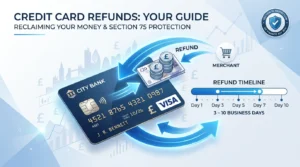


- Overview
- Introduction
- Key Takeaways
- What is UK Credit Card Users Are Protected? (A UK Guide for Beginners)
- How UK Credit Card Users Are Protected Works in the UK
- Real UK Examples & Scenarios
- Pros and Cons of UK Credit Card Users Are Protected
- Key Factors That Affect UK Credit Card Protection in the UK
- Common Mistakes UK Consumers Make
- Expert Insight Box
- Is UK Credit Card Users Are Protected Worth It for UK Users?
- UK Regulatory Information
- Conclusion & Next Steps
- 📋 Credit card protection in the UK: key questions answered
Overview
What does “UK Credit Card Users Are Protected” mean? Quick Answer: In the UK, credit card users benefit from strong legal protections—especially under Section 75 of the Consumer Credit Act. This means your card provider may be jointly responsible if something goes wrong with a purchase between £100 and £30,000, giving you extra security compared to other payment methods.
Introduction
Imagine ordering a £500 laptop online, only for it to never arrive. For many UK consumers, this scenario is more common than you might think. According to UK Finance, card fraud losses totalled over £1.2 billion in recent years, highlighting the importance of secure payment methods.
This is where the idea that UK Credit Card Users Are Protected becomes essential. Credit cards in the UK offer built-in legal safeguards that can help you recover your money when things go wrong. These protections are particularly valuable in an increasingly digital economy where online shopping continues to grow.
Understanding how Credit Card Protection works is crucial if you want to shop confidently and avoid financial loss. In this guide, you’ll learn how these protections operate, their limits, real-life UK scenarios, and how to use them effectively.
[IMAGE: Illustration of a secure online payment with shield icon and UK flag]
Key Takeaways
- UK credit cards offer legal protection under Section 75 for purchases between £100 and £30,000
- You may get a refund even if the retailer refuses or disappears
- Credit Card Protection limits apply depending on the transaction type and value
- Debit cards do not offer the same legal protection (only chargeback schemes)
- Surprisingly, even paying a small deposit on a credit card can activate full protection
What is UK Credit Card Users Are Protected? (A UK Guide for Beginners)
The phrase “UK Credit Card Users Are Protected” refers to the legal and financial safeguards available to people using credit cards in the UK. These protections mainly come from Section 75 of the Consumer Credit Act 1974.
In simple terms, this law makes your credit card provider equally responsible if a purchase goes wrong. This includes cases where goods are faulty, not delivered, or misrepresented.
You’ll typically encounter this protection when:
- Shopping online or in-store
- Booking holidays or travel
- Making large purchases (e.g., electronics, furniture)
For UK consumers, this provides peace of mind, especially when dealing with unfamiliar retailers or high-value purchases.
How UK Credit Card Users Are Protected Works in the UK
Here’s a step-by-step breakdown of how Credit Card Protection works:
- Make a Purchase
You use a credit card for a transaction between £100 and £30,000. - Issue Occurs
The product is faulty, not delivered, or the company goes out of business. - Contact the Retailer First
You attempt to resolve the issue directly with the seller. - Escalate to Card Provider
If unresolved, you contact your credit card provider. - Submit Evidence
Provide receipts, emails, and proof of the issue. - Investigation Process
The provider investigates under FCA-regulated guidelines. - Refund or Compensation
If valid, you receive a refund or compensation.
The Financial Conduct Authority (FCA) oversees how lenders handle complaints and ensures fair treatment.
Takeaway: The system is designed to protect you, but you must follow the correct process and provide evidence.
Real UK Examples & Scenarios
Example 1: Online Electronics Purchase (London)
You buy a £700 smartphone online. It never arrives. The retailer stops responding. Your credit card provider refunds you under Section 75.
Example 2: Holiday Booking Failure (Manchester)
You pay £1,200 for a holiday. The travel company collapses. You claim a full refund from your card provider.
Example 3: Faulty Furniture (Birmingham)
You purchase a £400 sofa. It arrives damaged. The retailer refuses replacement. Your card provider steps in.
Comparison Table
| Scenario | Situation | Outcome | Key Lesson |
|---|---|---|---|
| Online Purchase | Item not delivered (£700) | Full refund issued | Always keep receipts |
| Travel Booking | Company collapses (£1,200) | Refund via provider | Protection covers services |
| Faulty Goods | Damaged sofa (£400) | Compensation granted | Evidence is essential |
Pros and Cons of UK Credit Card Users Are Protected
| Pros | Cons |
|---|---|
| Strong legal protection (Section 75) | Only applies to £100–£30,000 purchases |
| Covers faulty, missing, or misrepresented goods | Not all transactions qualify (e.g., PayPal intermediaries) |
| Protection even if retailer goes bust | Claims process can take time |
| Applies to partial payments | Requires proper documentation |
Key Factors That Affect UK Credit Card Protection in the UK
- Transaction Value
Must fall within £100–£30,000 limits to qualify - Payment Method
Direct credit card payment is required (no third-party disruption) - Credit Agreement Type
Must be a regulated agreement under UK law - Credit Reference Agencies
Agencies like Experian influence your creditworthiness but not protection eligibility - FCA Regulations
Ensure fair complaint handling and transparency - Evidence Quality
Strong documentation improves your chances of success - Merchant Type
Some transactions (e.g., foreign intermediaries) may limit protection
Common Mistakes UK Consumers Make
- Using Debit Cards for Large Purchases
You lose Section 75 protection - Not Keeping Receipts
Without proof, claims become difficult - Using Payment Intermediaries
Services like PayPal may break the protection chain - Delaying Claims
Waiting too long can weaken your case - Misunderstanding Credit Card Protection limits
Not all purchases qualify—always check thresholds
Expert Insight Box
According to MoneyHelper (backed by HM Treasury), “Section 75 gives you the same rights against your credit provider as you have against the retailer, making it one of the strongest forms of consumer protection in the UK.”
This highlights how powerful and unique UK credit card protections are compared to many other countries.
Is UK Credit Card Users Are Protected Worth It for UK Users?
For many UK consumers, the answer is yes—but it depends on your situation.
You should consider it if:
- You regularly make purchases over £100
- You shop online frequently
- You want extra financial security
It may not be ideal if:
- You only make small purchases
- You prefer debit-only budgeting
- You avoid credit entirely
Alternatives include:
- Debit card chargeback schemes
- PayPal buyer protection
- Insurance-backed purchase protection
If you’re unsure, consider speaking with a regulated financial adviser.
UK Regulatory Information
The Financial Conduct Authority (FCA) regulates credit providers in the UK and ensures fair treatment of consumers.
Your rights include:
- Fair complaint handling
- Access to the Financial Ombudsman Service
- Transparency in credit agreements
You can verify information through:
- FCA official website
- MoneyHelper guidance platform
[Internal Link: Understanding FCA Consumer Rights]
[Internal Link: How to File a Financial Complaint in the UK]
Conclusion & Next Steps
The key message is clear:
- UK Credit Card Users Are Protected through strong legal frameworks
- Section 75 offers powerful safeguards for qualifying purchases
- Understanding the rules helps you maximise protection
Next steps:
- Use credit cards for purchases over £100
- Keep all transaction records
- Learn your rights before making large payments
For further guidance, visit official resources like FCA or MoneyHelper.
Here is a complete, ready-to-use HTML document that presents a professional, UK-focused FAQ section about credit card protection, styled with the CSS classes you provided. It is a self-contained, interactive component suitable for embedding in your article. “`html📋 Credit card protection in the UK: key questions answered
The minimum is £100 per item, not the total bill. Under Section 75 of the Consumer Credit Act, even if you pay just £1 on a credit card and the rest by another method, you may still qualify for full protection for the entire purchase (up to £30,000). This covers faulty goods, undelivered items, or misrepresentation.
Yes. Credit cards offer statutory protection under Section 75, making the lender jointly liable with the retailer for breaches of contract or misrepresentation. Debit cards rely on the voluntary chargeback scheme, which is not a legal right and has stricter time limits. For significant purchases, a credit card provides stronger, legally backed consumer protection.
Yes, as long as the transaction meets UK legal requirements and is made directly with the supplier, even if the retailer is based overseas. Section 75 applies when you have a direct relationship with a seller and the card issuer is in the UK. This gives you recourse against the credit card company if goods are faulty or services not delivered.
Protection applies to purchases between £100 and £30,000 (per item). Transactions below £100 are not covered under Section 75, though chargeback may still apply. For items costing more than £30,000, the statutory protection does not apply. Always check whether a single item falls within the threshold.
Yes. Even a small deposit (e.g. £50 on a £1,500 sofa) can trigger full Section 75 protection for the entire purchase amount, as long as the item costs between £100 and £30,000. This is one of the most valuable benefits of paying deposits with a credit card — you secure joint liability for the whole contract.
Section 75 is a legal right under the Consumer Credit Act 1974, making the credit card provider jointly liable for breaches of contract. Chargeback is a voluntary scheme offered by card networks (Visa, Mastercard) and banks, with no statutory guarantee. Section 75 provides more robust protection and longer time limits, while chargeback is often used for debit card disputes or transactions under £100.
The Financial Conduct Authority (FCA) regulates credit providers in the UK and ensures fair treatment of consumers. Section 75 of the Consumer Credit Act gives credit card users statutory rights when purchasing goods or services. For further guidance, visit the FCA website or consult MoneyHelper (formerly Money Advice Service). This information is for educational purposes only and does not constitute legal or financial advice.