

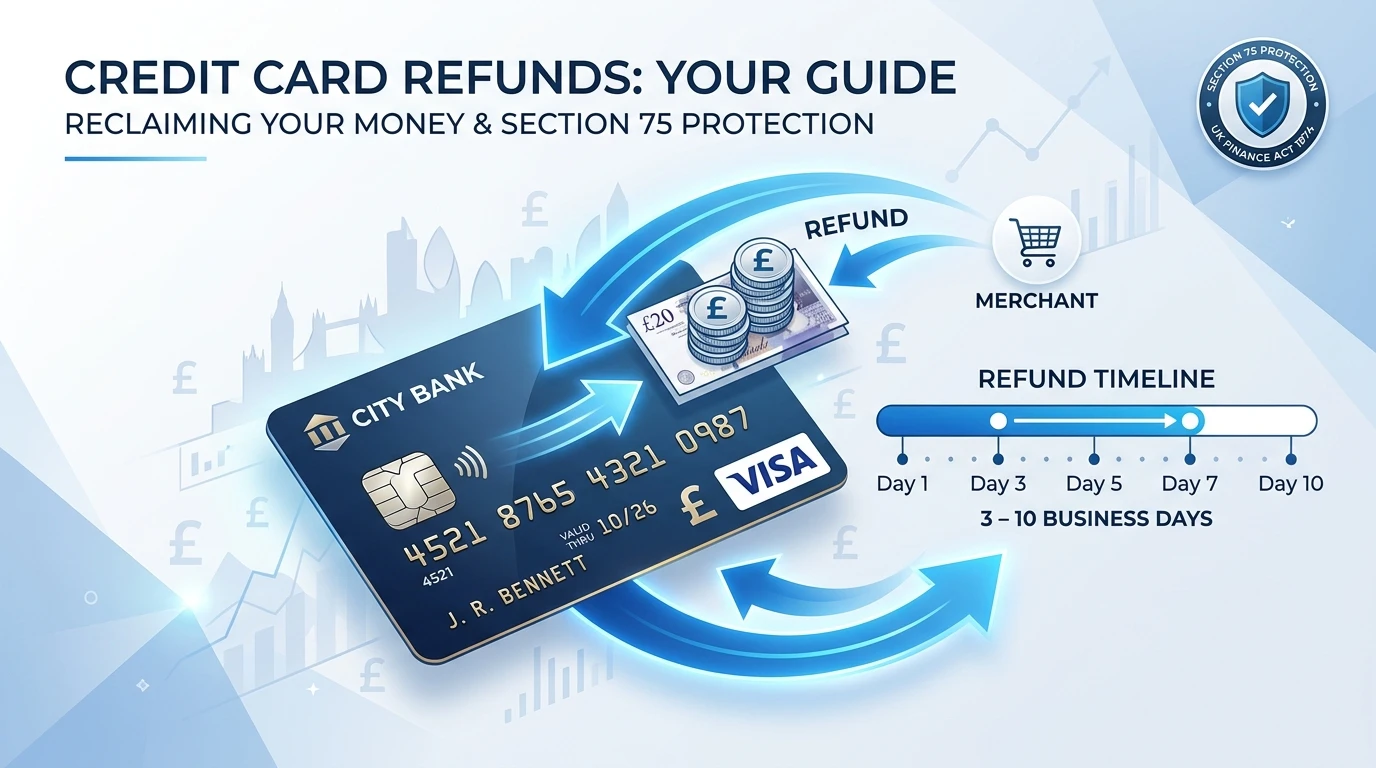
- Understanding how refunds work on credit cards
- The step-by-step refund process
- Returns vs refunds: what’s the difference
- Section 75 protection explained
- Chargeback: another way to get your money back
- Key refund scenarios explained
- What happens to interest and payments
- Common issues to watch out for
- Practical UK example
- Final thoughts
Understanding how refunds work on credit cards
When you buy something using a credit card in the UK and later return it, the refund is usually sent back to your card rather than your bank account. This is because a credit card is a borrowing tool, not a spending account. Instead of giving you cash, the refund reduces your outstanding balance.
This process is regulated under UK rules overseen by the Financial Conduct Authority, which ensures that card providers clearly explain how payments, refunds, and disputes are handled.
In most cases, refunds are processed within a few working days, but the timing can vary depending on the retailer and payment system used.
The step-by-step refund process
When you return an item, the retailer initiates a refund through their payment system. This request is sent through the card network to your credit card provider. Once approved, the amount is credited back to your account.
If your balance is still unpaid, the refund simply reduces what you owe. If you have already cleared your balance, the refund may create a positive balance. You can either spend this on future purchases or request a transfer to your bank account, depending on the provider’s policy.
It’s important to note that refunds do not cancel your payment obligations immediately. You should continue making at least the minimum payment until the refund is fully processed.
Returns vs refunds: what’s the difference
A return means you give the item back to the seller. A refund is the money being returned to your credit card. Not every return leads to a full refund. Some retailers may offer exchanges or store credit instead.
Your rights depend on the situation. For example, faulty or misdescribed goods usually qualify for a full refund, while unwanted items may depend on the retailer’s return policy.
Section 75 protection explained
One major benefit of using a credit card in the UK is protection under the Consumer Credit Act 1974, Section 75. This applies to purchases between £100 and £30,000.
If something goes wrong, such as goods not arriving or a company going out of business, you can claim a refund directly from your credit card provider. This makes credit cards more secure than many other payment methods.
Section 75 protection applies even if the retailer refuses to help, which is why many UK consumers prefer credit cards for larger purchases.
Chargeback: another way to get your money back
Chargeback is a different process from Section 75. It allows you to dispute a transaction through your card provider if there is a problem. Unlike Section 75, it is not a legal right but a scheme used by card networks. credit-card-eligibility-checker.
Chargeback can be useful for smaller purchases under £100 or when Section 75 does not apply. There are usually time limits, so it’s important to raise the issue as soon as possible.
Key refund scenarios explained
| Situation | What Happens | What You Should Do |
|---|---|---|
| Standard return | Refund goes back to card | Wait 3–10 working days |
| Paid-off balance | Creates positive credit | Use it or request transfer |
| Faulty goods | Full refund may apply | Keep proof of purchase |
| Company failure | Section 75 claim possible | Contact card provider |
| Small dispute | Chargeback may apply | Use it or request a transfer |
This table shows how different refund situations are handled and what you can expect in each case.
What happens to interest and payments
If a refund is processed before your statement date, it may reduce your balance before interest is calculated. However, if it comes after your statement is issued, you may still be charged interest temporarily.
You should continue making payments as normal until the refund appears in your account. Missing payments while waiting for a refund can lead to fees and may affect your credit record.
Common issues to watch out for
Refund delays are one of the most common problems. Some retailers take longer to process returns, especially during busy periods. In these cases, your credit card may still show the full balance for a short time.
Another issue is partial refunds. If you return only part of an order, only that portion will be credited. You remain responsible for paying the rest of the balance.
Keeping receipts, emails, and transaction records can make resolving disputes much easier. Clear documentation helps both the retailer and your card provider process your request faster.
Practical UK example
Imagine you buy a £300 phone online using your credit card. The item arrives damaged, so you return it. The retailer approves the refund and processes it within five days.
If you have not yet paid your credit card bill, the £300 is deducted from your balance. If you have already paid, your account shows a £300 credit, which you can use later or withdraw.
If the retailer refused to refund you, Section 75 would allow you to claim directly from your card provider.
Final thoughts
Refunds and returns on credit cards in the UK are generally straightforward, but understanding how they work can help you avoid confusion. Knowing the difference between returns, refunds, Section 75 protection, and chargebacks gives you more control over your money.
Credit cards offer added protection, but you still need to manage your account carefully. Staying aware of timelines, keeping records, and making payments on time ensures a smoother experience whenever you need to return something.
Most refunds take between 3 and 10 working days to appear on your credit card. However, the exact timing depends on the retailer, payment processor, and your card provider. Some refunds may show as pending before being fully completed.
Refunds are usually returned to the same credit card used for the purchase. If your balance is already paid off, the refund may create a positive balance, which you can spend or request as a transfer to your bank.
Section 75 is a legal protection under the Consumer Credit Act 1974 Section 75. It applies to purchases between £100 and £30,000 and allows you to claim a refund from your card provider if something goes wrong with the purchase.
Yes, you may still be covered under Section 75 if any part of the purchase (even £1) was paid using a credit card, as long as the total item value falls within the qualifying range.
Yes, you should continue making at least the minimum payment. Waiting for a refund does not pause your payment obligations, and missing payments could result in fees or affect your credit score.