

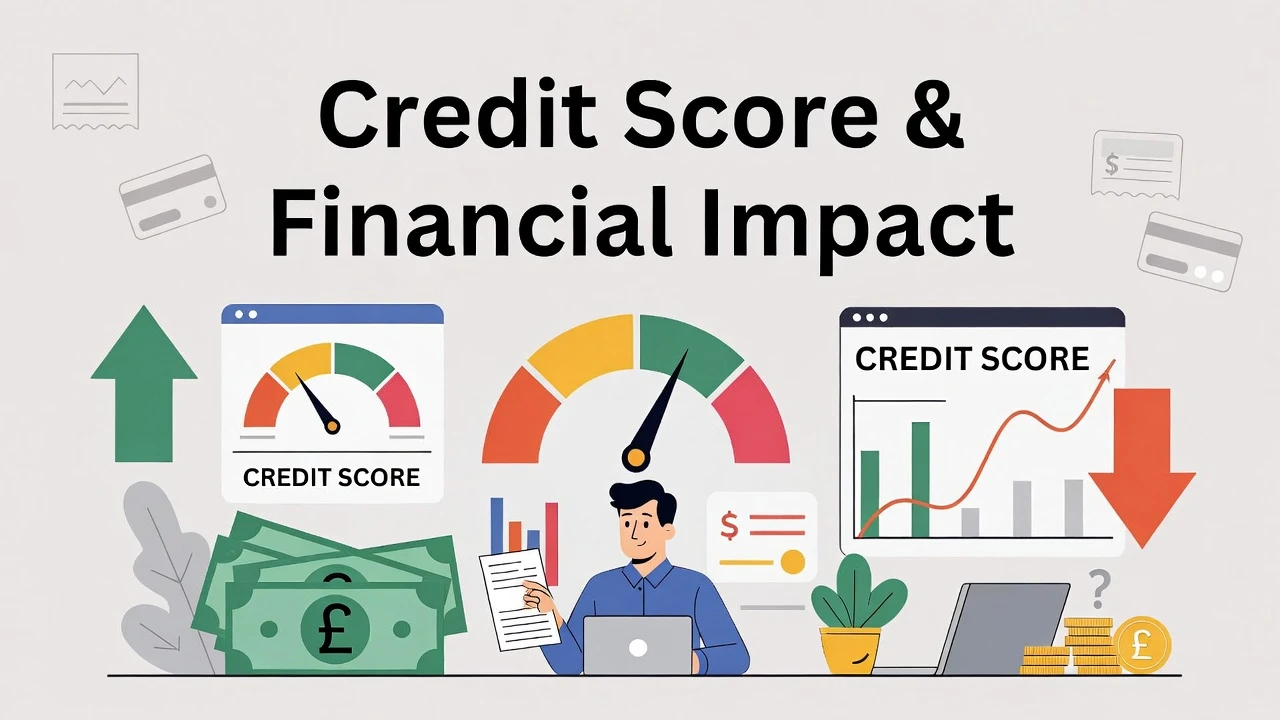
- Understanding credit scores in the UK
- How financial behaviour shapes your credit profile
- Why credit scores matter for financial decisions
- Common factors that influence your credit score
- Financial actions that can strengthen your credit profile
- Credit score ranges and general interpretation
- Long-term financial impact of credit scores
Understanding credit scores in the UK
A credit score is a numerical representation of how lenders assess your borrowing behaviour. It is calculated using information from your credit file, including payment history, outstanding balances, credit utilisation, and length of credit history. In the United Kingdom, this data is managed by credit reference agencies such as Experian, Equifax, and TransUnion.
While each agency may calculate scores differently, the purpose remains the same: to help lenders evaluate risk when deciding whether to approve credit. A higher score usually indicates responsible financial behaviour, while a lower score may signal higher lending risk. Understanding how your actions affect your score can help you manage credit more effectively.
How financial behaviour shapes your credit profile
Your credit profile develops over time through everyday financial activity. Paying bills and credit accounts on time is one of the most influential factors. Late or missed payments can remain on your credit report for several years and may reduce your score.
Credit utilisation also plays a significant role. This refers to the percentage of your available credit that you are currently using. For example, if your credit limit is £1,000 and your balance is £300, your utilisation rate is 30%. Lower utilisation is generally viewed more favourably because it shows you are not relying heavily on borrowed funds.
Length of credit history can also influence your profile. Accounts that remain open and well-managed for long periods can demonstrate stability. Closing old accounts without considering the impact on your credit history may reduce the average age of your accounts, which can slightly affect your score.
Why credit scores matter for financial decisions
Lenders often use credit scores as part of their approval process when assessing applications for credit cards, personal loans, mortgages or mobile phone contracts. A strong credit profile may lead to better interest rates or higher credit limits. Conversely, a weaker profile may result in stricter lending conditions or declined applications.
Credit scores may also influence non-borrowing services. For example, some landlords, utility providers or telecom companies review credit reports when setting up accounts. This helps them evaluate the likelihood of timely payments. Maintaining a healthy credit profile can therefore support a range of financial activities beyond borrowing.
Common factors that influence your credit score
Several key elements typically contribute to how your credit score is calculated. These factors reflect how reliably you manage financial commitments.
Regular, on-time payments demonstrate consistency and reliability. Maintaining a low credit utilisation ratio indicates responsible borrowing habits. Applying for too many credit products in a short period can result in multiple hard searches, which may temporarily lower your score.
Financial stability is also considered. Stable employment, consistent addresses and long-term financial behaviour may indirectly support your credit profile by providing a clearer picture of your financial circumstances.
Financial actions that can strengthen your credit profile
Improving your credit profile often involves small but consistent financial habits. Setting up direct debits for bills and credit payments can help ensure that payments are made on time. Reviewing your credit report regularly can also help you identify errors or outdated information.
Using credit moderately is another effective strategy. Instead of using the full limit on a credit card, maintaining a lower balance relative to the available limit may demonstrate better financial control. Over time, responsible use can gradually strengthen your overall credit position.
Credit score ranges and general interpretation
Different credit reference agencies use their own scoring systems, so ranges vary slightly. However, the general interpretation tends to follow similar patterns. The table below illustrates a simplified overview of how credit score ranges are often viewed in the UK.
| Credit Score Range | General Category | Typical Lending Impression |
|---|---|---|
| Very High Score | Excellent | Lower perceived lending risk |
| High Score | Good | Generally favourable terms |
| Mid-Range Score | Fair | Standard approval conditions |
| Lower Score | Poor | Limited credit options |
| Very Low Score | Very Poor | Higher risk for lenders |
These categories are only broad indicators. Lenders consider many additional factors, including income, affordability checks, and overall financial history. savings calculator.
Long-term financial impact of credit scores
Your credit score is not just a number; it reflects long-term financial habits. Responsible credit management may help you access better financial products over time. For example, lower interest rates on loans or mortgages can significantly reduce the total cost of borrowing.
On the other hand, repeated missed payments or high debt levels can restrict financial opportunities. Rebuilding a credit profile may take time because lenders often look for consistent positive behaviour over several months or years.
Understanding how financial decisions affect your credit profile encourages better planning. Monitoring spending, paying balances responsibly, and reviewing financial commitments regularly can help maintain a healthy credit position. Over time, these habits can support greater financial stability and flexibility.
A: In the UK, credit scores generally range from poor to excellent. A score above 700–750 is usually considered good and may improve your chances of being approved for credit cards and loans with favourable terms. (Each agency – Experian, Equifax, TransUnion – uses its own banding, but 700+ is a solid benchmark.)
A: Late payments are recorded on your credit file and can lower your score. The more recent and frequent the missed payments, the greater the impact on your ability to get new credit. Even a single 30-day late can stay on file for six years, but its influence fades over time with consistent on-time payments.
A: Yes, each hard credit check (e.g., when applying for a new credit card) can slightly reduce your score temporarily. Soft searches, such as using eligibility checkers or viewing your own report, do not affect your score. Multiple hard searches in a short period for the same type of credit (like mortgages) are often treated as one.
A: To improve your score, pay bills on time, maintain low credit utilisation (under 30% of your limit), avoid applying for too many products at once, and regularly review your credit report for errors. Registering on the electoral roll at your current address also gives a reliable boost.
A: Most negative items, such as missed payments or defaults, remain on your UK credit file for six years from the date they were registered. Positive behaviour, like timely repayments, can gradually offset this over time — but the record itself stays for the full term, even after the debt is settled.