

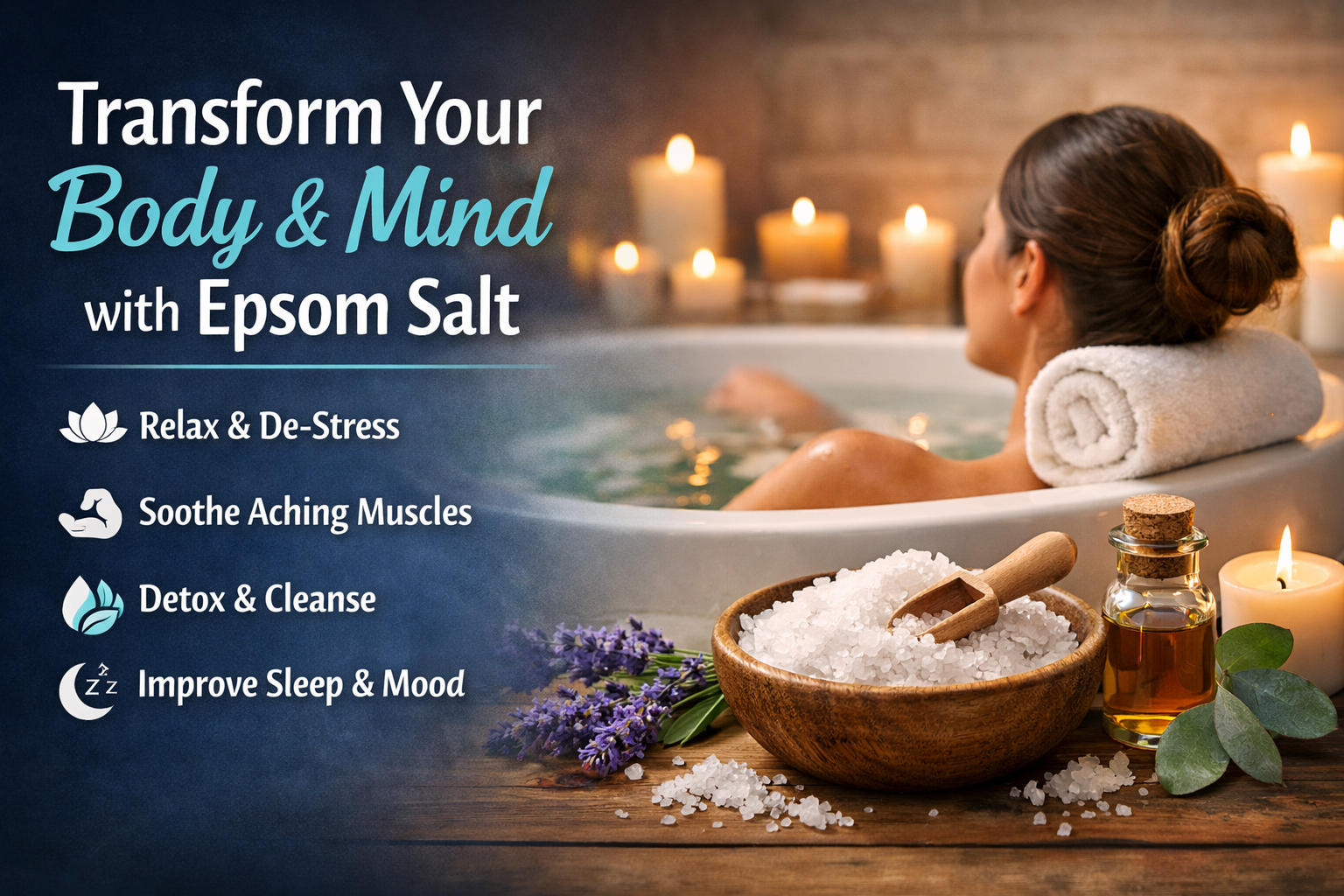
Epsom salt, scientifically known as magnesium sulfate, is a natural mineral compound that has been used for centuries to support health and wellbeing. While many people associate it with simple baths, Epsom salt offers far more than just relaxation. From improving muscle recovery to reducing stress and promoting mental clarity, it is a versatile remedy for both body and mind.
In today’s fast-paced world, where stress, fatigue, and muscle tension are common, finding natural solutions is more important than ever. Epsom salt provides a safe, cost-effective, and easily accessible option that can enhance your overall wellbeing. Whether you are looking to soothe sore muscles after a workout, detoxify your body, improve sleep quality, or simply enjoy a calming bath experience, Epsom salt can play a vital role in your daily routine.
This article will explore everything you need to know about Epsom salt, including its health and mental benefits, how to use it safely, common mistakes to avoid, and tips for incorporating it into your lifestyle. By the end of this guide, you’ll have a complete understanding of how this simple mineral can transform your physical health and mental clarity, making it a must-have in every home.
What is Epsom Salt? A Quick Overview
Epsom salt is a naturally occurring mineral compound made of magnesium and sulfate. It was first discovered in Epsom, England, which is how it got its name. Unlike regular table salt, Epsom salt is not meant for cooking, but it has a variety of therapeutic, health, and beauty applications.
When dissolved in water, Epsom salt releases magnesium and sulfate ions, which can be absorbed through the skin during a bath or applied in other ways. Magnesium plays a critical role in muscle function, nerve activity, and energy production, while sulfate supports joint health, detoxification, and the formation of proteins in the body.
Because of these properties, Epsom salt has been widely used for:
- Relaxation and stress relief
- Soothing sore muscles
- Skin care treatments
- Detoxifying the body
The Science Behind Epsom Salt and Wellbeing
Epsom salt’s effectiveness comes from its magnesium and sulfate content, which are essential minerals the body needs for proper functioning. Magnesium, in particular, is involved in over 300 biochemical reactions, including muscle contraction, nerve transmission, and regulating blood sugar levels. Sulfates, on the other hand, help the body detoxify, form joint proteins, and improve nutrient absorption.
When used in baths, magnesium in Epsom salt is absorbed through the skin, helping to relax muscles, reduce inflammation, and calm the nervous system. This makes it particularly useful for people experiencing stress, muscle soreness, or insomnia. Scientific studies have shown that magnesium supplementation can help lower blood pressure, reduce stress hormones, and improve sleep quality, all of which contribute to overall wellbeing.
In addition, Epsom salt can stimulate the production of serotonin, a hormone that helps regulate mood, making it not just a remedy for the body but also for the mind. This combination of physical and mental benefits explains why Epsom salt has been a trusted natural therapy for centuries.
Physical Health Benefits of Epsom Salt
Epsom salt offers a range of physical health benefits, making it a popular natural remedy for home care. Here’s how it can help your body:
Epsom Salt for Muscle Recovery and Pain Relief
After a strenuous workout or long day, muscles can feel sore and tense. Soaking in a warm Epsom salt bath helps relax muscles by allowing magnesium to be absorbed through the skin. This reduces inflammation, eases cramps, and relieves stiffness, helping you recover faster.
Boosting Detoxification and Blood Circulation
Epsom salt can stimulate your body’s detoxification processes. Magnesium and sulfate help flush toxins and heavy metals from the body, while warm baths improve blood circulation, which supports heart health and speeds up healing.
Supporting Bone and Joint Health
Magnesium plays a vital role in bone density and joint function. Regular use of Epsom salt baths may help alleviate discomfort from conditions like arthritis or joint stiffness, keeping bones strong and joints flexible.
Improving Sleep and Relaxation
A relaxing soak in Epsom salt not only benefits muscles but also prepares your body for quality sleep. Magnesium helps regulate melatonin production, which controls sleep cycles, making it easier to fall asleep and stay rested.
Mental Health Benefits of Epsom Salt
Epsom salt is not only beneficial for the body—it also has significant mental health benefits. Incorporating it into your routine can help reduce stress, improve mood, and support overall mental clarity.
Stress Relief and Relaxation
Soaking in an Epsom salt bath triggers relaxation by reducing stress hormones in the body. Magnesium helps regulate cortisol levels, which is the hormone responsible for stress, leaving you feeling calm and rejuvenated. A simple 20-minute bath can significantly improve emotional wellbeing after a hectic day.
Enhancing Sleep Quality Naturally
Poor sleep is often linked to magnesium deficiency. Epsom salt baths can help increase magnesium levels in the body, which in turn promotes better sleep. Regular use can reduce insomnia, help you fall asleep faster, and improve overall sleep quality.
Mood Improvement and Anxiety Reduction
Magnesium from Epsom salt encourages the production of serotonin, a mood-stabilizing hormone. This can help alleviate symptoms of anxiety, depression, and irritability. Regular Epsom salt use may provide a natural boost to mental health, complementing other wellness practices like meditation and yoga.
How to Use Epsom Salt Effectively
Epsom salt is easy to use at home, but using it correctly ensures maximum benefits for both body and mind. Here’s how you can incorporate it into your routine safely and effectively:
Epsom Salt Baths for Body and Mind
One of the most popular methods is a warm Epsom salt bath. Follow these simple steps:
- Fill a bathtub with warm water (around 37–40°C / 98–104°F).
- Add 2 cups of Epsom salt for a standard bath.
- Soak for 15–20 minutes to allow magnesium absorption through the skin.
- Relax, breathe deeply, and let the stress melt away.
Regular baths can relieve sore muscles, reduce stress, and improve sleep quality.
DIY Epsom Salt Scrubs and Treatments
Epsom salt can also be used as a skin exfoliant or in homemade scrubs:
- Mix Epsom salt with olive oil or coconut oil for a gentle scrub.
- Use on rough areas like elbows, knees, and feet to remove dead skin and improve circulation.
- Add essential oils like lavender or peppermint for added relaxation.
Drinking Epsom Salt Solutions (Safe Usage Tips)
While less common, oral consumption of Epsom salt can be used as a laxative under medical guidance.
- Dissolve the recommended amount in water as per pack instructions.
- Only use occasionally and never exceed recommended doses.
- Consult a healthcare professional before internal use, especially for people with kidney or heart issues.
Tips and Mistakes to Avoid When Using Epsom Salt
While Epsom salt is safe and natural, using it incorrectly can reduce its benefits or even cause minor issues. Follow these tips to get the most out of your Epsom salt routine:
Proper Dosage and Frequency
- For baths: Use 1–2 cups per bath, soaking for 15–20 minutes.
- Avoid overuse; 2–3 baths per week is sufficient for most people.
- For DIY scrubs, a 2:1 ratio of salt to oil works well.
Common Mistakes to Avoid
- Using very hot water: Can dry out your skin or cause discomfort.
- Soaking too long: More than 30 minutes can irritate the skin.
- Ignoring skin sensitivity: People with sensitive skin should test a small area first.
- Internal consumption without guidance: Oral intake should be occasional and under medical supervision.
Safety Precautions for Home Use
- Stay hydrated before and after a bath.
- Avoid Epsom salt baths if you have open wounds or infections.
- Pregnant women and individuals with kidney or heart conditions should consult a doctor.
Using Epsom Salt in Daily Life
Incorporating Epsom salt into your daily routine can help you maintain both physical and mental wellbeing naturally. Here are practical ways to make it part of your lifestyle:
Using Epsom Salt for Fitness Recovery
- Athletes and fitness enthusiasts can benefit from post-workout Epsom salt baths.
- Soaking for 15–20 minutes reduces muscle soreness, cramps, and inflammation.
- Add a few drops of essential oils like eucalyptus or peppermint to enhance recovery and relaxation.
Incorporating Epsom Salt into Skincare Routine
- Use as a gentle exfoliant to remove dead skin cells and improve blood circulation.
- Combine with honey or coconut oil for a moisturizing scrub.
- Regular use can soften rough areas like elbows, knees, and feet, while also improving skin glow.
Epsom Salt for Home Relaxation and Mindfulness
- Take a warm bath after a long day to relax muscles and calm the mind.
- Pair with meditation or deep breathing exercises to reduce stress.
- Even small steps, like foot soaks, can provide instant relief and mental clarity.
Conclusion
Epsom salt is much more than a simple bathing product—it’s a natural, versatile solution that supports both physical health and mental wellbeing. From relieving muscle soreness, reducing inflammation, and improving joint health to reducing stress, enhancing sleep, and boosting mood, Epsom salt offers benefits for your entire body and mind.
By incorporating Epsom salt into your routine through baths, scrubs, or mindful practices, you can create a simple, effective, and enjoyable way to improve your overall wellness. Remember to use it safely, follow dosage guidelines, and combine it with healthy lifestyle practices for the best results.
Whether you are an athlete recovering from workouts, someone seeking stress relief, or anyone looking to enhance skin health and relaxation, Epsom salt is a natural remedy worth exploring. Start using it today and experience the transformative effects for yourself—your body and mind will thank you.
FAQs
Is Epsom Salt Safe for Everyone?
Yes, Epsom salt is generally safe for most people when used externally in baths or scrubs. However, those with kidney problems, heart conditions, or open wounds should consult a doctor before use.
Can Epsom Salt Help With Weight Loss?
Epsom salt itself does not directly cause weight loss. However, relaxing baths can reduce stress, improve sleep, and support overall wellness, which may indirectly contribute to healthier weight management.
How Often Should I Use Epsom Salt Baths?
For most adults, 2–3 baths per week is sufficient to enjoy muscle, joint, and relaxation benefits. Overuse may irritate the skin or cause dryness.
What Are the Side Effects of Epsom Salt?
External use is very safe, but some people may experience:
- Mild skin irritation if used too frequently
- Dry skin if baths are too hot or prolonged
- Diarrhea or stomach upset if taken orally without proper guidance
Can Epsom Salt Improve Mental Health?
Yes. Epsom salt baths can reduce stress, calm the nervous system, and improve mood by promoting magnesium absorption and serotonin production, supporting mental wellbeing naturally.